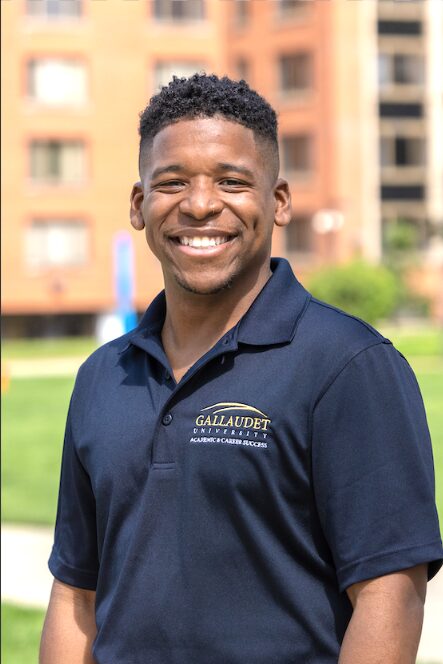
When Keaobaka Dabutha arrived at Gallaudet in 2022, he was matched with junior mentors Celso Martinez, ’24, and Micah Fields ’24. ” Both Celso and Micah supported me and motivated me to be myself, to build relationships, and to just go try different things,” says Dabutha, who is now a senior majoring in Public Health, and paying it forward by mentoring freshmen today.
He helps new students navigate their classes and dorms, and equips them with advice, skills, and strategies to feel more comfortable on campus. “I’m happy most of my mentees are involved in sports, organizations, debate, and other clubs. I’m really proud of them,” Dabutha says. “I’m also proud of my own work connecting and empowering them.”
That is the goal of Bison Mentors, a peer mentorship program on campus. Led by Student Success Coordinator, Tramarvious “Dee” Hosley ’20 & G-’22, the Bison Mentors are a group of 15 high-energy upperclassmen tasked with sharing their experiences and easing the transition to college life.
Way beyond a welcome mat
Peer mentorship programs are not new at Gallaudet, but its current iteration, the Bison Mentor Program, launched last fall and is run by Student Success.
Mentors must have a minimum 3.0 GPA, be in good academic standing, provide two letters of recommendation, and be interviewed. Interested applicants use Handshake to apply, and, in turn, mentors teach mentees how to use the platform when it’s their turn to look for on-campus jobs, internships, or post-graduate work.
Hosley says some of the best Bison Mentors are motivated, truly value building relationships with new students, and can quickly establish those connections through empathy and sharing experiences.
Another common thread of Bison Mentors is their desire to meet new people. Mentor and Biology major Macy DeGraw says, “I want to know what their visions are for their lives, what their majors are, or what changes they are going through. I really like that part of the Bison Mentor Program.”
DeGraw says her experience as a mainstream student helps her connect to students who are experiencing a Deaf environment for the first time at GU, like she did. “I let them know that they’re not alone. Yes, there are many people who attended residential deaf schools or grew up in families using ASL here, but I didn’t. I learned ASL in high school, relatively recently. I can provide that kind of understanding,” she says.
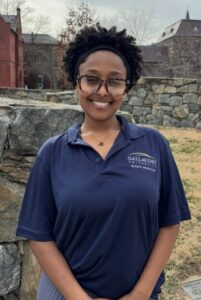
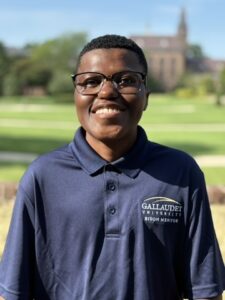
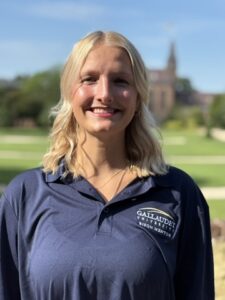
Hanna Johnston Shaw, Keaobaka Dabutha, and Macy DeGraw (L-R) draw on their own experiences to mentor students.
Peerless advice
Hired the previous spring, Bison Mentors are in place to personally deliver warm, welcoming waves to newbies during New Student Orientation (NSO) at the beginning of the next academic year. During NSO, students are assigned an academic advisor and a Bison Mentor based on the school where their academic program is housed. This way, new students can also rely on their mentors for relevant academic advice.
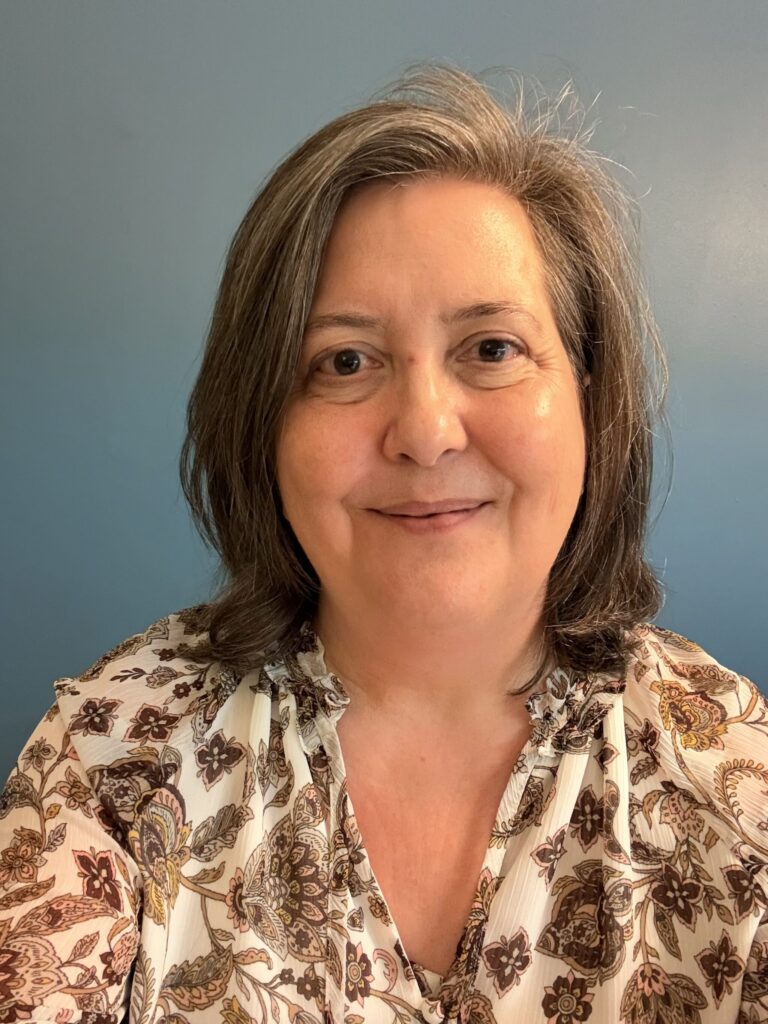
As part of their first- and second-semester grades in their GenEd/VEE classes, new students are required to have one-on-one meetings with their Bison Mentor. “Typically, this first meeting is around how they feel settling in on a social-emotional level, whereas the second one focuses more on the academic side of things,” says Hosley. This second meeting is especially important for encouraging students to access math or English tutoring if needed.
Director of Student Success, Jerri Lyn Dorminy, ’93 & G-’95, says the Bison Mentors’ roles in academic advising are important, since new students may be more willing to listen to a peer in their program than to faculty or staff. They can be incredibly helpful in helping students navigate the unofficial lessons that accompany formal education, or the hidden curriculum. “We have formal processes, but experienced students will know how to navigate the university experience in a way staff may not. Students discuss meal choices, living in student dorms–those are all valuable peer-to-peer shared experiences,” explains Dorminy.
Front and center
One significant departure from previous mentorship programs is that mentors work shifts at the Student Service Center front desk in the Sorenson Language and Communication Center (SLCC). They serve as a friendly first line for what can be complicated university processes.
In the past, the four programs at the one-stop center (the offices of the Registrar, Financial Aid, Student Financial Services, Student Success, and Academic and Career Advising) each hired their own student workers. Now, Hosley says, the Bison Mentors team improves internal collaboration and communication among the programs, ultimately resulting in a smoother experience for students.
“I think we have a great team. Customer service has improved tremendously. The Bison mentors are very professional in engaging with students, and they’ve developed some great work experience and leadership skills,” says Dorminy.
It’s fun too. Senior Hanna Johnston Shaw, a double major in Social Work and Psychology and a minor in Public Health, says she loves engaging with different students when they come into the one-stop center. “There’s so much good energy and positivity; I’m excited to work with everyone who comes into the office. We have a great team and a fantastic working environment,” she says.
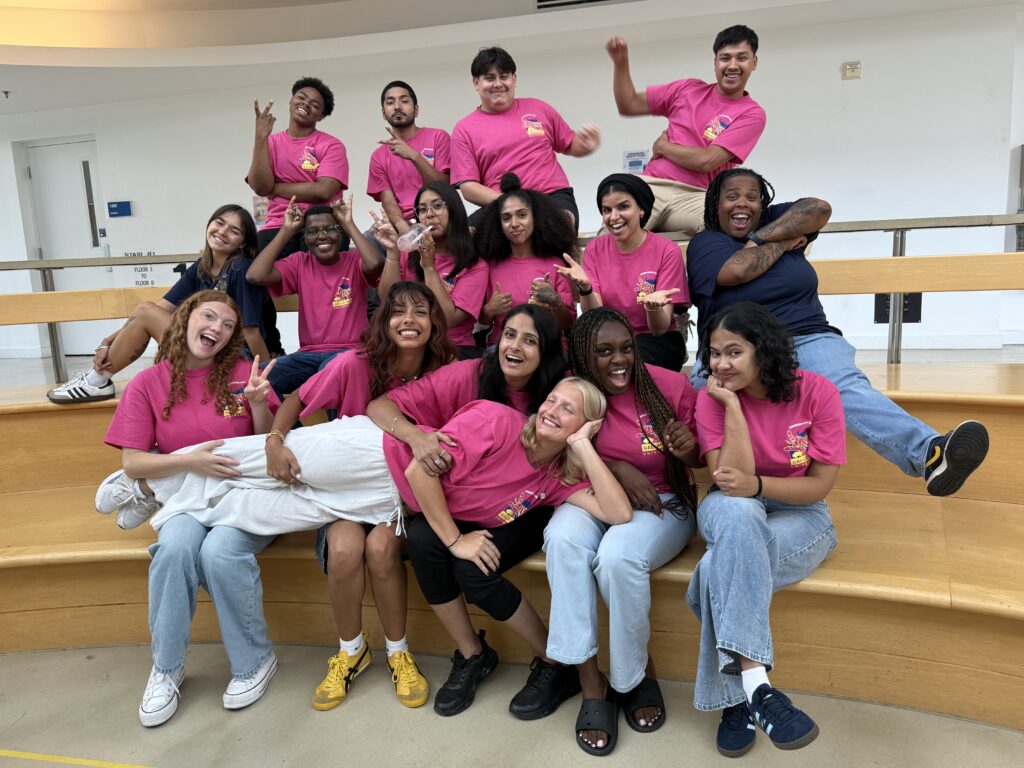
Face-to-face or far away, support on tap
Bison mentors are not just on campus. Pricilla Acosta-Feliz (below left) and Mel Mejias (below right) are both Deaf Studies Online Degree Completion Program (ODCP) students who support other online students and are supervised by ODCP Advisor Cheryl Murgel, ’81. Connecting from Georgia and Florida, respectively, they offer technical support ranging from navigating Blackboard to making and editing videos, and downloading and using new apps. Some students reach out asking to double-check their understanding of an assignment, and since many online students juggle full-time jobs and families, Acosta-Feliz and Mejias also offer wellness advice and practical tips through email, discussion boards, and YouTube videos.
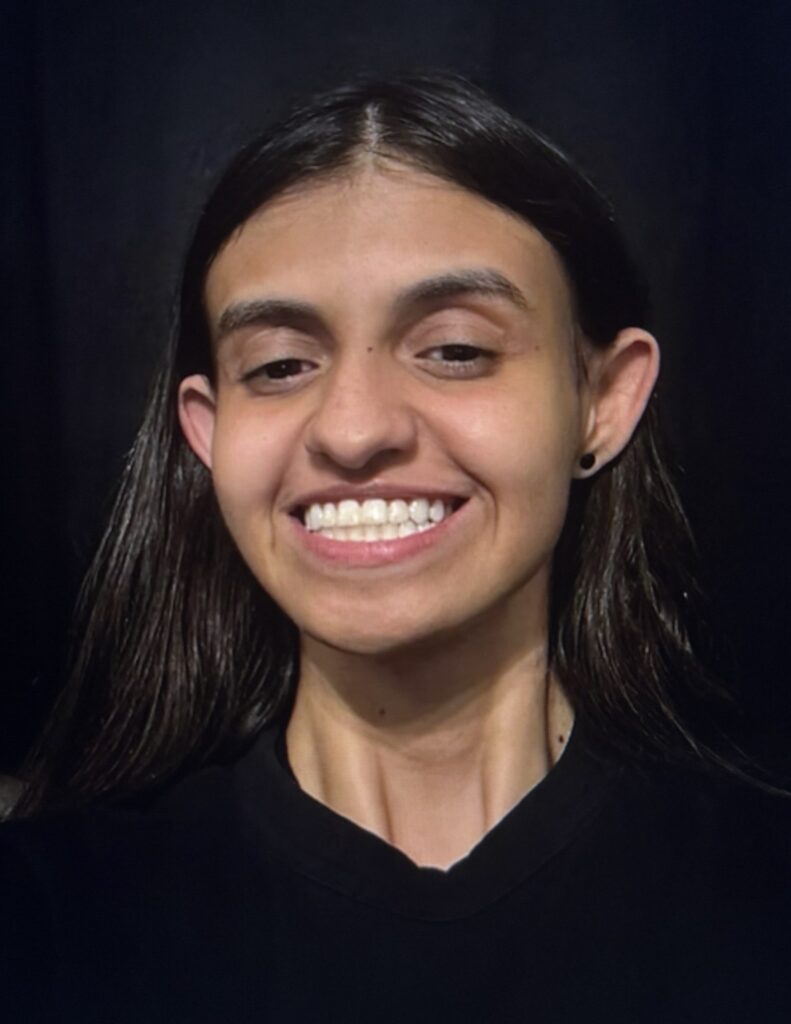
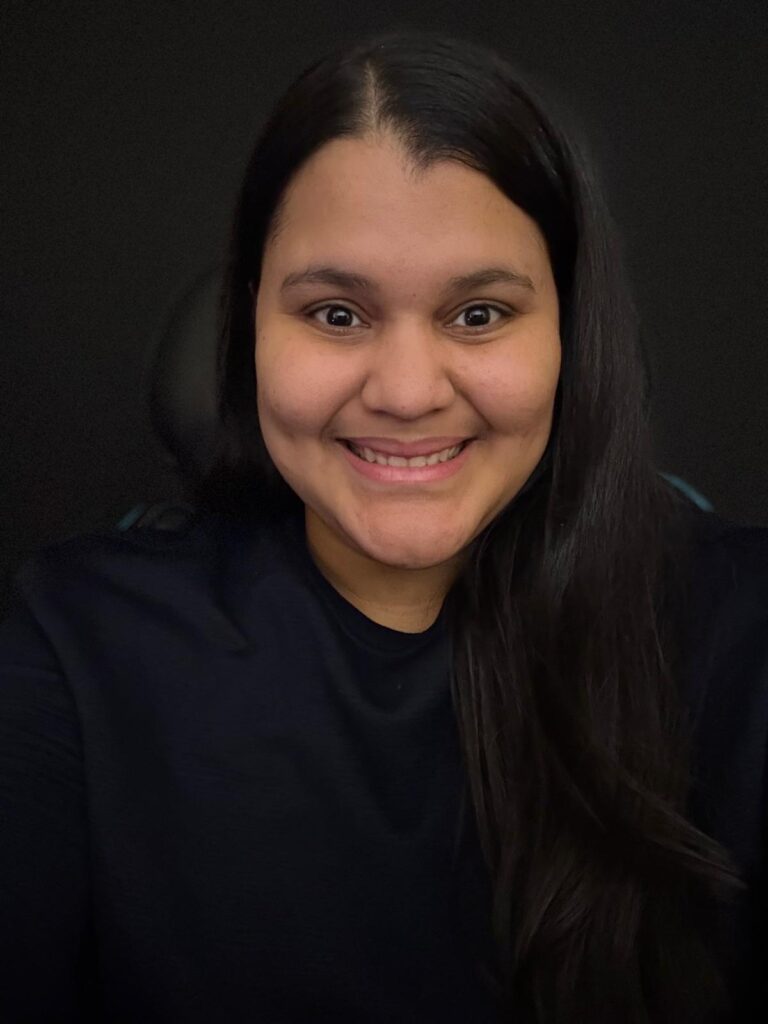
Mejias wants to apply the practical skills she uses as a Bison mentor to her work running ASL Deaf Chat, a non-profit she founded. Acosta-Feliz worked as a mentor and tutor while studying at NTID and wanted to renew that experience at Gallaudet, saying, “I want to make sure the students are satisfied with their work and with their progress in the program.”
The future looks bright
Dorminy works closely with School Directors, advisors, and other partners to recruit new Bison Mentors and to understand what kinds of peer support new students could benefit from. “We look at data, continue to learn, and make tweaks to improve the program as time goes on,” she says. Some of those future plans include strengthening the partnerships among student mentors, staff advisors, and the five schools. Mentors can then expand their support to the full student lifecycle from enrollment to graduation by advising on specific majors and programs of study.
“I remember looking back at my freshman year until now, I’ve grown so much: in my confidence, how I engage with people, and in my understanding of what campus has to offer,” reflects Johnston Shaw. Now, Bison Mentors accompany students on their journey, sharing an extra dose of encouragement and pride along the way.
Student Success offers a range of support to Gallaudet students.