



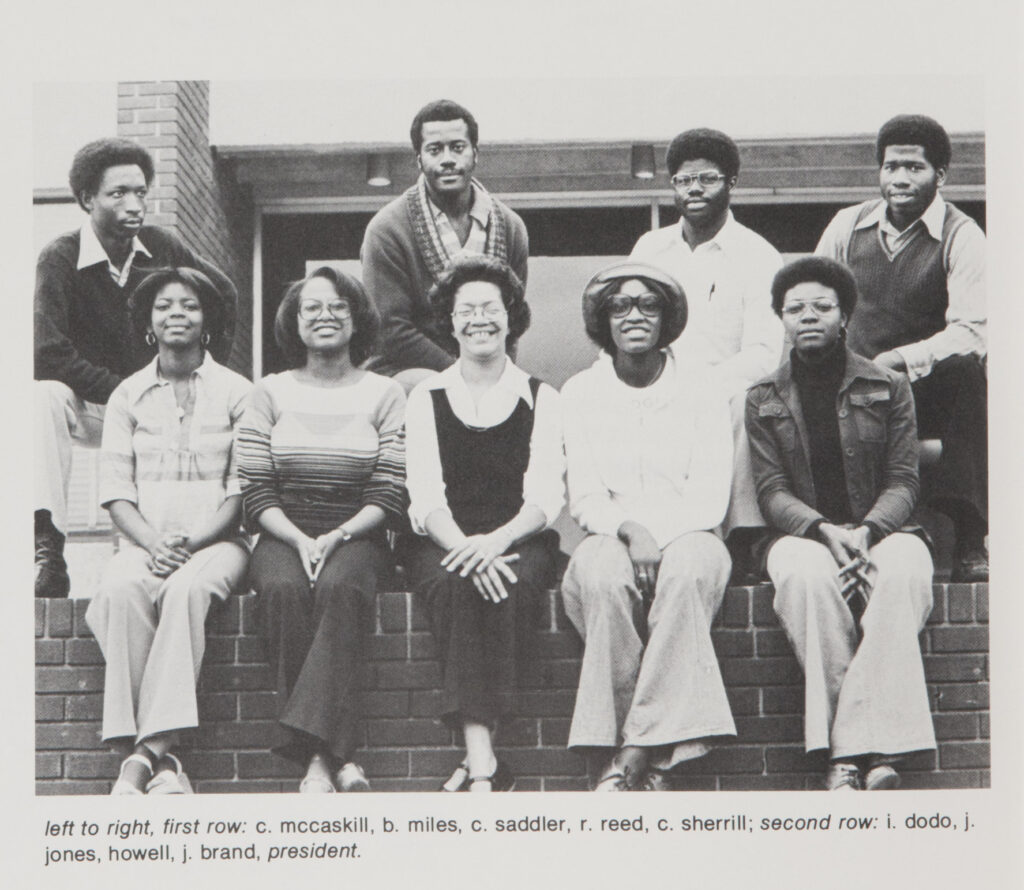
In February 1976, Black History Month was recognized by a sitting American President for the first time. That same year, Gallaudet’s Tower Clock yearbook included a new student group called the Ebony Harambee Club.
Led by its first president, John Brand, ’79, the club organized to support the “growth and development” of Black American and African students. In a lively Buff and Blue article by Idris Dodo, ’78, Brand asked Dodo to break down the organization for readers.
“The name of the club itself can give you a clue … the word Ebony in English means black, and the word Harambee, which is an African language word, means unity and cooperation…”
50 years later, those values of unity and cooperation live on through the Black Student Union (BSU). The enduring student organization has lasted through the years by centering belonging.
BSU member Justin Muschette puts it simply: “It’s about culture, pride, and empowerment.”
Let us think back to the days of the seventies. Remember the times we carried our afros high, tall, and filled with black pride. It helped us become more conscious of our identity as Black Americans. …
Likewise, the BDSU has served to increase our black pride and awareness. It has helped us improve our identity as Black and Deaf people.
Tower Clock 1996
From Ebony to Aswads to BSDU
In 1983, the Ebony Harambee Club became Deaf Ebony. That same year, another Black student organization formed. The new Ascending Aswads Association (AAA) focused on educational, cultural and social enrichment.
During the 1980s, Deaf Ebony and AAA became a haven for Black Deaf students. They also provided events such as fashion shows and bake sales for the Gallaudet community. For Black History Month, they invited guest speakers to educate the campus on Black history and civil rights.
By 1988, Deaf Ebony and AAA were one group under the name Ascending Aswads Association. A few years later, the organization officially changed its name to the Black Deaf Student Union (BDSU).

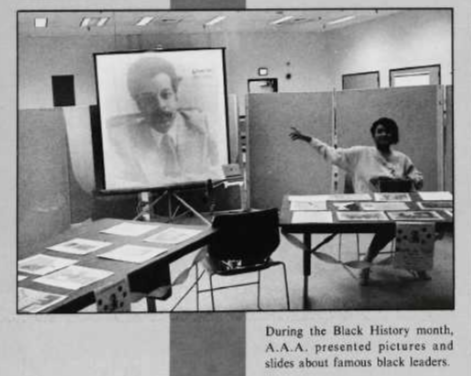
Through the 1990s and 2000s, BDSU uplifted education, culture, and leadership skills. The organization’s events and meetings were often open to all races, with the goal of building solidarity across the Gallaudet campus.
In the April 1996 Buff and Blue, outgoing BSDU President Alex Jones, ’96, reflected on his time with the organization: “BDSU is where generations of Black leaders start out at Gallaudet. When I started, the organization helped me to use my talents–such as developing my leadership capabilities … which in turn, developed my interpersonal skills and most important, communication skills.”
BDSU continued to celebrate Black History Month. In addition to an annual fashion show, it hosted a variety of inclusive events such as reggae parties and bake sales. In 2006, BSDU held a 30th anniversary gala in the Hall Memorial Building Atrium.
As the years progressed, the organization evolved once more, becoming today’s Black Student Union (BSU).
Activism
While the name has changed, advocacy has remained central to BSU’s mission over the years. During the 1990s, BDSU hosted presentations on topics such as leadership in the Black community, racism, audism, mental health, and oppression within the deaf community.
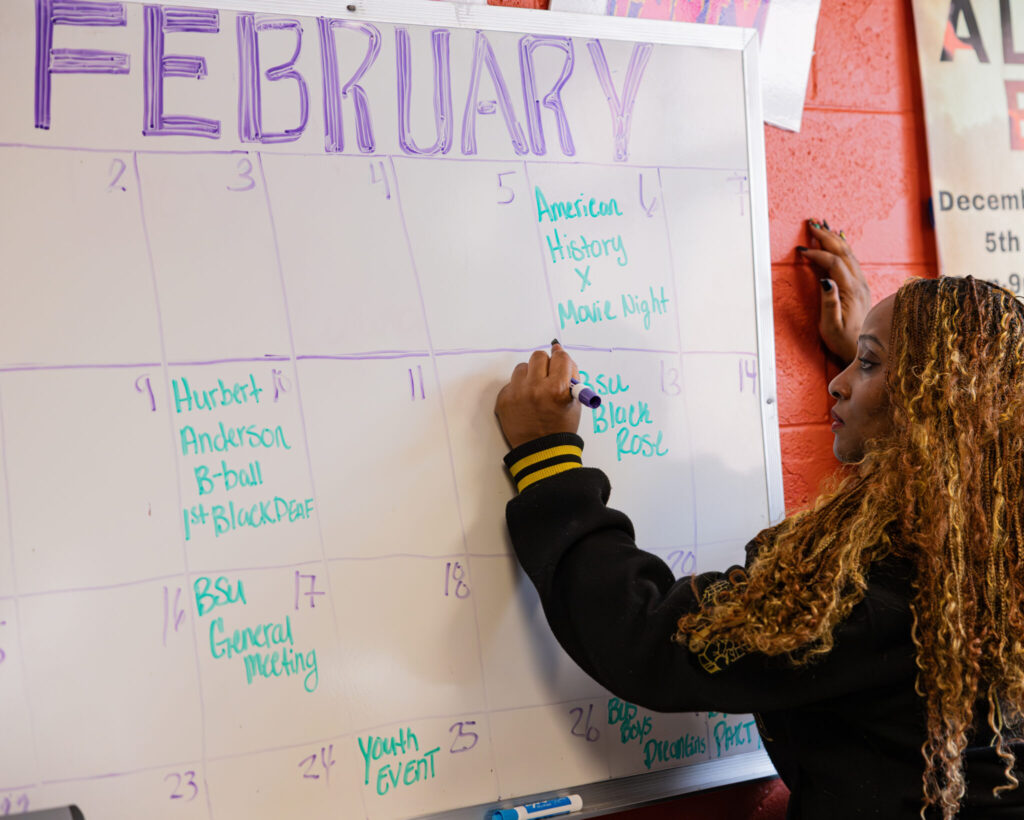
BDSU also advocated for fairness in leadership roles at Gallaudet. In 1995, the Black Deaf Student Union considered seceding from the Student Body Government because its Executive Branch didn’t reflect the demographics of Gallaudet’s student population.
Trina Baylor, ’01, and other female members of BDSU traveled to Philadelphia, Pennsylvania to participate in the Million Women’s March in 1997. After Hurricane Katrina in 2005, BSDU collected donations of supplies, food, and clothing for survivors.
LaToya Plummer, ’22, joined BSU for the first time as an undergraduate in the mid-2000s. She remembers protesting with her fellow members during the 2006 Unity for Gallaudet Movement. “It was a challenging time, but I was so proud to be a BSU member,” Plummer says. Today, as a graduate student, she serves as the Vice President of both BSU and the African Student Union.
In 2020, BSU advocated for change in solidarity with the Black Lives Matter Movement. BSU members worked with the Student Body Government to demand changes from Gallaudet’s administration. The administration eventually agreed to a series of actions to address system racism.
The ASU connection
Before the Ebony Harambee Club formed in 1976, a Deaf African Student Union Conference took place in 1970. Speakers included African alums such as Dr. Gabriel A. Adepoju, ’69, G-’71, & PhD ’91; Seth L. Tetteh-Ocloo, ’64 & G-’65; and Peter O. Mba, E-’67. All three went on to found schools for the deaf in Africa.
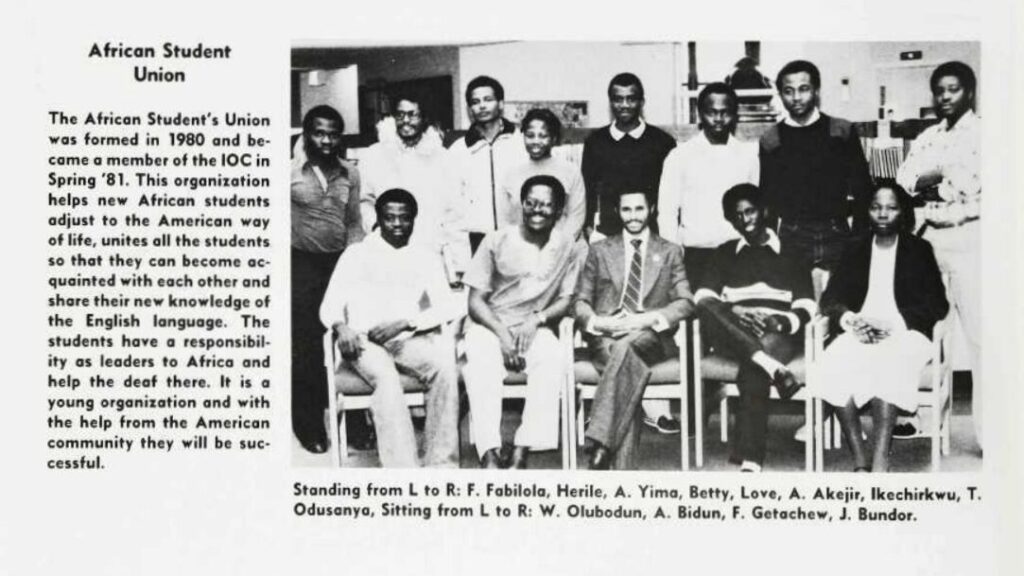
The African Student Union (ASU) became a formal student organization in 1980. For over 25 years, ASU has helped African students at Gallaudet adjust to life in the United States.
Just like BSU, the African Student Union also fosters the leadership skills of its members. In 1987, a young sophomore from Nigeria served as Vice President of ASU. 35 years later, that student, Dr. Khadijat Rashid, ’90, became the Provost of Gallaudet University.
ASU continues to support African students today with events and gatherings that build community, often working with BSU. Over the years, the two organizations have become constant partners in supporting Black students on campus.
A legacy of leadership
The histories of BSU and ASU are rich with legendary Black Deaf leaders. John Brand, the first president of the Ebony Harambee Club, would later become co-founder of Chicagoland Black Deaf Advocates. His children, John Brand III, G-’16, and Cookie J. Brand, ’02 & G-’07, also attended Gallaudet. Cookie is currently a board member of the Gallaudet Alumni Association.
Carolyn McCaskill, ’77, G-’79, & PhD ’05, was also a member of the inaugural Ebony Harambee Club in 1976. That same year, she was crowned Miss Gallaudet, which turned out to be a minor footnote in a long and storied career. In 2011, McCaskill authored the groundbreaking The Hidden Treasure of Black ASL. Later, she became the first Director of the Center for Black Deaf Studies (CBDS).
Lindsay Dunn, ’85, the first CBDS scholar and researcher, was once president of ASU. The current CBDS Manager, Evon Black, ’87, G-’96, & EdS, ’25, was a BSU member during her time as a Gallaudet student. In the decades since, she has been one of the university’s steadfast leaders, including a crucial role in developing the Louise B. Miller Pathways and Gardens.
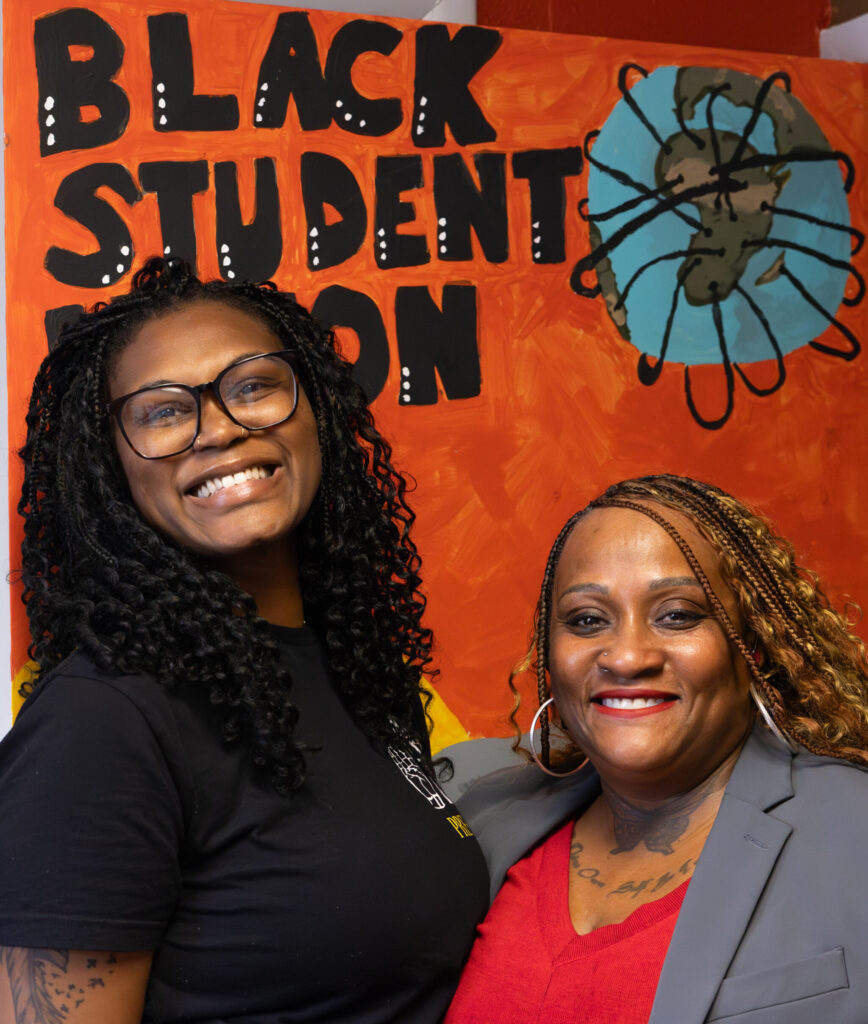
The mentorship of Black Deaf alumni and community members has created a stronger Gallaudet community. Legendary names such as McCaskill; Dunn; Black; Glenn Anderson, ’68, H-’17;and Dr. Isaac O. Agboola, ’81 & G-’83, have guided and mentored countless Black Deaf students over the years. Current CBDS Director Dr. Joseph C. Hill, G-’04 & PhD ’11, continues that legacy today as CBDS supports the modern iteration of BSU.
BSU today
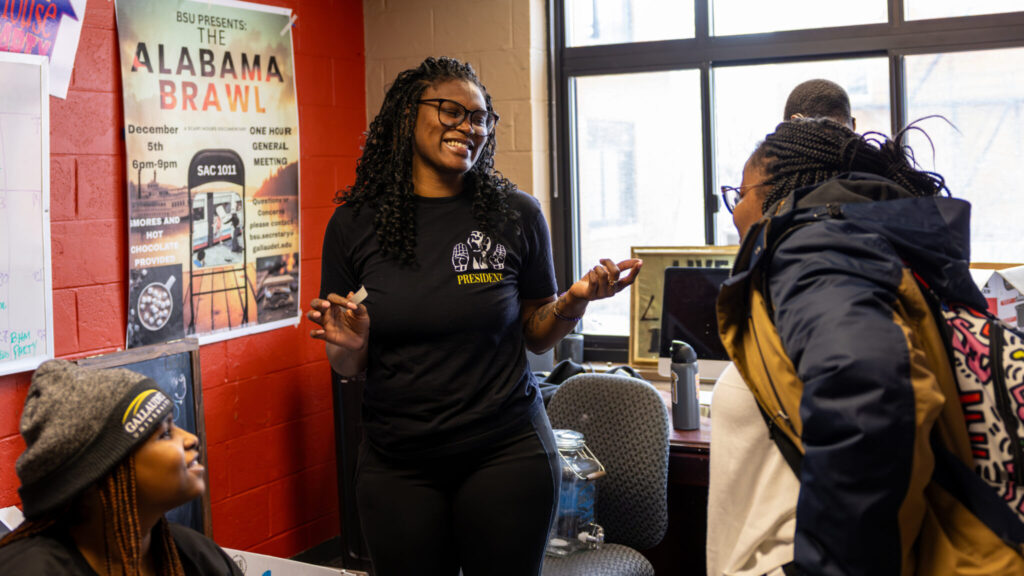
Current BSU President Kaneesha Stallworth remembers attending her first meeting after entering Gallaudet in 2024. “It was powerful,” Stallworth says. “I saw a lot of Black students who wanted space, time, and opportunities for joy. I decided I had to get involved.”
Stallworth’s time as president has helped BSU recover from the impacts of the COVID-19 pandemic. She emphasizes confidence and community as central to BSU’s mission. “I see the good in people, and I want them to see the good in themselves. That confidence will be passed on.”
Muschette, a Communication Studies major, shares a similar reflection. “Growing up, I didn’t have Black Deaf teachers or role models,” he says. “It’s powerful to share my experience with other Black people. BSU gives us a network. It teaches us our history. It helps us realize we’re not alone.”
“BSU provides a place for Black students to be themselves,” says Plummer. “We can talk about our lives, journeys, challenges, and struggles as Black Deaf people. And we have different resources for Black Deaf students to thrive.”
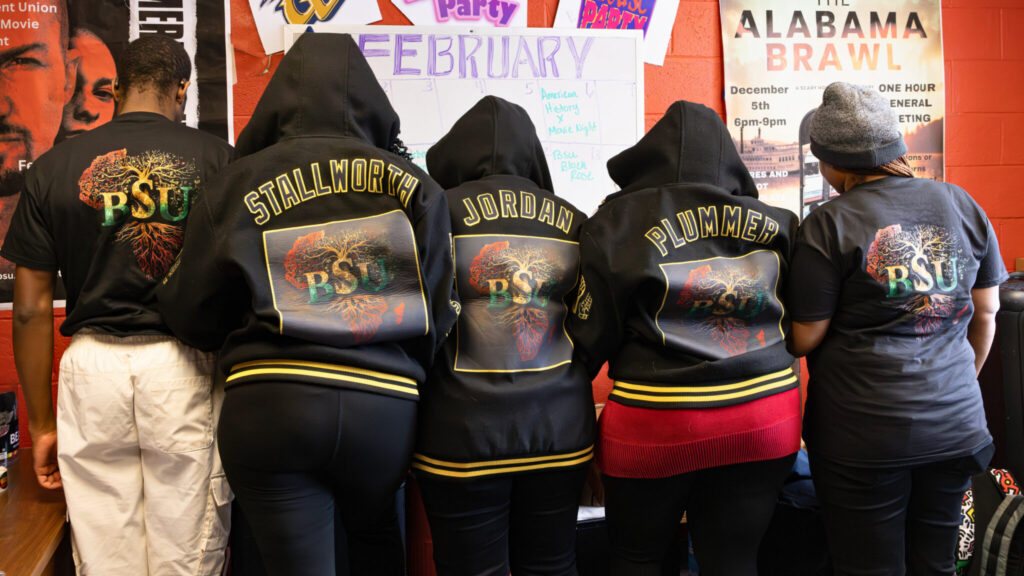
Black Deaf pride
Plummer, Muschette, and Stallworth have fond memories of a recent November Friendsgiving. Several BSU members gathered with other Gallaudet students to celebrate in good spirits. The organization provided their famous Rotel dip and strawberry lemonade.
Stallworth hopes that the event becomes a new tradition. As her graduation approaches, she is preparing to pass on the mantle of President to the next generation of Black Deaf leaders at Gallaudet. She has a mission for them.
“Keep the BSU name alive,” she says. “Let them know, we’re here. We exist.”
This year, BSU continues its longest-standing tradition. The organization will honor Black History Month with workshops, discussions, and events that center the Black Deaf experience. Later in the spring, a banquet will celebrate 50 years of BSU activism, leadership, and most importantly, Black joy.
The story of Gallaudet can’t be told without recognizing contributions of its Black Deaf students and the Black Student Union. The leaders that passed through BSU have shaped the university and the deaf community as a whole. The impacts of BSU organizing can be seen at Gallaudet today in institutions like the Office for Belonging and Engagement and Center for Black Deaf Studies.
Black history is American history. And BSU history is Gallaudet history, too.
Follow @bsugallaudet on Instagram to stay connected to the Black Student Union.
Gallaudet offers a minor in Black Deaf Studies.