



Mystery: The image above is a page from the photo album of Maud Edington Parker, 1913. The old Fowler Hall is visible in the background. The images show Gallaudet’s campus sometime between 1908-1910. What do these photos tell you about life at Gallaudet during that time?
Look at your family photos. Do you remember where each photo was taken? In what year? With whom? Did Uncle George and Aunt Jane get married before or after they moved to a new home?
As you review more photos, you begin to assemble a rough timeline: in one image, you recognize a family member from an earlier time; in another, you see that same person at your uncle’s wedding. You realize your aunt and uncle must have been married before the move, and gradually, the pieces begin to fall into place.
History is built from photo-album snippets and half-remembered events ordered by stacks of forgotten photos. At Gallaudet University, the Tower Clock yearbook, The Buff and Blue student newspaper, and other similar publications are the building blocks of our history.
April is Deaf History Month, and Gallaudet’s 162nd Charter Day is coming up, celebrating the day when our little school earned the ability to confer collegiate degrees. Both events often lead to some interesting inquiries for the Gallaudet Archives.
For researchers who may not be used to managing historical context, readers who may not know how to read between the lines, or visitors who just want to know something simple, the Archives offer a good starting point for not only answers, but also questions.
Asking the right questions
When doing historical research using materials from the Archives, researchers need to arrive prepared to do detective work, rather than finding perfectly packaged soundbite answers with an accompanying citation.
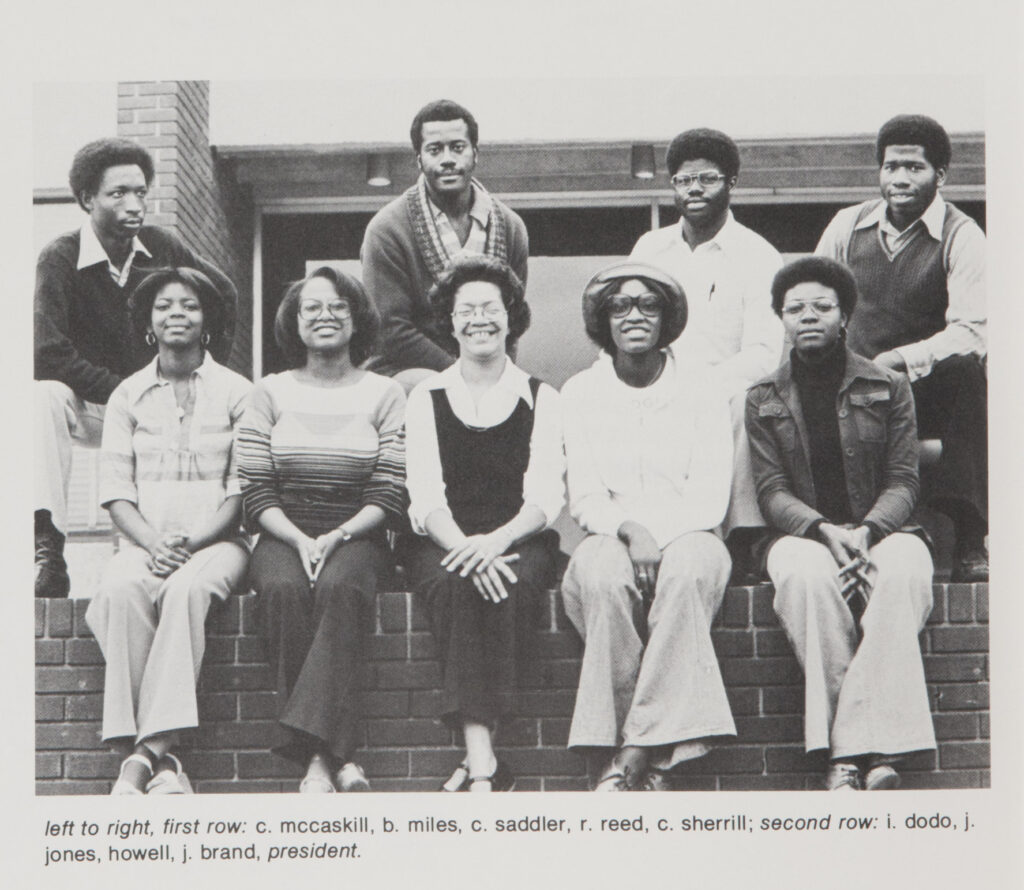
One recent example includes a February article about Black Deaf organizations and advocacy on campus. The first challenge was simply determining what organizations we were talking about.
There was Ebony Harambee, founded in spring of 1975. It later became Deaf Ebony. Then there was Ascending Aswads Association of the Deaf in the 1980s, the African Student Union around the same time, then either the Black Deaf Student Union or the Black Student Union in the 1990s, up until today.
Are these all the same organizations? Were the same people involved in more than one at the same time? How were the goals the same or different?
More importantly, what do those questions tell us about research using materials from the Archives?
Answer: The clubs above were mostly different organizations, only occasionally appear to have overlapped in membership. Although their specific goals varied, they all carried the same theme of empowering and advocating for Black Deaf students on campus.
And they tell us a lot about how Black Deaf students on campus viewed each other (African-Americans versus international students from Africa, for example) and how those groups sometimes had distinct views of race relations on campus. But we do know the first recorded group was Ebony Harambee in the spring of 1975, shown above.
What’s already there?
Most of the work has been done, at least as far as factual information about Gallaudet is concerned: There have been two almanacs published that contain anything you’d like to know about whatever’s quantifiable in a given year. SBG presidents, buildings, academics, Greek organizations, enrollment numbers—it’s all there.
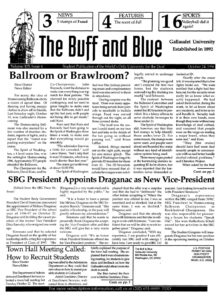
The challenge comes for researchers in figuring out what to do with it. The facts in the almanac are presented without much context; are SBG administrations really so cut and dried? What sports got a lot of attention on campus at the time? What happened during Homecoming that year? What do we really learn from these facts and figures?
Answer: The October 24 issue of The Buff and Blue has the answers to all these questions for the 1996-97 academic year. Click the Buff and Blue image to find them for yourself.
People are complicated, messy things; so are the organizations they build. Showing who and what they were is also messy and complicated.
Though there have been histories written about Gallaudet (most recently, Phil Bravin, ’66, H-’14, wrote a memoir about DPN, Controlling our Destiny, and perhaps most comprehensively, Drs. Brian Greenwald, ’96, and John Van Cleve’s excellent A Fair Chance in the Race of Life), they all have the same tendency: they smooth over the awkward, boring bits to get to the good parts. For others, those boring bits are the good parts. For a more complete picture, it’s always a good idea to go digging around.
Often, history is presented as a neatly-wrapped package. But those neatly wrapped packages got their information from a whole messy slew of primary sources.
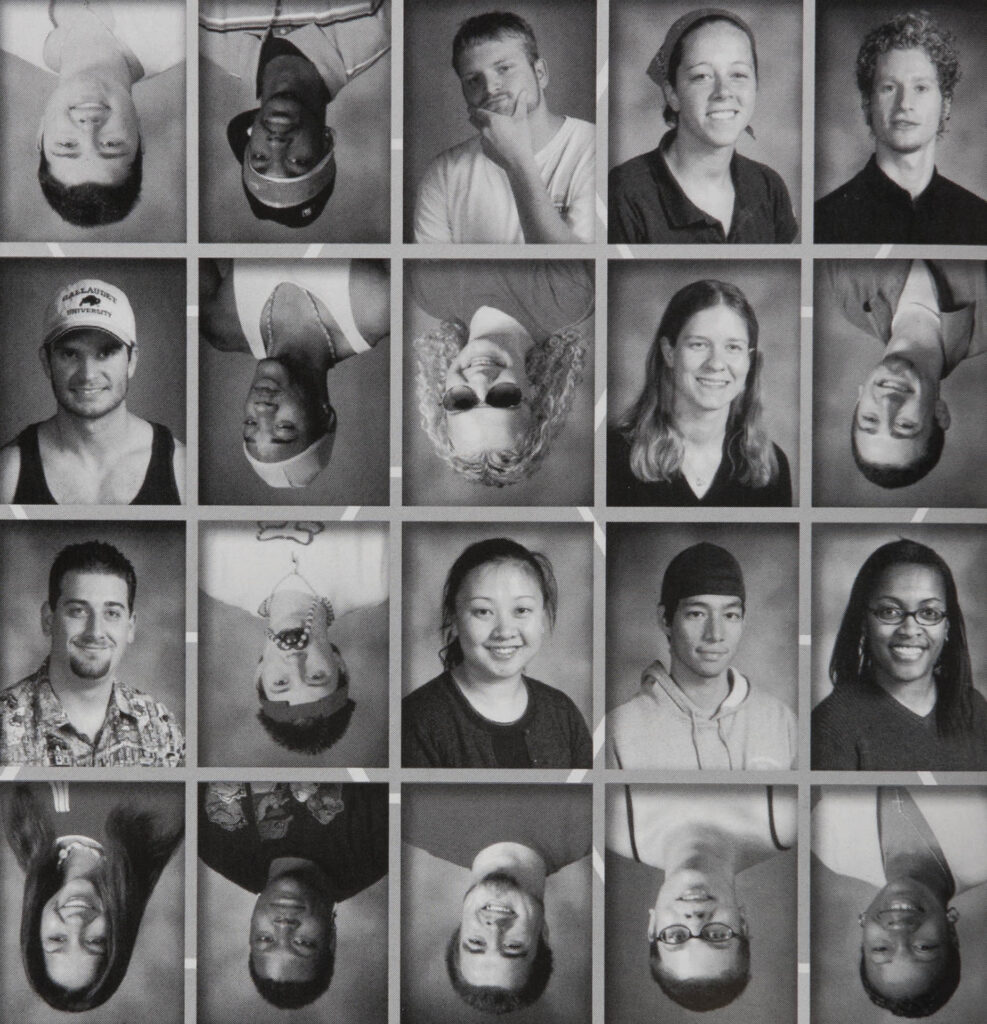
Mystery: What do you think this grid of photos from a Tower Clock tells you about the character of the student body, about the year in which these photos were taken, and about the kind of place Gallaudet seems to be at the time of these photos?
Shifting the mindset: an example
In some years, Tower Clock was not published. In other years (well, just the 2001 yearbook, as far as we know), the content was so objectionable the administration made the unusual decision to claw back as many copies as possible and destroy the rest. In still others, Tower Clock was rushed to publication without much in the way of proofreading; those names remain misspelled forever (apologies go out to the Jonathans of the world, as “Jonathaint” is a heck of a typo; and of course “Stremlau” has never had a “z” in it).
The overall character of each yearbook suggests additional information about the character of the writers, designers, and editors. Some years are impeccable; student headshots are perfectly styled, each person is in order, every name is spelled right, and layouts show military precision.
In other years, well…some decisions were made.
When noticing these differences, the questions begin to shift of their own accord, away from who and when and towards why and how. The sphere of inquiry expands, taking in other resources like The Buff and Blue and On the Green.
Researching Gallaudet’s history becomes a matter of triangulation: Tower Clock is the Pole Star, while the other two publications become the latitude and longitude placing specific events in the landscape of more than 160 years at Gallaudet. Sometimes the best they can do is a reasonable approximation.
Why it matters
Every year around Charter Day, we see similar questions and dark suspicions, mostly centering around Amos Kendall and what sort of man he was, and what that legacy means for Gallaudet.
There is also speculation about U.S. President Abraham Lincoln and his friendship with Laura Redden Searing. Searing was a Deaf graduate of the Missouri School for the Deaf who went on to become an acclaimed military poet and a war correspondent. Her friendship with Lincoln may have made the idea of an educated class of Deaf people more readily attainable in the President’s mind.
The questions keep coming, too: about the railroad that used to run down West Virginia Avenue; whether the Brent Vault really lies under Ballard North (and houses a vampire); when the institution traded land with the National Park Service to make room for the high school that would become KIPP DC; whether students have always complained about the food on campus; and so on.
Some are easier to answer than others. Who knows? You might find your own answer in the Archives one day!
Answer: Complaining about food? Regina Olson Hughes, 1918, the widely-recognized Deaf artist and botanical illustrator, wrote a short biography sometime in the 1970s. She remembered, “I had the best time in Gallaudet of any student before or since, and looking back often wonder how I crowded so much into four years. When I hear young fry howling about the food, the hours, the work, it envelops me in a great weariness.”
Hughes graduated in 1918. The more things change, the more they stay the same.
Ready to explore more Gallaudet history? The Gallaudet Archives has digital collections you can browse online! If you have research questions, email Click to reveal email. For access to more materials, email Click to reveal email.