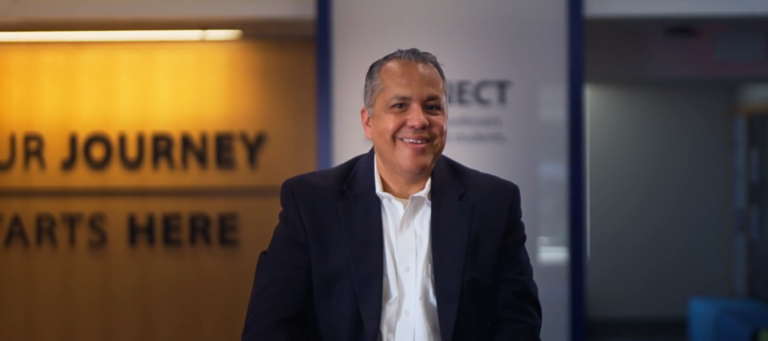
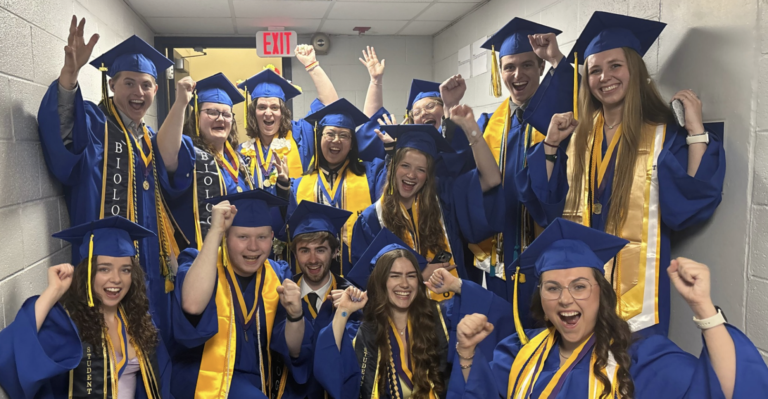
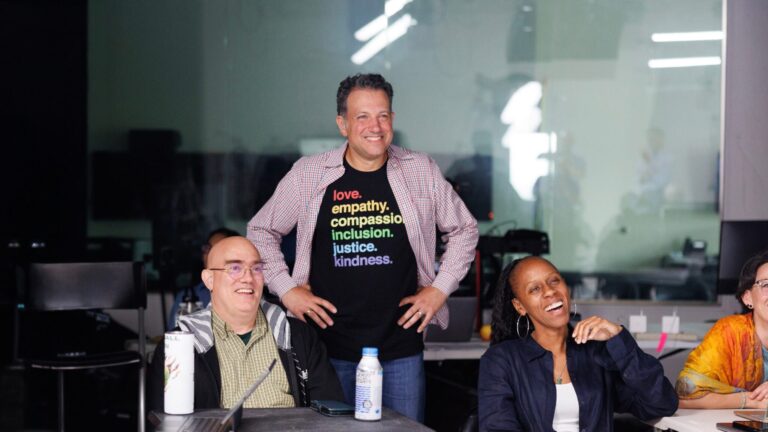
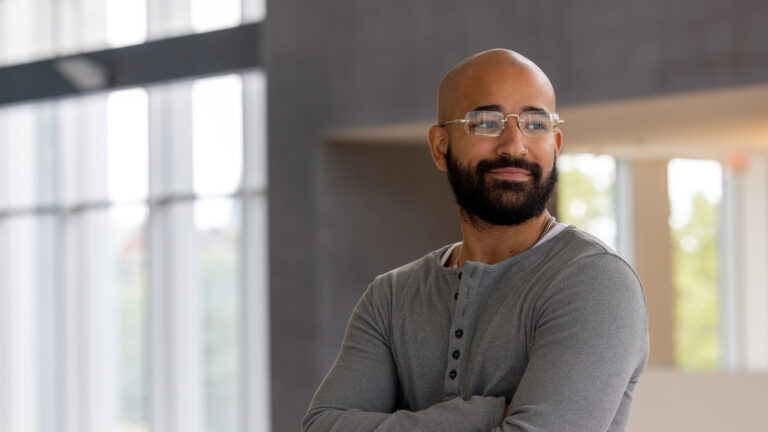
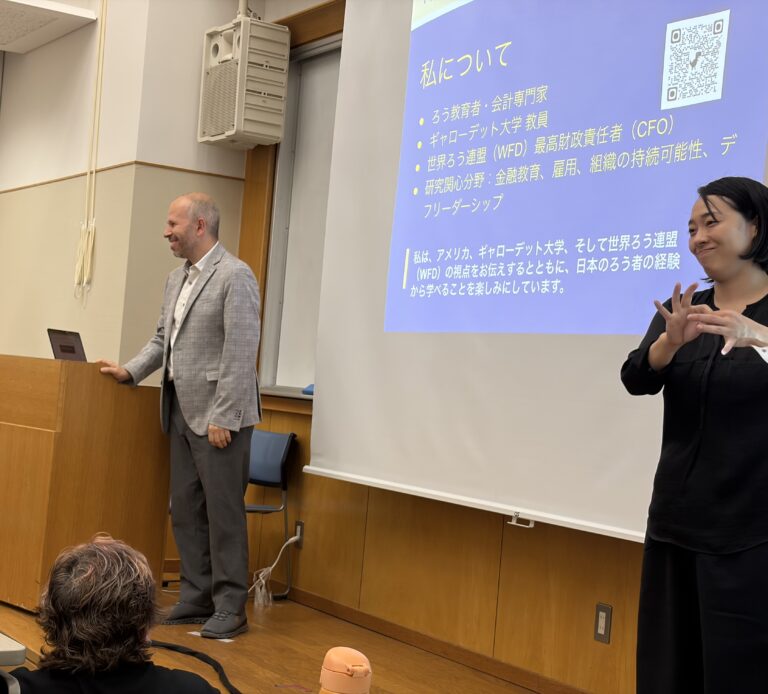


Faculty and students from the Accessible Human-Centered Computing and Policy (AHCP) program have spent the past two months bouncing around the globe, presenting cutting-edge research on a huge range of topics as well as promoting Gallaudet’s National Science Foundation-funded Universal AI Graduate Research Traineeship Program. We caught up with them to find out the highlights of their trips across three continents and a dizzying number of time zones. (In the photo at the top, they are in Barcelona!)
Anaheim, California
CSUN Assistive Technology Conference, March 9–13
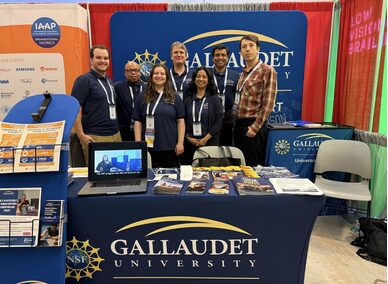
One of the most prominent international conferences on assistive technology and disability inclusion was a natural place to share information about the Universal AI training program, which is supported by a $4.77 million NSF award, one of the largest training grants in the university’s history. Principal Investigator Dr. Raja Kushalnagar, and Co-Principal Investigator Dr. Christian Vogler, who lead the program, as well as Dr. Abraham Glasser, project coordinator for Universal AI Charmaine Mendonsa; Paige DeVries, ’22 & G-’24; Joe Merino; and Jason Durek engaged attendees at a Gallaudet exhibit booth.
In addition, Kushalnagar and Merino presented on how a multi-camera approach to ASL recognition can capture signs from multiple angles simultaneously, reducing occlusion and improving accuracy. DeVries and Vogler attracted a crowd to “Sign Language Interaction with Alexa: The Impact of Sticky Hands,” which looked at the possibility of using sign language with Amazon Alexa while cooking in the kitchen.
Daegu, Korea
IEEE VR Conference, March 21-25
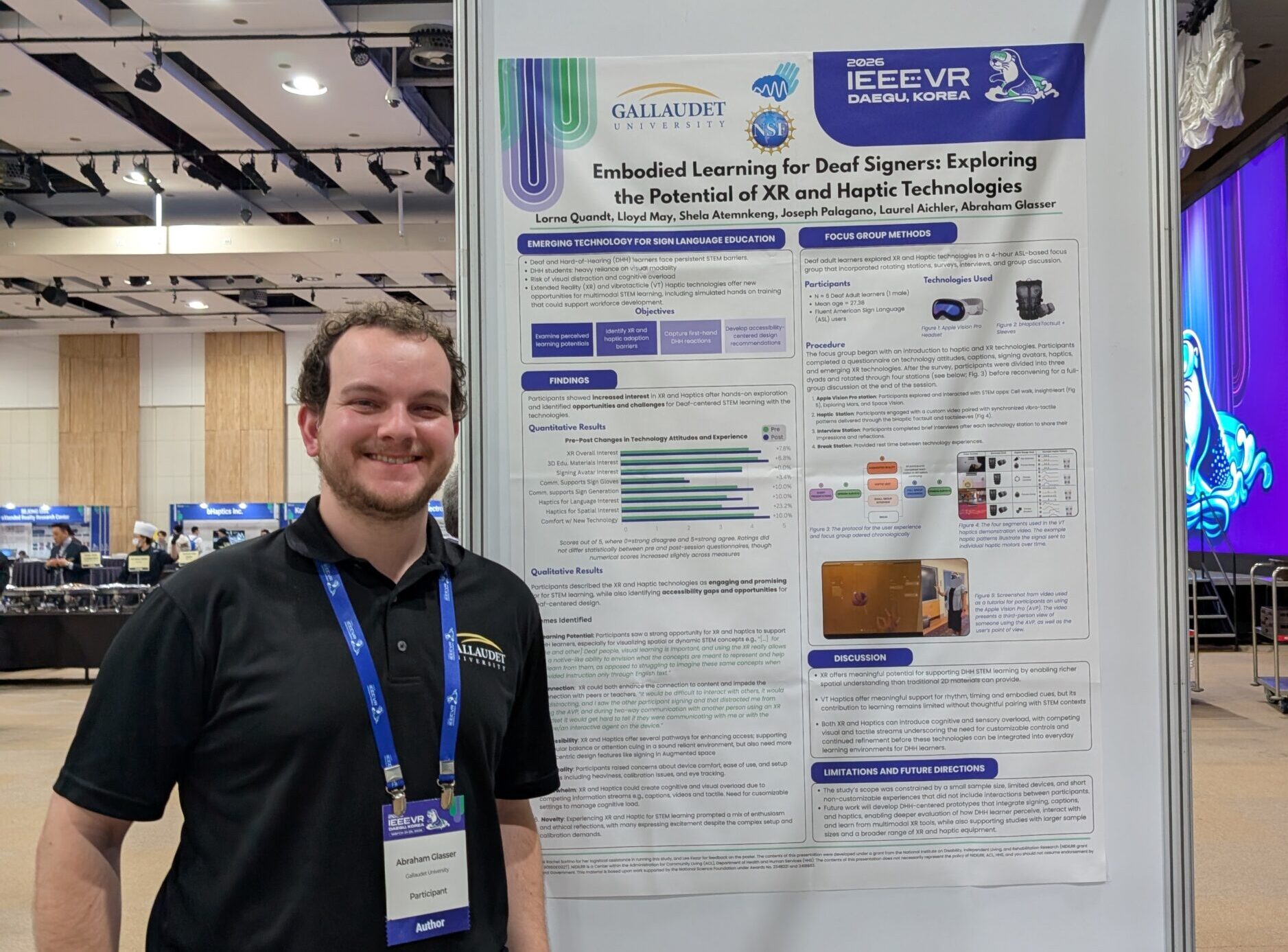
Glasser presented research in collaboration with Dr. Lorna Quandt’s Action & Brain Lab on “Embodied Learning for Deaf Signers: Exploring the Potential of XR and Haptic Technologies.” Participants in a focus group used augmented reality goggles to test out learning applications that allowed them to move around planets in our solar system and dive into a human body. The research is focused on determining which methods of delivering information are most accessible to Deaf signers without being overwhelming.
Golden, Colorado
National Science Foundation’s NRT Annual Meeting, March 23-24
Kushalnagar, Mendonsa, NRT trainee Merino, and data analyst Jonah Winninghoff — along with partners from Rochester Institute of Technology — represented the Universal AI Graduate Research Traineeship Program at this NSF event at the Colorado School of Mines. The gathering of the NSF Research Traineeship community from across the country offered the opportunity to learn from other projects, compare notes on trainee recruitment and curriculum design, and position Gallaudet’s work within the broader STEM graduate education landscape.
Barcelona, Spain
ACM CHI Conference on Human Factors in Computing Systems 2026, April 13-17
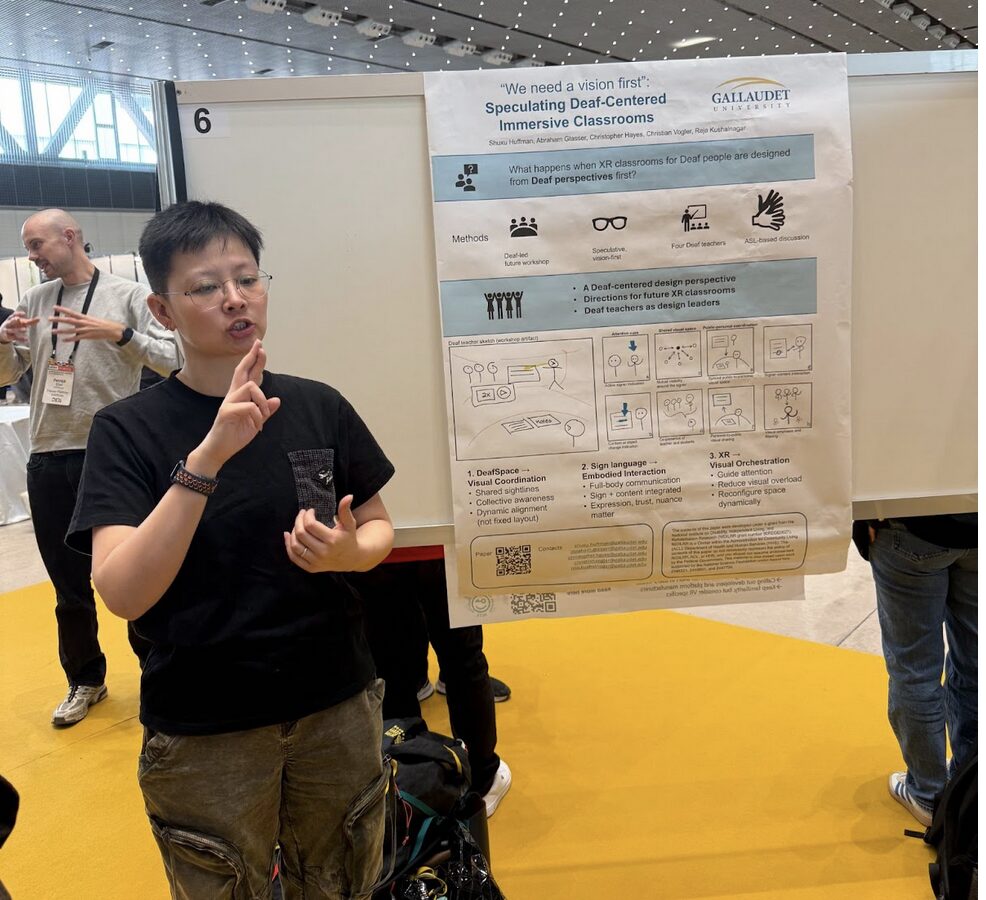
At the world’s premier international gathering for human-computer interaction research, PhD student Shuxu Huffman, ’16, received an Honorable Mention — an award given to only the top 5% of submissions — for the paper, “Reclaiming VR Design Authority: Deaf Signers Shaping Immersive Classrooms.” Kushalnagar served as Principal Investigator and advisor on the project, which examined how virtual reality learning environments need to move beyond retrofitted accessibility and toward experiences built from deaf perspectives from the ground up. Huffman also presented a poster titled, “‘We need a vision first’: Speculating Deaf-Centered Immersive Classrooms.”
Tackling another critical topic was PhD student Michaela Okosi, who presented, “Deaf and Hard of Hearing Access to Intelligent Personal Assistants: Comparison of Voice-Based Options with an LLM-Powered Touch Interface,” with Vogler as Principal Investigator and Glasser as advisor. The work asks what happens to users who are locked out of voice-first interaction.
The entire Gallaudet team co-organized two workshops that drew together researchers working at the intersection of accessibility, AI, and deaf-centered design. “Sign-Up on Deaf Technologies: Reframing Access, Interaction, and Design,” pushed participants to move past framings of accessibility as an accommodation tacked onto mainstream technologies. “Speech AI for All: The What, How, and Who of Measurement,” dove into how speech AI systems are evaluated.
All of these contributions reflect a sustained research agenda that positions deaf and hard of hearing communities not as recipients of accessibility features but as leaders in shaping the technologies that affect their lives.
Boston, Massachusetts
SLxAI Summit, April 16-17
Glasser and several other colleagues from Gallaudet were part of this inaugural event at Boston University bringing together researchers, industry, Deaf-led organizations, and community partners to discuss the future of sign language and artificial intelligence. He presented about potential risk factors that must be managed in communication technologies and the ethical questions that swirl around sign language AI.
Learn more about studying technology through the Accessible Human-Centered Computing and Policy (AHCP) program.