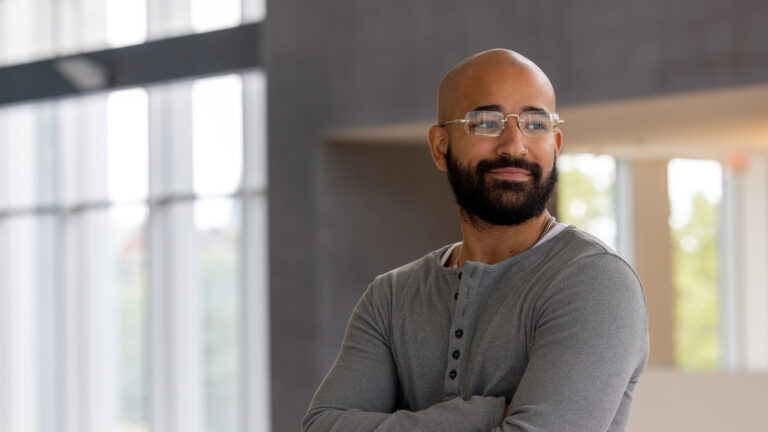


“Often what we read, see on TV, or online about a place is not the reality–you have to go and interact with people there to truly know it,” says Dr. Carolina Ferreira Pêgo, a visiting scholar to Gallaudet’s Deaf Studies Incubator.
She knows this from her exchange program in 2011. She and five other Brazilian students swapped places with Gallaudet students who went to the Universidade Federal de Santa Catarina (UFSC) in Florianópolis, Brazil. “When I studied here, I learned about the diversity among Deaf people and about different cultures and people. I also felt pride to be Brazilian,” she says.
Pêgo is now a professor and program coordinator of the Letras-Libras faculty at UFSC, one of the largest higher education programs for Deaf and DeafBlind students in Latin America. She has been busy sharing her expertise with students, staff, and faculty in several ways since she arrived here during Spring Break.
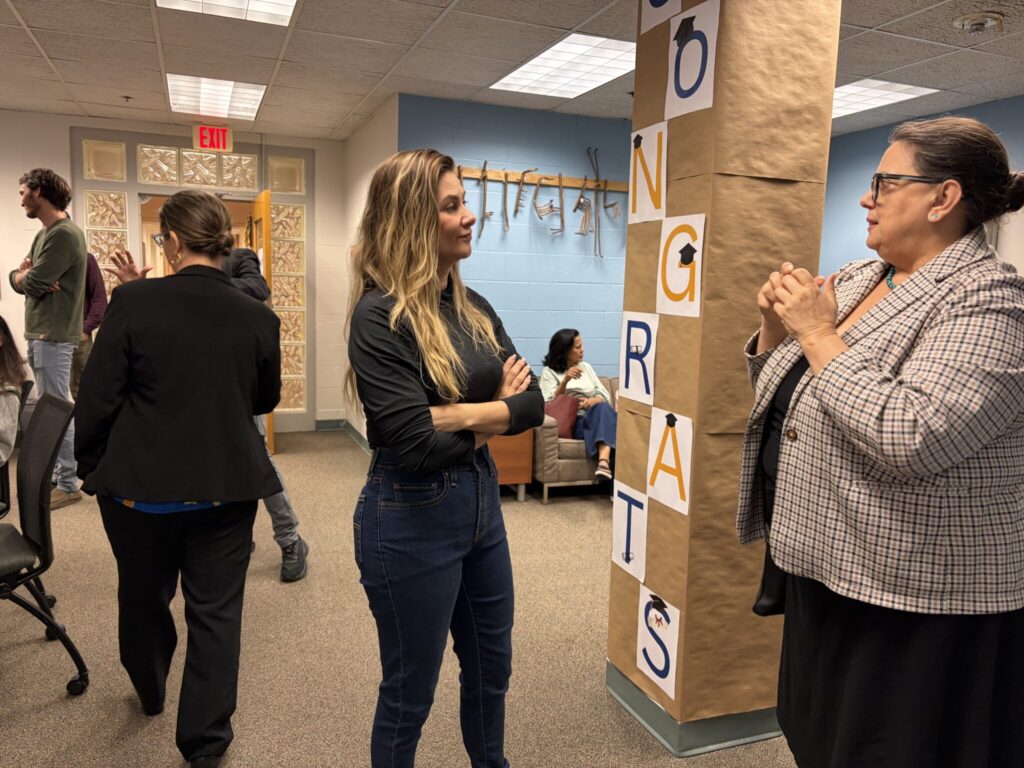
Pêgo was a featured presenter at the International Student and Scholar gathering in March and taught a session in DST 595, Deaf Policy Lab: Grassroots Activism. She also gave a talk earlier this month about her research on mouth articulations in Brazilian Sign Language, or Libras. Her research focuses on interpreter education, Deaf and DeafBlind teacher education, and sign language proficiency frameworks in Libras. She also works with the Brazilian federal government on Deaf and DeafBlind education policy.
When School of Arts and Humanities School Director, Dr. Teresa Blankmeyer Burke recently visited UFSC on a Fulbright award, the two professors met at a yoga class conducted in Libras. This led to an invitation to the Florianópolis Deaf Club to see a deaf poetry slam organized by Pégo and her UFSC colleague, Dr. Andre Ribeiro Reichert. (Reichert also briefly visited Gallaudet this spring through the Deaf Studies Incubator).
“Dr. Pêgo is a fierce advocate for Deaf causes and a brilliant scholar. We spent many hours in wide-ranging discussions covering a host of Deaf Studies topics, including developing the seeds of a possible COIL class for Gallaudet and UFSC students,” says Blankmeyer Burke.
Broadening Deaf experience through language
Along with several other GU community members, Blankmeyer Burke took Pégo’s drop-in conversational Libras class, in which Pêgo immersed students in Brazilian culture and Libras twice a week. Sophia Williams, one of this year’s Deaf Studies Incubator Fellows, also attended some Libras classes, saying, “Carol is remarkably generous with her time and shares amazing stories that connect back to her lessons. She even invited people from her network in Brazil to join our class sessions remotely.”
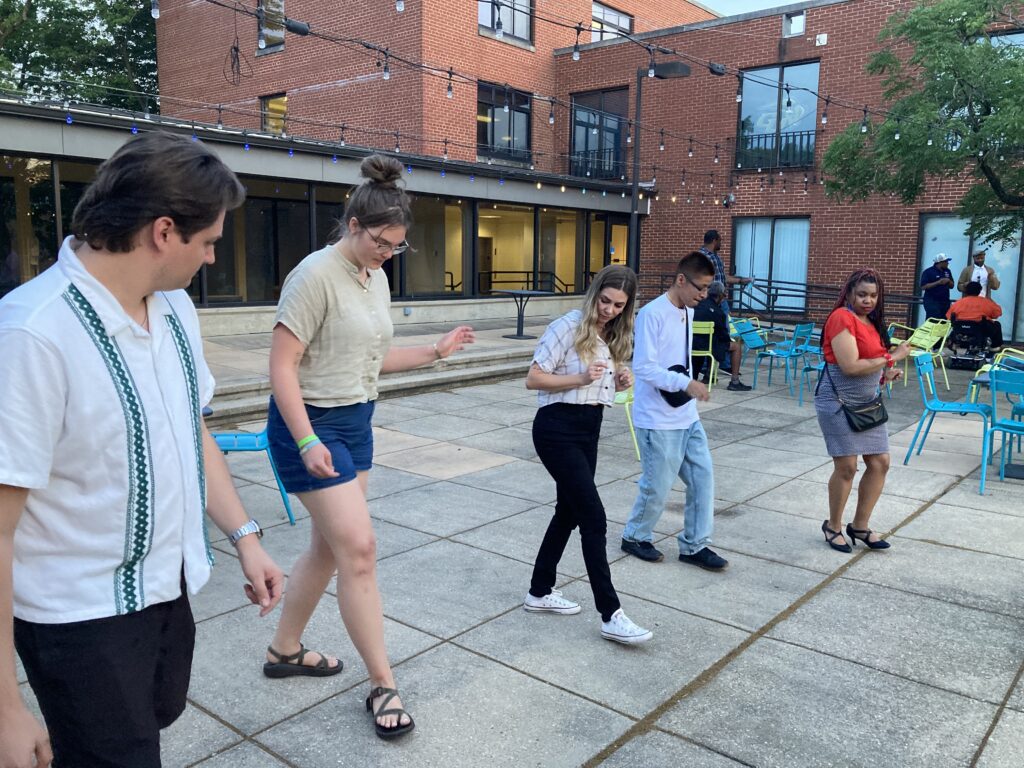
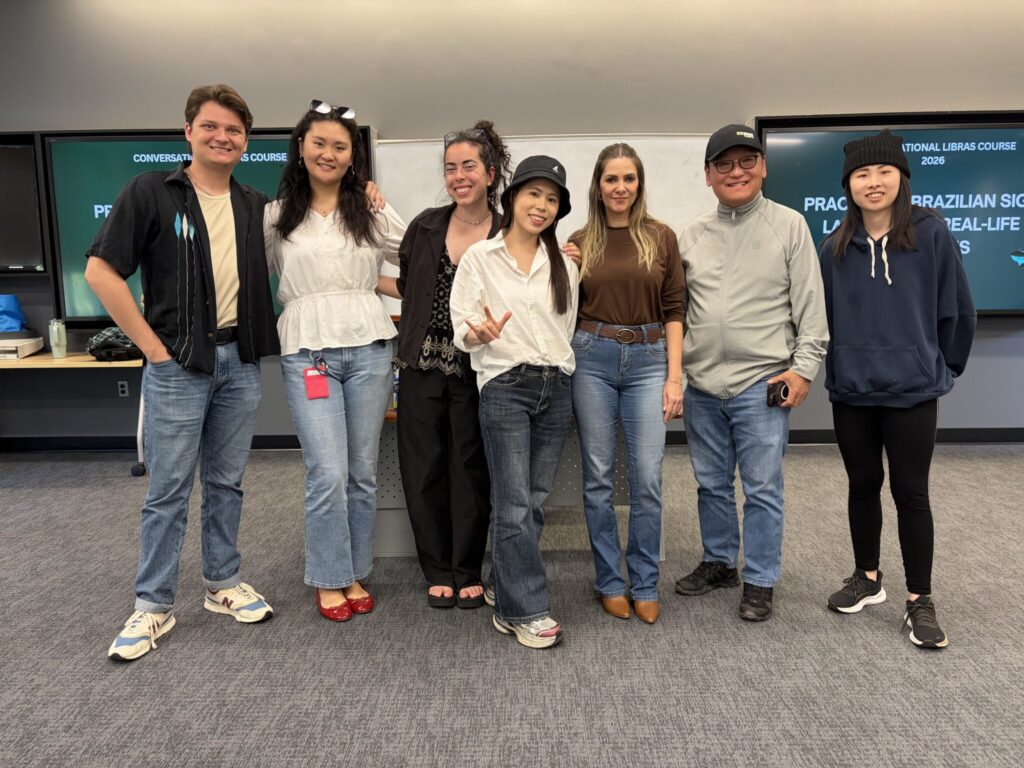
Williams says learning signed languages from other countries is especially important to counteract assumptions that ASL is the default language of Deaf experience, and welcomes more opportunities like this at Gallaudet.
“When we learn a new sign language, we are gaining a new way to inhabit space and a new lens for human connection. We need these courses and opportunities to ensure we are producing global citizens who respect the sovereignty and diversity of signing worlds and deaf communities,” she says.
Crafting new understandings together
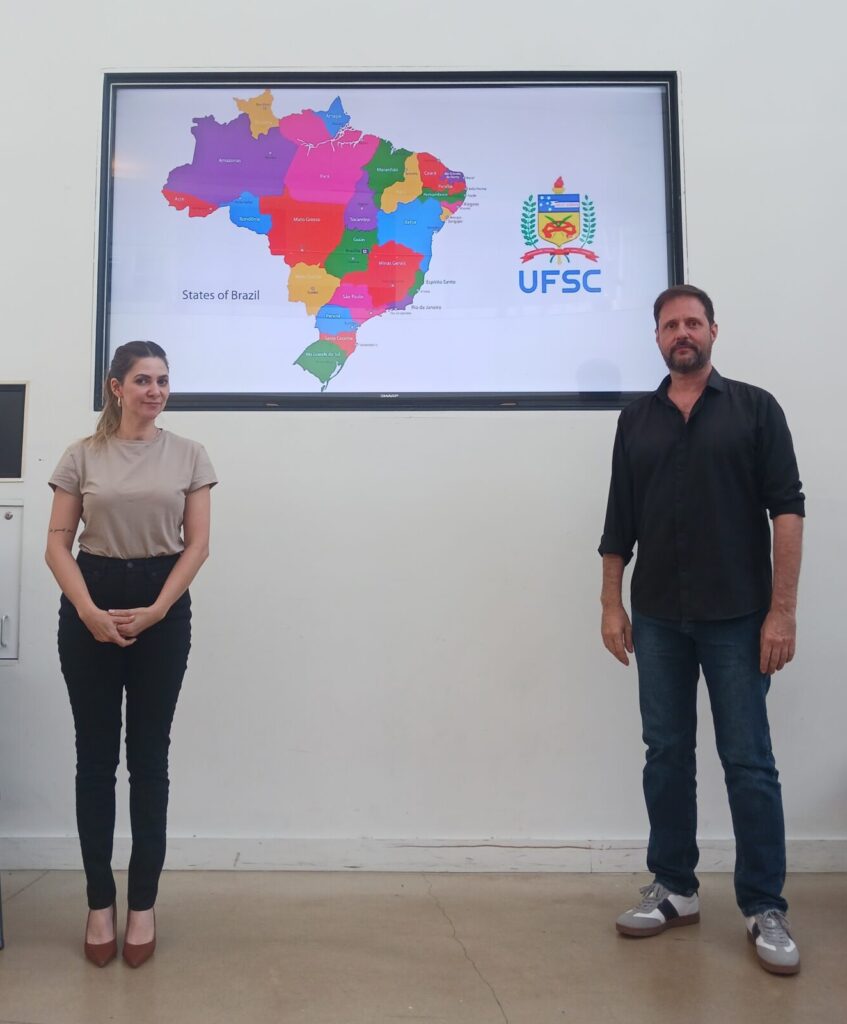
Pêgo appreciates that opportunities for international exchange, language learning, and dialogue can help address misperceptions. For example, she says many Americans are unaware of Brazil’s vibrant Deaf academic community. “There are already 158 Deaf people with Ph.D degrees and over 350 people with Master’s degrees,” she says. Deaf students across South America increasingly come to Brazil for their graduate studies. Along with an emphasis on education, Pêgo says there is a strong sense of giving back to the community. “Many Deaf Brazilians who go to college and gain knowledge will often return to contribute to their community, with the goal to raise everyone up,” she explains.
She also wants to raise awareness about the significant presence of Deaf indigenous populations in Brazil, many of which have their own sign languages. “Those indigenous communities do not allow Libras to colonize their native languages–they learn and use Libras as a second language,” says Pêgo. She also describes a shift to Deaf-led indigenous researchers leading the way, and reclaiming their primacy over hearing researchers interested in Brazilian indigenous signed languages. “Language and resistance politics are just part of our culture,” says Pêgo. “One thing to know about the Brazilian Deaf personality is that we are not complacent. We roll up our sleeves and are persistent and determined!”
If Pêgo’s Brazilian pride is evident, even more so is the value she places on the potential for Deaf communities working across international boundaries to affect change. “The global Deaf community is a goldmine. Because of the nature of our languages, we can connect with more ease than hearing people to build strong communities, find commonalities, and work together,” she says.
Expertly facilitating exchanges with a new generation, Pêgo’s return to Gallaudet has no doubt planted seeds of exploration and exchange in the minds of those she has come across this spring.
Ready for a change? Gallaudet’s International Visiting Scholar program and Deaf Studies Incubator light up new ideas and pathways. Find ways to study abroad through our World Languages and Cultures program and Education Abroad.