





Wildfires, bears, and rabid signers? Just another walk in the park for Liz Jarashow, ’14.
Jarashow is the first deaf person known to have completed the Triple Crown of Hiking. The title belongs to hikers who finish the most famous long-distance treks in the United States: the Pacific Crest Trail, the Continental Divide Trail, and the Appalachian Trail.
The monumental achievement is another milestone in deaf history. Jarashow hopes it will inspire more deaf and hard of hearing people to explore the outdoors.
“Hiking teaches resilience,” says Jarashow. “If you feel oppressed or overstimulated, hiking can help you connect with yourself, find your strength, and heal. You don’t have to do long hikes like I did. One weekend in nature is great.”
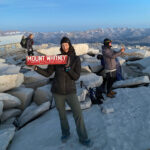
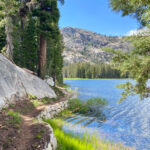
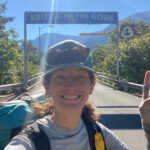
Pacific Crest Trail
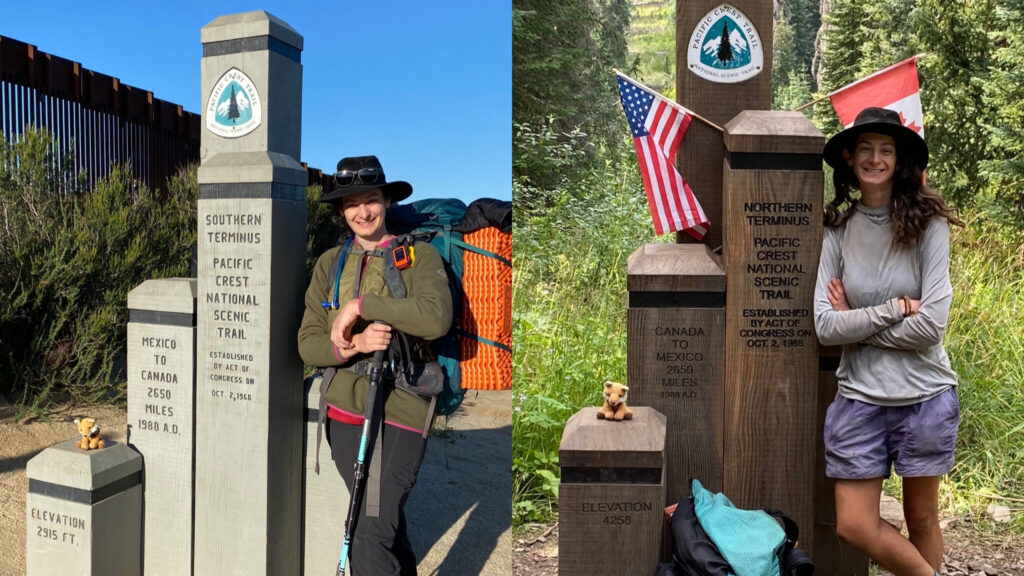
Jarashow took her first steps toward history during the COVID-19 pandemic in 2020. Frustrated with being stuck inside, she began to spend more time outdoors. As her ambition grew, she felt drawn to the legendary Pacific Crest Trail (PCT).
The PCT stretches 2,650 miles through the western United States. In California, the journey begins with a colorful desert that ascends into the steep, snowy Sierras. Temperatures warm as the trail stretches north. Oregon flattens out, while rocky and wet Washington State mountains lead to the finish.
Jarashow began her PCT hike in 2022. As she approached Oregon, she felt elated. There had been no trail closures on her way through California. It was a beautiful day, and she looked forward to seeing the mountains of the Pacific Northwest appear on the horizon.
After descending Mount Shasta, Jarashow checked her phone and found a text message from Guthrie Nutter, G-’15. Nutter himself had become the second recorded deaf person to hike the PCT in 2012, and advised Jarashow during her journey. In the text, Nutter warned her about wildfires up ahead in Oregon.
Nutter remembers, “In July of 2022, a big fire erupted off the Klamath River. I knew she was near the California/Oregon border. Being at the top of a giant drainage, she was at greater risk should the wind shift in her direction.”
Jarashow looked up and saw black smoke on the horizon. The smoke was over 13 miles away, so she figured it was safe to keep moving. Eventually, she stopped and pitched her tent at a campground with other hikers.
She never got to sleep. As the night wore on, the temperature kept rising, and a faint smell of smoke appeared. At midnight, Jarashow saw flickers of flashlights and headlamps bouncing outside of her tent. She realized that the campers around her were awake and moving. She stepped outside and saw panicked hikers scrambling to pack their equipment.
Jarashow turned her phone on and found a flurry of messages from Nutter, urging her to move. The wildfire was heading south rapidly. She used her phone to type back and forth with the other hikers for information. The group moved six miles away to the closest freeway. When the sun rose into the smoky sky that morning, it was an ominous blood red.
The trail into Oregon was closed. Hikers and campers jammed into a nearby hotel as they considered their next steps. While it was stressful, Jarashow counts herself one of the lucky ones. Some hikers on the trail had to be evacuated by search and rescue teams.
Accessible communication can be a literal lifesaver for deaf and hard of hearing people. Modern technology has made it easier than ever before to stay connected. Any time that Jarashow wasn’t using her phone on the trails, she turned on airplane mode to conserve the battery. Thanks to her diligence, she had the power she needed to communicate with fellow hikers, text with friends and family, and check her navigation app. She also carried a satellite communicator for emergencies.
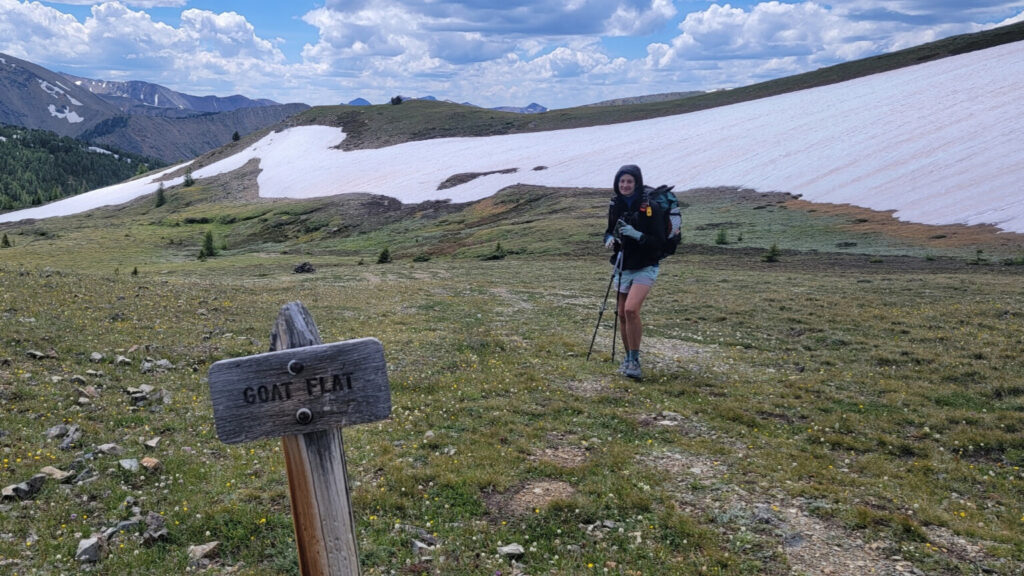
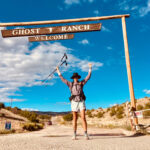

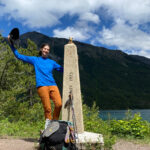
Continental Divide Trail
After finishing the PCT, Jarashow was hungry for more. Her next stop in 2023 was the Continental Divide Trail (CDT). The full trail is 3,028 miles of every kind of terrain in the United States. It begins in the deserts of New Mexico, then winds through forests and snowy mountains in Colorado, Wyoming, Idaho, and Montana.
It’s also home to a zoo’s worth of wildlife. Hikers on the CDT often catch glimpses of deer, coyotes, mountain lions, moose, and more as they’re traversing the trail. Some glimpses are an unwelcome sight.
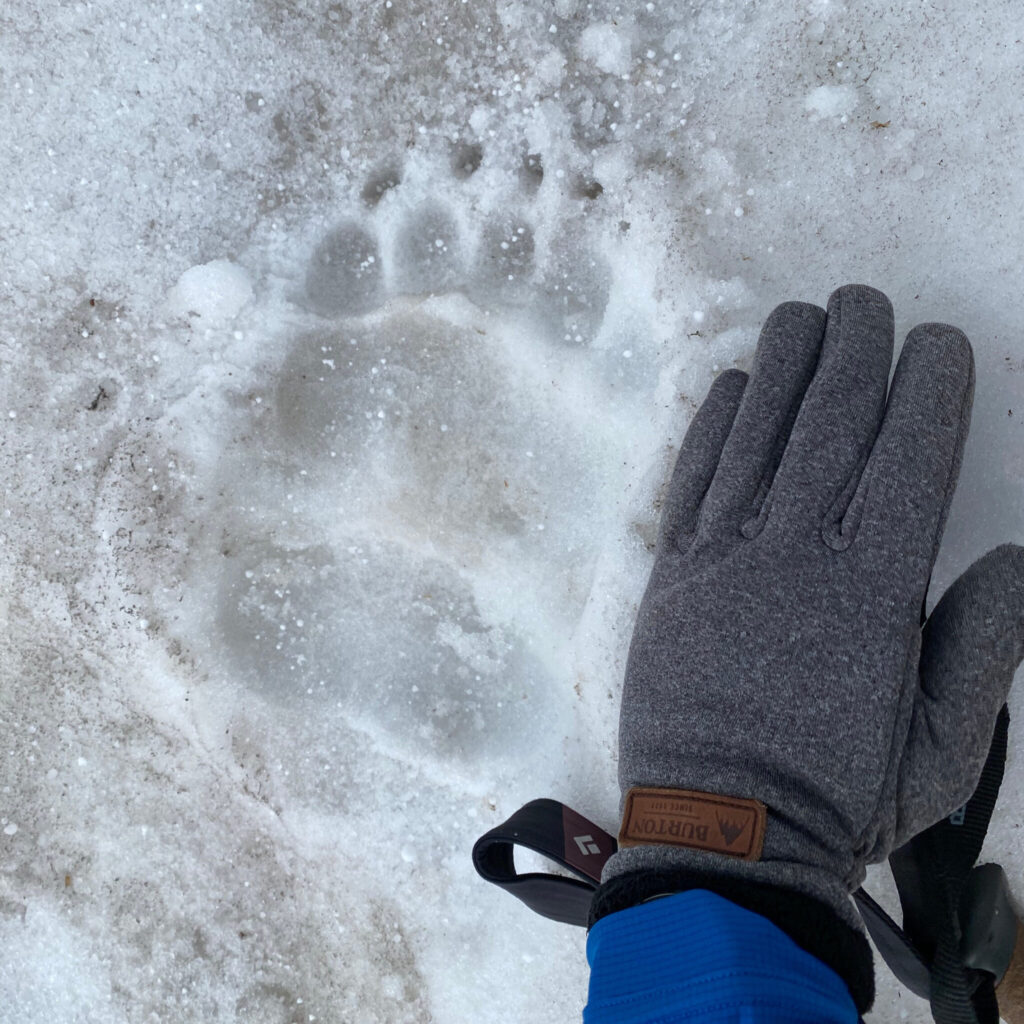
One day, Jarashow was near the end of her CDT trek in Montana. She had been traveling with two other hikers through rainy mountains. Her companions were taking their time to move, so Jarashow decided to press on alone. Five miles later, she walked up the trail and saw two large grizzly bears ahead. She froze.
“Luckily, I knew what to do if I ran into a bear,” Jarashow says. “I made sure to study and memorize the exact steps.”
Jarashow reached for her bear spray and slowly crept backwards until she was out of sight, then hiked briskly back to the other hikers. They traveled together back through the area where Jarashow had seen the bears. Fresh paw prints glistened in the ground.
“Carry bear spray and do your homework,” Jarashow says. “Before you enter a trail, ask the rangers or other hikers what they’ve seen.”

Appalachian Trail
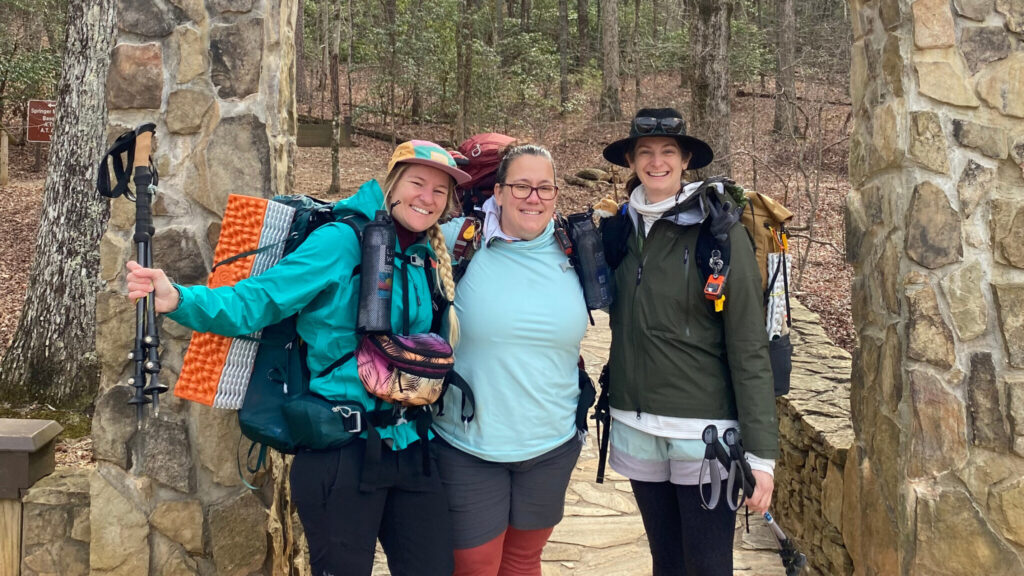
The Appalachian Trail (AT) in the eastern US was the most social leg of Jarashow’s three adventures. She started the AT journey with two friends, Tenaya Herbold, ’12 and Kathleen Roberts, ’09 & G-’21. Unfortunately, they were both forced to drop out by the halfway point due to injuries.
The eclectic nature of AT hikers helped make up for it. Jarashow calls the AT “the backyard of the United States.” Unlike the PCT and CDT, a large part of the AT is near easily accessible towns. Jarashow shared the trail with more casual hikers and families than ever before.
The AT passes through 14 different states for 2,200 miles. As she made her way north, she learned just how diverse the United States really is. “Each state had its own character,” Jarashow says.
Jarashow hiked thousands of miles during her journey and encountered all sorts of people. The hiking community is known for being friendly, and it was easy to find a companion for portions of her journey. Still, she struggled at times as a deaf hiker. Some fellow hikers stopped to talk, then kept walking after seeing that she was deaf.
Luckily, the amount of hikers on the AT also meant more deaf and signing people on the trail. Jarashow met more signers on the AT than the PCT and CDT combined. One was especially memorable.
“It was pouring rain and I was walking with my umbrella,” Jarashow says. “All of a sudden, I saw somebody walking up the trail with no rain protection, acting like they didn’t have a care in the world. They stopped to ask me something, and I signed that I was deaf. They started signing back! I was shocked. I asked them if they wanted to stand under my umbrella, but they declined with a smile and went on their way.”
The outdoors is for everybody
Jarashow has enjoyed physical activity her whole life. At Gallaudet, she majored in Physical Education and Recreation. Even so, her accomplishments as a hiker are a surprise to her and her family.
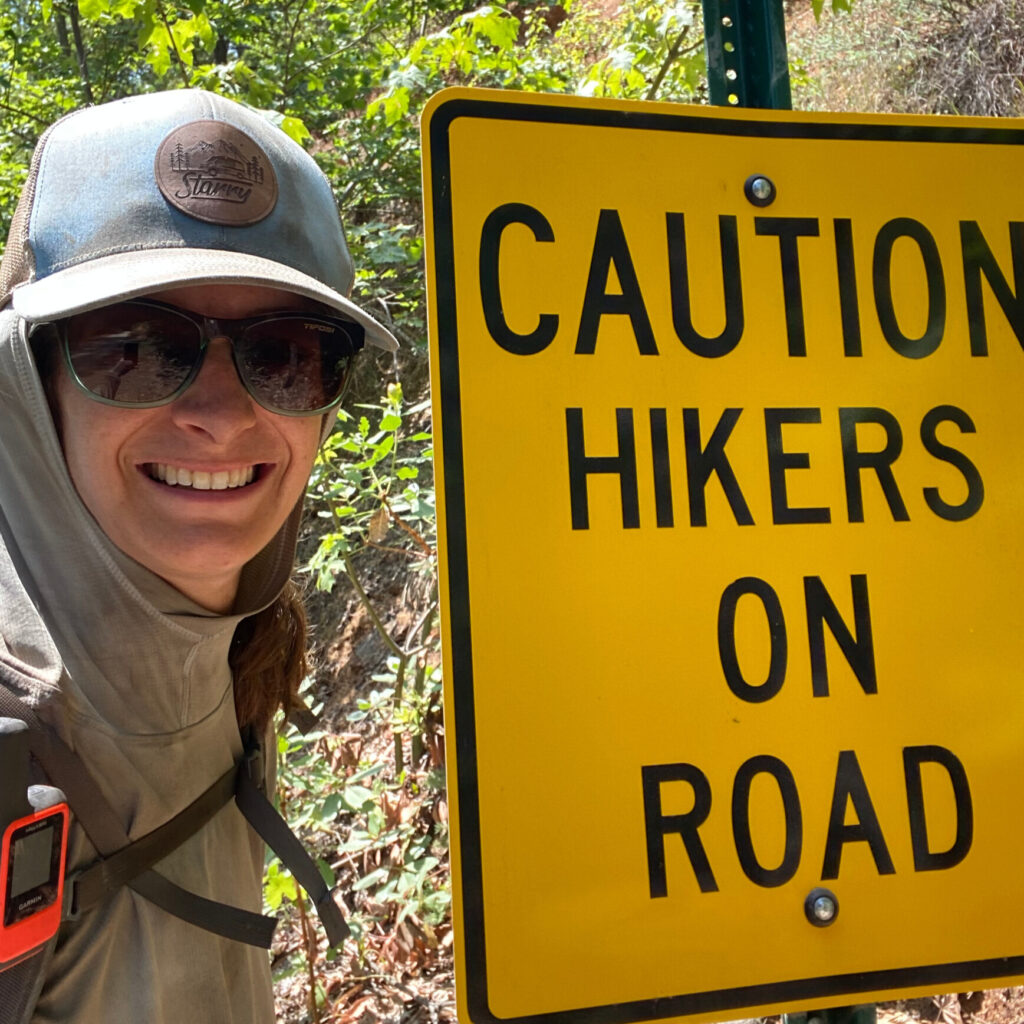
“I did a week-long hike as a kid,” Jarashow says. “Hated it.”
What started as a way to get outside has become an inspiration to other deaf, deafblind, and hard of hearing people. Jarashow has been approached by community members who credit her with inspiring their own hiking journeys.
“Completing the Triple Crown is an incredible feat, point blank,” Nutter says. “Deaf or not. For Liz, the significance is less the physical feat (which is incredible in its own right) and more about beating society’s perception of what a Deaf woman can do. In some ways, that’s harder than the actual hike.”
Enjoying the outdoors is a proven way to reduce stress and anxiety. When she started hiking during the COVID-19 pandemic, Jarashow wasn’t just getting outside. She was healing from the inside out. “Hiking helped me slow down, connect with myself, and realize what I really wanted,” she says.
The benefits of time in nature can be especially powerful for deaf and hard of hearing people. “As deaf people, we face barriers everyday,” Jarashow says. “In nature, you can let go of that. When you go back to the city, you feel more confident advocating for yourself”.
Jarashow’s friends tell her that she’s changed.
“They say I’m more wise than before,” Jarashow says with a smile. “I remember almost everything from my hikes because the days were so slow. When you live in the city, life is so fast-paced that it’s hard to remember what you do every day. Hiking taught me to experience every moment.”
Gallaudet offers a bachelor’s degree track in Physical Education and Recreation, as well as minor tracks in Sport Management and Athletic Coaching. Visit the program webpage to learn more.