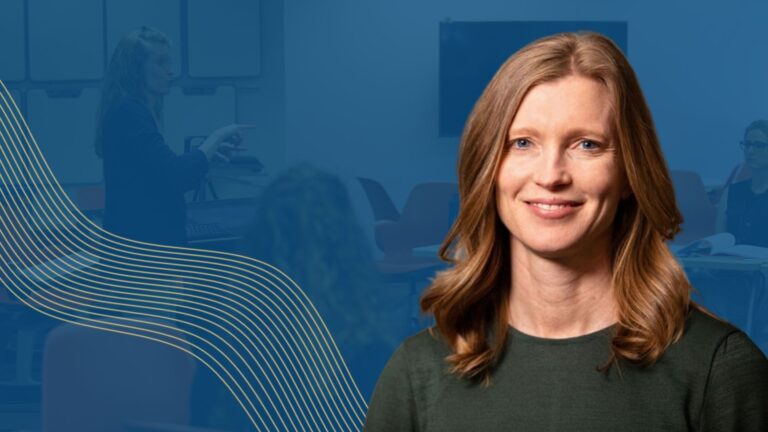
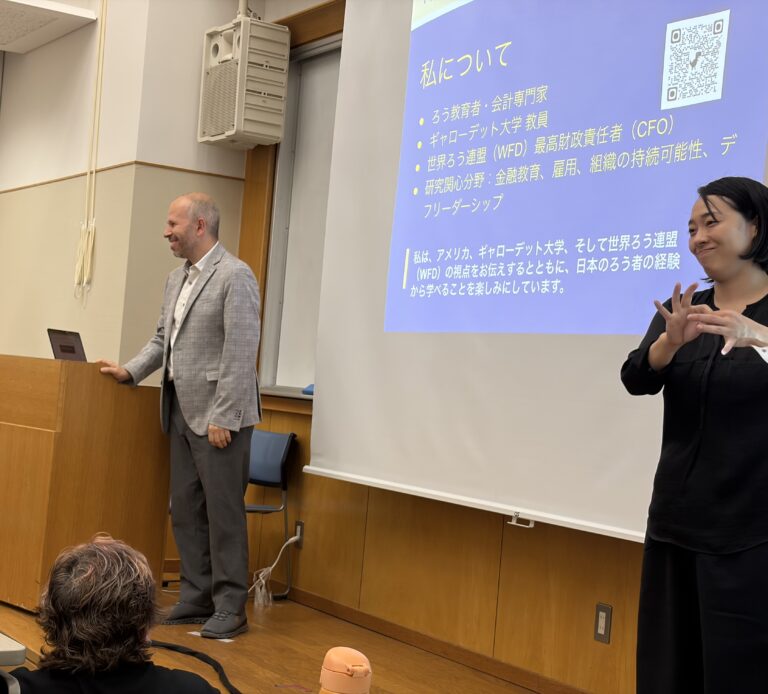


When Deaf and hard of hearing children experience trauma, their families have a place to turn for help: Gallaudet’s Deaf and Hard of Hearing Child Resilience Center (DHHCRC). A recent two-day visit by a team from the UCLA-Duke University National Center for Child Traumatic Stress (NCCTS) gave the DHHCRC a chance to share the significant impact it is making nationwide.
Psychology Professor and Center Director, Dr. Lori Day, G-’08 & PhD ’10, established the DHHCRC in 2021 with a five-year, $2.9 million grant from the Substance Abuse and Mental Health Services Administration (SAMHSA). SAMHSA funds the broader National Child Traumatic Stress Network (NCTSN), an umbrella initiative of nearly 200 sites, including the DHHCRC, and the NCCTS, which serves as the coordinating center of the entire network.
Eroding obstacles to mental health care
Thanks to the DHHCRC, trauma services are more accessible today than they were five years ago, said Tracy Henderson-Bethel, NCCTS Liaison of the Site Integration and Collaboration Program. The Center does this in several ways:
Tool translation, cultural validation, and resource development
During this funding cycle, the Center translated two standardized psychological assessment tools — the Child Behavior Checklist and the UCLA PTSD Reaction Index — into American Sign Language (ASL) to support more accurate screening for deaf and hard of hearing children.
It has also increased the availability of specialized treatment for deaf and hard of hearing children and young people. Day’s clinician-led teams have been adapting and developing resources for three types of psychological interventions: Parent-Child Interaction Therapy, Trauma-Focused Cognitive Behavior Therapy, and Sensory Motor Arousal Regulation Treatment. The Center has also trained almost 100 clinicians who work with deaf youth in these interventions.
Understanding the role language deprivation plays in mental health is another important part of the Center’s work. Collaborating with Dr. Wyatte Hall, G-’12 & PhD ’14 at the University of Rochester, the Center has been developing ASL translations of his Deaf Childhood Experiences Scale. “He designed this measure, currently for adults, to share information about their childhood experiences related to language and belonging. The goal for this measure is to provide data to better understand unique deaf life experiences with the long-term goals of better understanding education, health, and quality of life outcomes among deaf populations,” explains Day.
Professional development in ASL, no interpreter required
The DHHCRC offers multiple free trainings each year for hundreds of professionals, families, and community members. These include workshops for practitioners directly in ASL. One trainee’s comment captures this impact: “It really meant a lot to me to have this training in ASL without interpreters. For the first time in years, I completed a week [of] training — not exhausted.”
The DHHCRC also partnered with the NCTSN to translate the NCTSN’s 12 Core Concepts for Understanding Childhood Traumatic Stress into ASL, adding unique considerations for deaf youth, such as the complications that can arise related to access to communication about the traumatic event. “We also developed ASL training vignettes so that this curriculum is better adapted to train Deaf professionals,” says Day.
Disseminating trauma-informed education and support
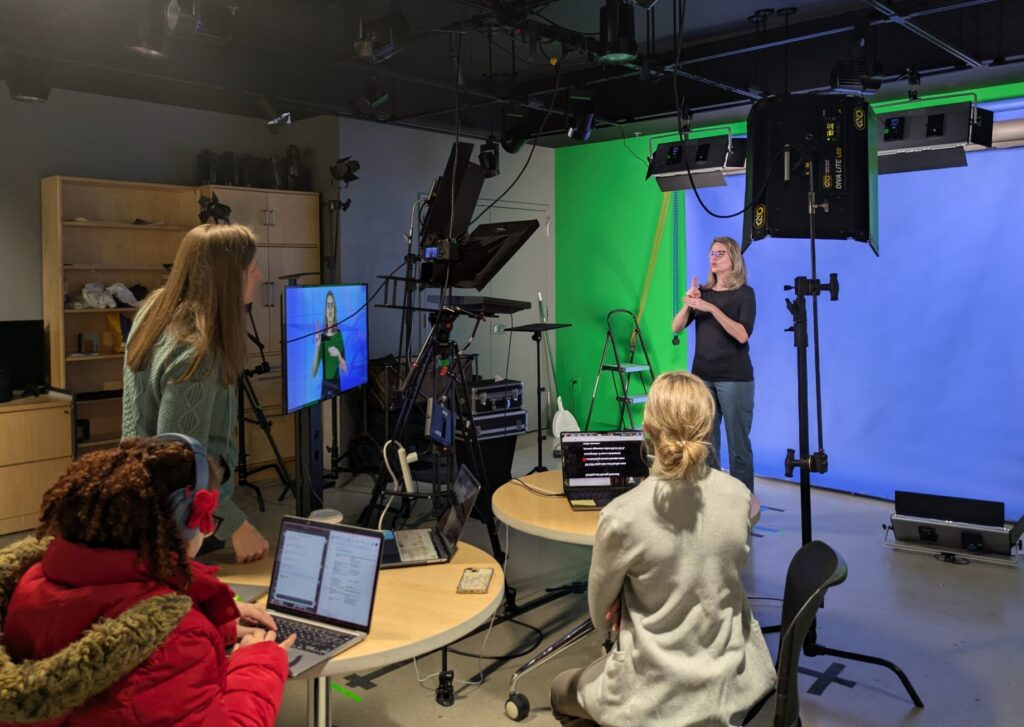
Clearly filling yet another gap, in FY 2025 alone, over 25,000 individuals accessed the Center’s mental health resources and social media campaigns in ASL. The Center creates and disseminates trauma-informed information to support healing and education about numerous mental health topics, including mass violence, shootings, and human trafficking in ASL. Some of these videos were quickly released for use in response to shootings in Uvalde, Texas, and Lewiston, Maine. “You all had both the infrastructure and the knowledge to actually reach the communities that most needed those messages when they needed them,” said Henderson-Bethel.
Multiplying impact
The DHHCRC’s impacts go beyond its grant deliverables. It advances accessibility at systemic levels, fosters cross-campus collaborations, and actively builds a pipeline of future mental health professionals.
The NCTSN strengthened its commitment to accessibility as an unintended — but welcome — consequence of funding the DHHCRC and integrating it into its fold. Henderson-Bethel described this shift from a focus on translation work to language justice, and more fully considering culture and language. They credit Day and her team for helping spark that change on a systemic level through ongoing discussion and education. Day applauded the NCTSN’s receptivity: “They stepped up to take on the role of truly partnering in ways that went above the typical legally-required access — they started embedding access resources across network activities. We’ve never had such a warm and welcome response and willingness to change — not asking why we might need something, but assuming that we know best,” she said.
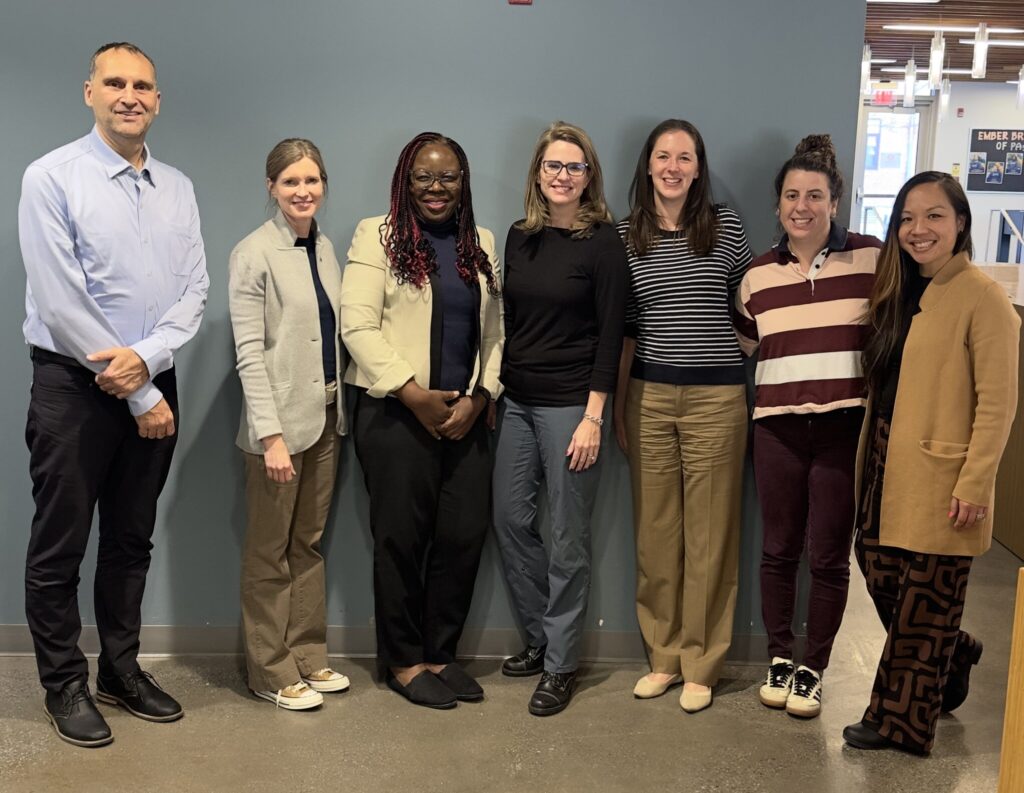
Provost Dr. Khadijat K. Rashid, ’90, expressed pride in the Center’s work, pointing to the cross-disciplinary nature of its approach. “This is a holistic Gallaudet effort…the Center is wide-reaching and truly fulfills the Gallaudet promise of inclusion, as it centers on deaf children and on those who experience trauma within our community.”
Key leads on the center team include Dr. Patrick Boudreault from the ASL Program and Dr. Danielle Previ, G-’15 & PhD ’18, from Gallaudet’s Psychology Clinic. The Center also has an exciting collaboration with Motion Light Lab (ML2) to develop an ASL storybook on emotional regulation for children in the works.
Day is creating a pipeline of people to work in this specialized mental health field by hosting students to work and train with her and her team. At a site visit session, Dru Balsley, ’07, a Ph.D. student in the Clinical Psychology program and assistant in the Center, remarked to Day, “You’re investing in us. You really value our perspectives, our work, and our contributions. We’re not just students to you, we’re a part of the team. Thank you for that trust.”
Day says she doesn’t feel personally responsible for the positive outcomes, but is fortunate to work with the many people who make the work possible. Addressing them directly, she said, “This work is impossible without the support of everyone on the team. You all are not only doing this, but a lot of other work as well: clinical work, academic work, research, and teaching…It’s not always easy.”
The Center’s current funding ends in September 2026, but Day and her team plan to apply for a new round to continue and expand its work.
Keep up with the Deaf and Hard of Hearing Child Resilience Center (DHHCRC). Their many resources in English and ASL can be accessed here.
Gallaudet offers mental health-related training at undergraduate, graduate, and certificate levels. Explore our offerings in Clinical Psychology, Psychology, Social Work, and Counseling.