Dr. Gabriel Lomas, G-’01, Director of Gallaudet’s Counseling Programs, frequently consults on court cases. When attorneys ask where they can find recent information related to Deaf mental health, he never has much to offer. “There exists very limited and mostly outdated literature on the topic,” says Lomas, who hopes that is finally about to change thanks to several new publications.
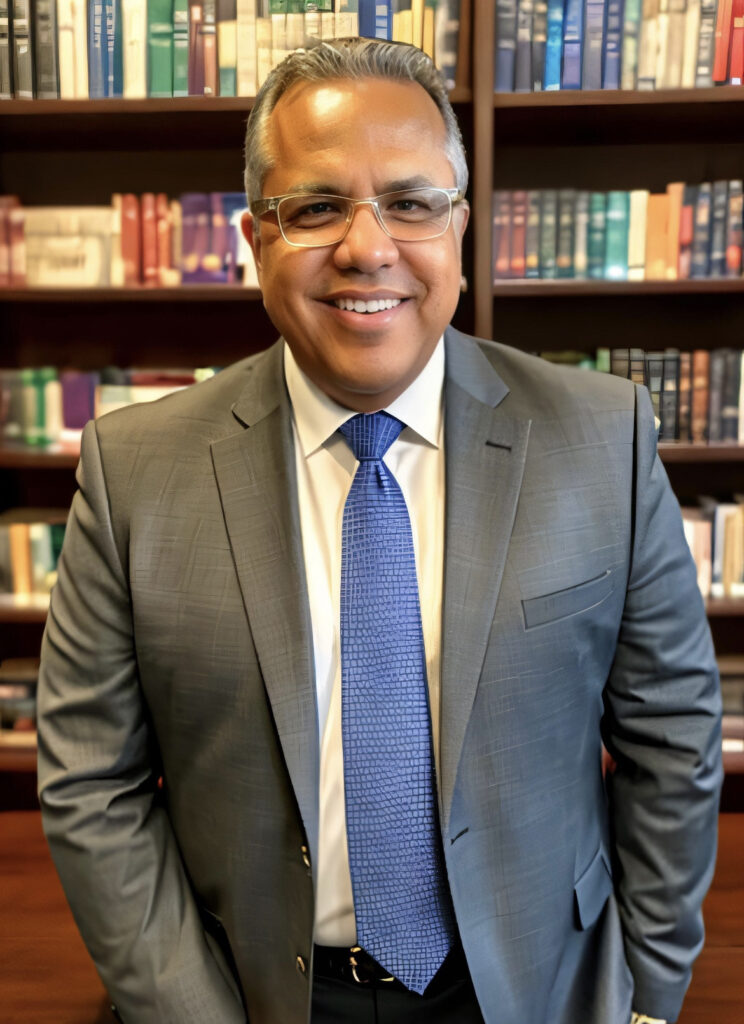
Gallaudet University Press is launching a new book series, “Mental Health and Deaf Communities,” co-edited by Lomas and Dr. Kent Schafer, E-’01, president of the American Deafness and Rehabilitation Association (ADARA). The goal is to develop a collection of at least eight books covering core areas of behavioral health, including addiction, crisis, and trauma.
While waiting for the series to hit bookshelves in 2028, readers can seek out two other new titles. Gallaudet University Press is just about to release, “Head-to-Head and Heart-to-Heart: Contemporary Discourse on Deaf Mental Health,” edited by Dr. Cathy Chovaz, a Deaf clinical psychologist who directs the King’s Centre of Deaf Education & Accessibility Forum (CDEAF) in London, Ontario. The book mixes scholarly discussion with nonfiction narratives to tackle pressing issues including language deprivation, cultural competencies, and insights specific to Deaf+ and marginalized deaf and hard of hearing populations.
Plus, last month, Springer Publishing came out with “Deaf Mental Health: From Theory to Practice,” edited by Dr. Tracey Bone, Associate Professor of Social Work at the University of Manitoba. The book, which promotes a Deaf-centric approach to treatment, features the work of several Gallaudet professors, students, and alumni.
Tapping into Gallaudet resources
Of course, many of the leading researchers prioritizing Deaf mental health are at Gallaudet, which is why Bone pulled them into her project. “Gallaudet University is the center of education related to deaf and signing communities,” says Bone, who wants readers to have the opportunity to tap into this expertise to enhance their understanding of “culturally and linguistically appropriate mental health supports for the larger Deaf community.”
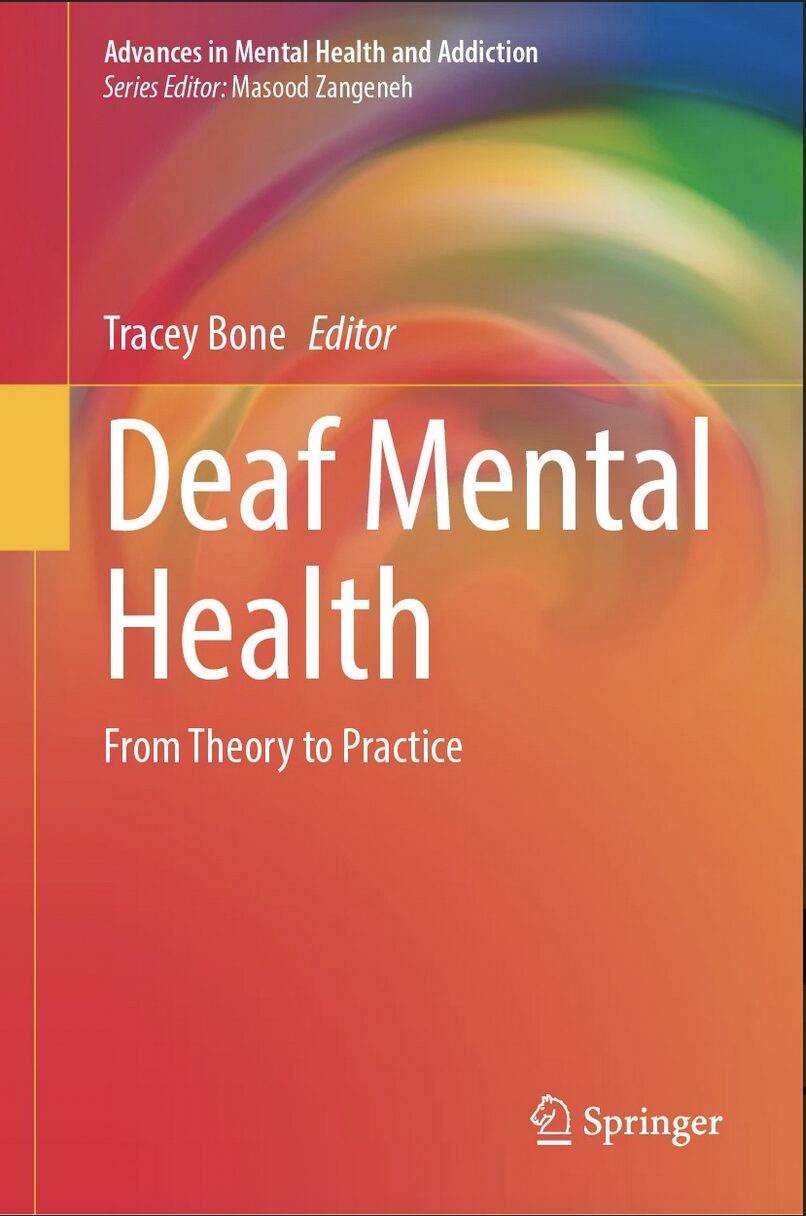
Contributors include Dr. Lori Day, G-’08 & PhD ’10, who directs the Deaf and Hard of Hearing Child Resilience Center, Associate Professor of Public Health Dr. Christine Gannon, and Social Work Professor Dr. Teresa Crowe, G-’92.
A chapter on “Mental Health and Deaf LGBTQ Adults” is the work of the Clinical Psychology Program’s Dr. Kathryn Wagner and Dr. Cara A. Miller, G-’09 & PhD ’11, along with doctoral student Margalit Roitman. Wagner says the trio wrote the chapter to educate others about barriers that lesbian, gay, bisexual, transgender, and gender nonconforming Deaf and hard of hearing people (DHH) commonly encounter when seeking care. They identified individual and systemic factors that contribute to their wellness and resilience in the larger context of identity and lived experience. “We also wanted to increase readers’ understanding of the psychological health risks among DHH LGBTQ+ adults, such that physical and mental health care can be better tailored to the unique, complex needs of this population,” Wagner adds.
Gallaudet continues to train current and future practitioners in multiple fields related to mental health. “We recently restarted the M.A. in Counseling program at Gallaudet and it has grown to become one of the largest graduate programs in the university,” Lomas says. That is why he views these new publications as so critical. “We need to start working now to create a series that will address key topics and integrate mental health standards with content specific to Deaf people,” he adds.
Meeting of the minds
This surge of interest in Deaf mental health has been building up for years.
When Lomas and Schafer met for the first time at the ADARA Conference in New Mexico in 2022, they realized they had a lot to discuss. Lomas co-edited “Deaf People in the Criminal Justice System,” which GU Press released in 2021, and Acquisitions Editor Katie Lee had approached him about following that up with a mental health project. Schafer, a psychologist and part-time faculty member at Gallaudet, saw a way to improve a broken status quo. “Gabe and I fell into the kind of conversation that makes you forget your tea is getting cold,” Schafer says. “We talked about generating new materials and finding the sort of insights that might nudge our people toward a greater good.”
Schafer’s various leadership roles at psychiatric hospitals and statewide services have given him a front row seat to the myriad problems Deaf patients face. “I could give you the usual grim statistics, the systemic neglect, the fact that we are an underrepresented field, or the alarming reality that mental illness risks are significantly higher here than in the world at large,” he says. “Instead, let’s look at the opportunity. We are now in a position to grow our own scholars and tease apart the umbrella concepts that people usually just slap a label on and ignore.”
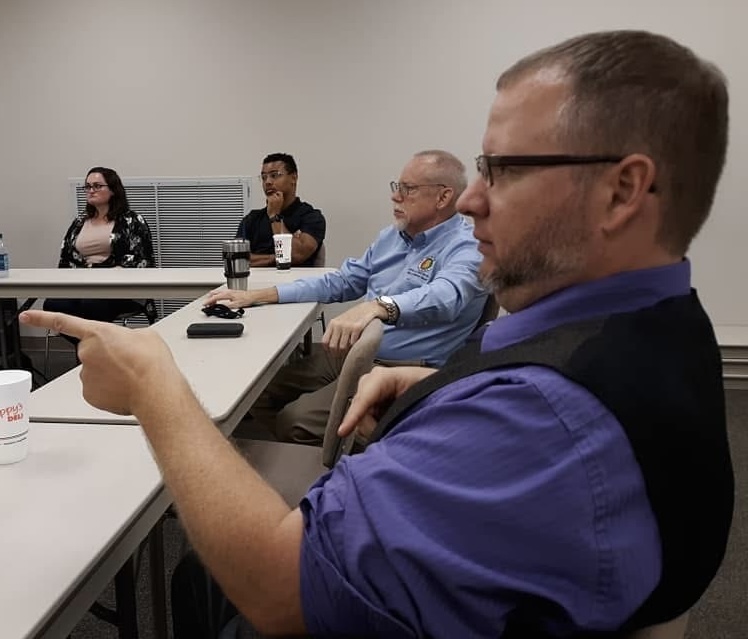
The biggest hurdle: Cramming in all of the material they wanted. “Dr. Lomas identified that there remains a significant gap in the deaf mental health literature, so I figured why stop at one book?,” says Lee, who notes that the series will cover a wide range of topics, ensuring that there is a steady stream of updated research and best practices. “The Press is especially excited about the inclusion of contributions from Deaf scholars and practitioners, many of whom are at Gallaudet!”
Filling in the gaps
To launch their series, Lomas and Schafer are planning an overview that will cover how language deprivation and cognition impact decision-making and mental health. “Language deprivation has become a catch-all term for any deaf person who doesn’t communicate well. Like hearing people, deaf people are not homogenous. In some ways, deaf people are more complex because etiologies of deafness and functional abilities vary a lot,” Lomas explains. “What I don’t see enough in the literature is a discussion of the interplay of cognition, ASL exposure, medical/health conditions, and environmental influences.”
Lomas has seen many Deaf people get into legal trouble because of what he calls “an illusion of comprehension.” “If a judge asks a question and the interpreter provides an answer, the judge thinks the deaf person understands. Sadly, many do not understand and early deprivation of language may or may not contribute to the communication gap,” he says. “Continuing with the same scenario, let’s assume the judge orders this deaf person to get counseling. Most therapists would have the same experience with the interpreter — a gap in comprehension.”
Schafer says the “awkward geometry created when you add an interpreter to a conversation” makes for a complicated relationship that we don’t fully understand. “And it can occasionally make a client feel even more diminished,” he adds.
Ignoring these issues only creates additional problems, Schafer explains. “We’ve spent decades failing to give people a way to talk to one another. We need to stop patting ourselves on the back for providing accessible services and start looking for culturally affirmative ones,” he says. “There is a mountain of work to be done in helping deaf individuals stop trying to pass as hearing, a pursuit as exhausting as it is futile, and instead move toward a healthy, autonomous identity.”
Spreading the word
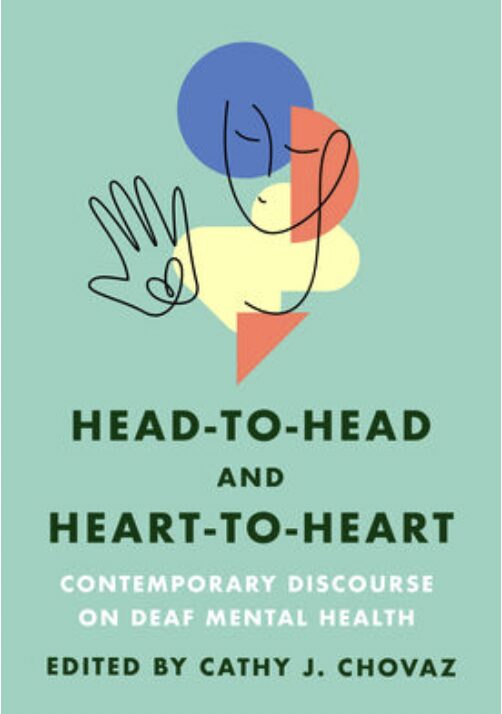
The potential audience for this type of information spans multiple disciplines. Dr. Leslie Rach, G-’91, director of Gallaudet University Press, notes that “Head-to-Head and Heart-to-Heart” is targeted to clinicians, academics, practitioners, and sign language interpreters. Bone hopes to expand the knowledge of students and professionals in social work, psychology, medicine, justice, and more.
“We hope they might find appeal with families and caregivers too,” Lee says. “Books that increase our understanding of these issues will raise awareness and reduce the stigma often associated with mental health conditions and behavioral healthcare.”
For the “Mental Health and Deaf Communities” book series, Lomas is asking that contributors aim for content that is academic enough to serve as textbooks but easy enough to read that someone might want it for their own professional development.
Schafer also wants to make sure that the books address the mental health needs of providers, who are often immersed in intense emotional experiences. “We have to talk about compassion fatigue. We simply cannot burn a candle at both ends when we’re serving a small, high-need population without eventually running out of wax. It is exhausting, unfair, and a bit of a miracle that anyone stays in for the long haul at all,” he says. “It’s time we gave them a better map.”
If you have a book project in mind you’d like to pitch, or if you have general questions about the series, please reach out to the GU Press acquisitions editor, Katie Lee (Click to reveal email). Katie will forward your queries to the series editors.