Nikki Palleja spent last Thursday night on the terrace of her dorm positioned next to a model of the human brain. She was flagging down fellow students to chat with them about the dangers of meningitis and how meningococcal vaccines can prevent these bacterial infections. That was just a few hours after she co-hosted a “Stop the Bleed” training on campus.
“We taught students how to respond in real emergencies, including how to control bleeding by applying pressure and properly dressing a wound,” explains Palleja, founder of Bridge to Medicine, a club for Gallaudet’s aspiring doctors, nurses, and other medical professionals. “I wanted to create a space that provides guidance, resources, and community for students pursuing careers in healthcare.”
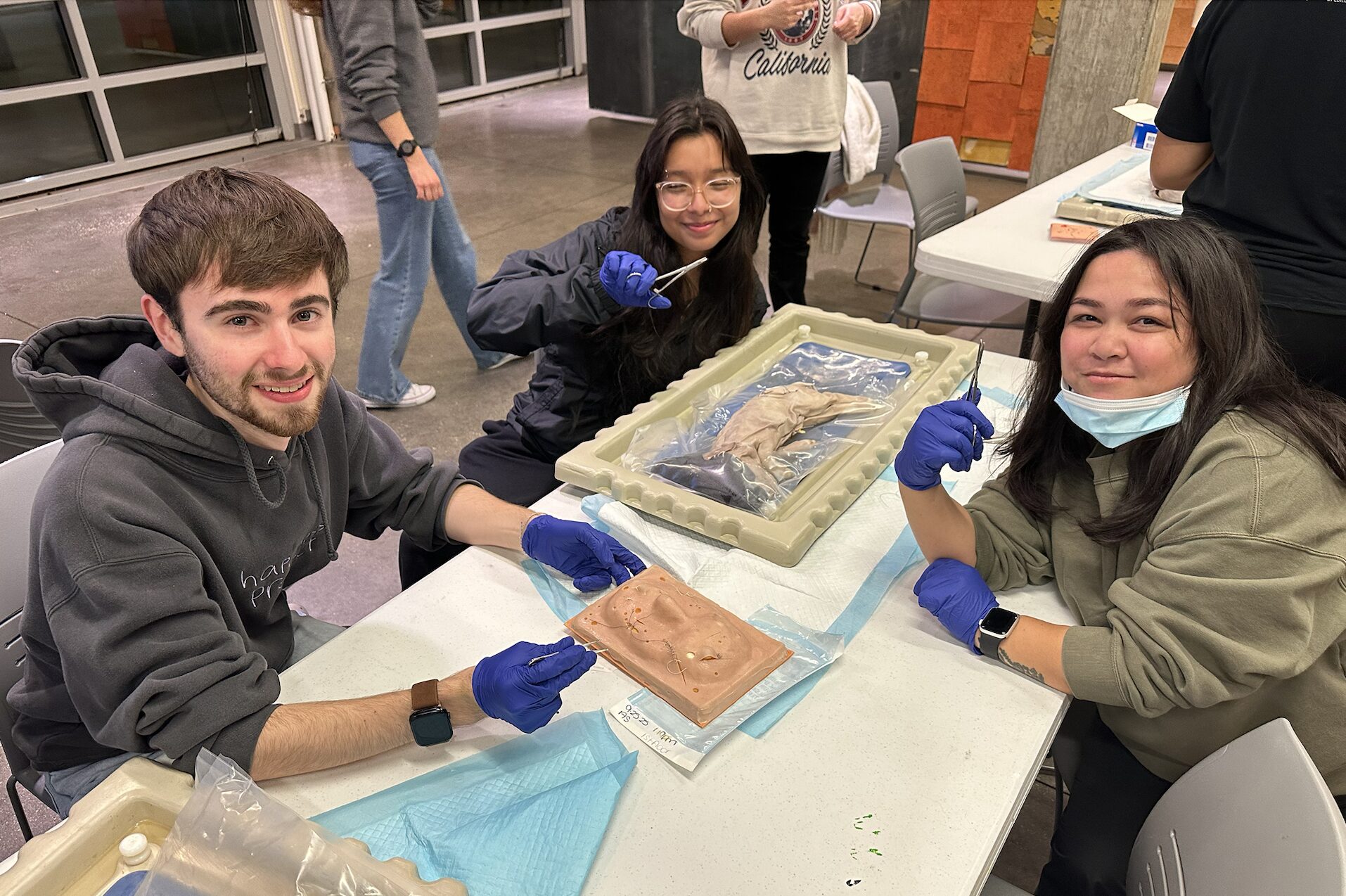
With the help of Student Health Services director Dr. James Huang, Palleja has set up several events focused on practical skills. In November, Huang and local medical residents led a workshop on how to suture, teaching students to sew up pig skin. Next month, he will demonstrate proper vaccination techniques, which students will then get to try out on each other. The group will identify injection sites and administer simulated injections using saline solution. “We will also practice intradermal injections, such as the technique used for tuberculosis testing, to ensure proper formation of the characteristic ‘wheal,’” Palleja says.
Also coming up in April — thanks to financial assistance from the S-STEM grant, the Sterling White gift account, and Gallaudet — Palleja and several other students will be attending the Association of Medical Professionals with Hearing Loss (AMPHL) conference in Orlando.
“I didn’t think I would have all of these opportunities. At another school, I wouldn’t have,” says Palleja, who is in her second year at Gallaudet.
Hearing about Gallaudet
Palleja’s unusual path here started a decade ago, when the hearing southern California native took an American Sign Language (ASL) class her freshman year of high school. She was hooked instantly. “I fell in love with the language and Deaf culture, and I decided I really want to work with Deaf people,” she says.
Initially, Palleja pursued medical interpreting. But after earning a degree in liberal arts from a community college and a BA in linguistics and psychology from UCLA, she realized her real dream was to be a doctor. Palleja is passionate about encouraging families to learn ASL and countering the idea that doctors need to “fix” deaf kids. “I want to change the narrative to a positive one,” she says.
To go onto medical school, Palleja needed to get a bachelor of science degree and take certain prerequisites. At Gallaudet, she realized that she could do that while learning so much more. “If I do want to work with deaf patients, I want to be in this environment to learn about Deaf culture,” she says.
One of her former ASL professors who attended Gallaudet encouraged her to apply. “He talked specifically about how it helped him improve his ASL skills and how engaging it is,” she says. He also told her that professors are approachable and eager to help students succeed, which has been her experience too. “At UCLA, there are hundreds of students in courses, and they really have to go out of their way to talk to you,” she says. “Here, there is much more opportunity to get one-on-one.”
Mentors with medical expertise
While taking Human Anatomy and Physiology with Associate Professor Dr. Adebowale Ogunjirin, Palleja approached him about interning in his lab. “I selected Nikki because she demonstrated genuine passion, respect for others, and strong collaborative skills with her peers,” says Ogunjirin, who was impressed with her initiative and willingness to learn as she prepared laboratory reagents and performed in vitro binding assays.
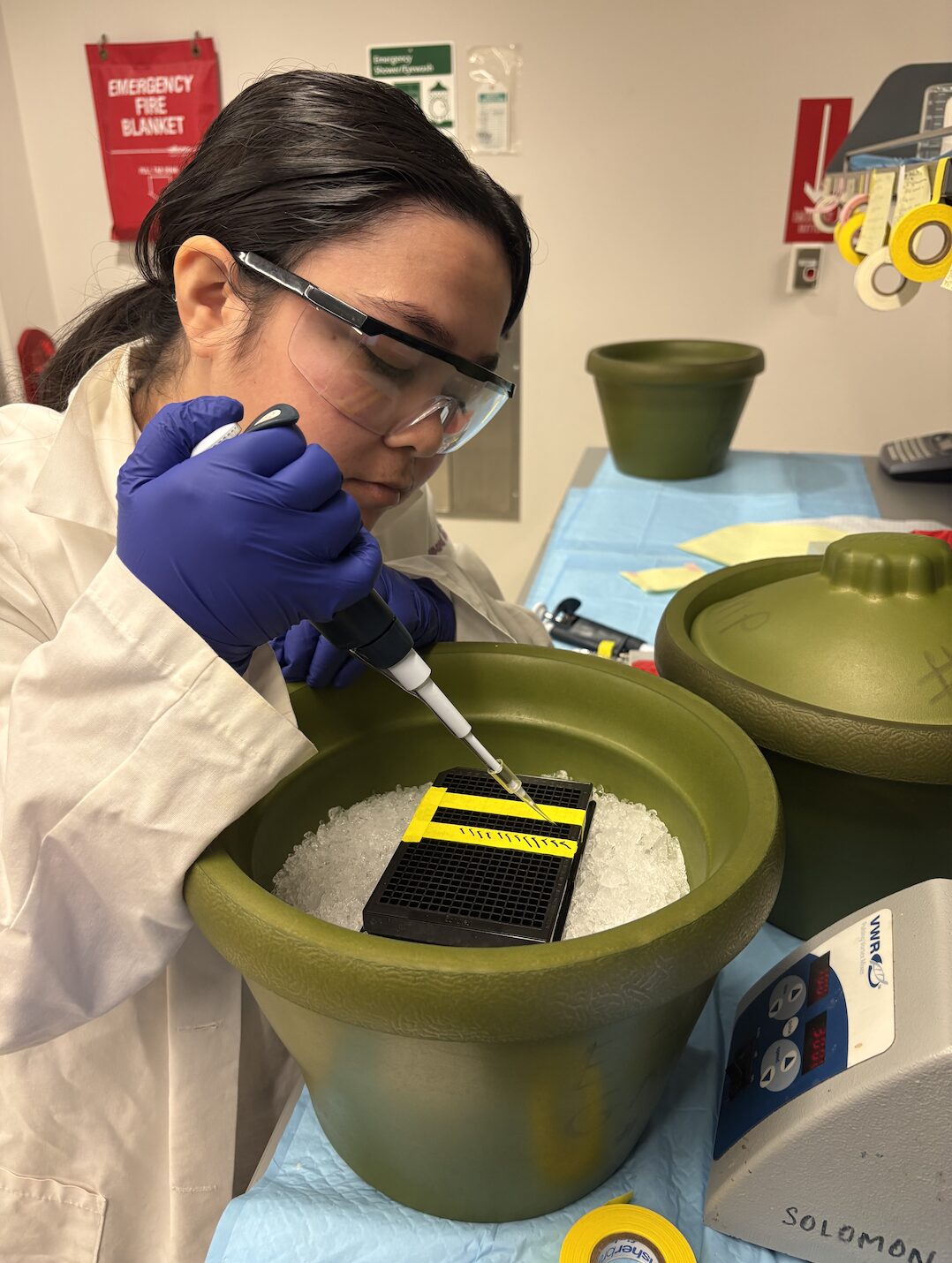
Ogunjirin is one of multiple faculty members with experience in the field of medicine who can prepare students for these kinds of careers. “In my pharmacology and medicinal chemistry laboratory, I train students in the principles of drug discovery and development,” he says. “Through this process, they gain a comprehensive understanding of how medicines are designed, tested, and optimized — an understanding that complements the clinical expertise they later acquire in medical school.”
Palleja built on that experience with an internship with Associate Professor Dr. Gaurav Arora, who specializes in bioinformatics. Her work focused on analyzing the phageome — the collection of bacteriophages, or viruses that infect and replicate within bacteria — in both diabetic and healthy patients to identify patterns that may be associated with disease. “We would get a data set, and I would think, ‘What am I looking at?’” says Palleja. “He would guide me through it, helping me interpret the data and understand its broader significance.”
The work they did just helped her win third place in the NASA DC Space Grant Consortium’s 2026 STEM Student Research Poster Award Competition. Palleja is grateful to be able to gain exposure to diverse areas of medical research and spotlight all that Gallaudet has to offer.
Writing it up
Palleja also wanted to gain experience working directly with patients, so she asked Huang if there was anything she could do at the Student Health Services clinic. He brought her on as a medical scribe, allowing her to observe patient visits while documenting clinical findings, diagnoses, and treatment plans in real time.
“I can’t document an appointment while using my hands to communicate without breaking up the flow,” Huang says. “She really helped me with time management.”
Then he pulled her into supporting his patient education outreach on the HPV vaccine. They made a brochure to give out during appointments, and he encouraged Palleja to take the lead on explaining the science. “I help patients understand that a virus isn’t considered a living organism on its own — it needs a host to survive and replicate,” she says. “HPV can go unnoticed, but in some cases, it can lead to cancers such as cervical cancer. Vaccination is a key way to prevent that progression.”
Making medical research make sense to the general population is not easy. “It can feel awkward,” says Huang, who has been impressed by how Palleja has strived to make her presentations as engaging as possible.
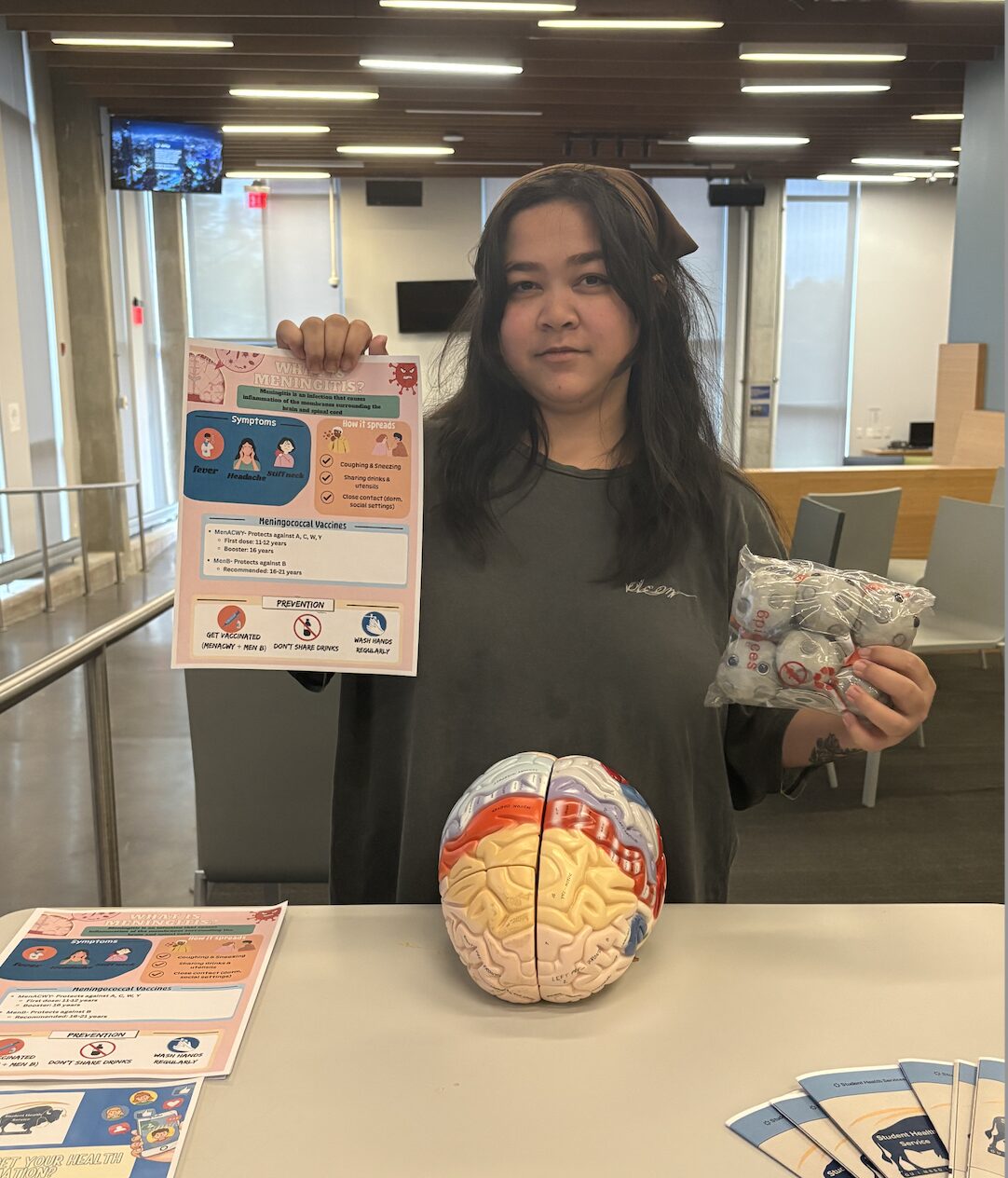
Palleja is one of three undergraduates working with Huang on a program to increase student awareness about immunization (funded by a $20,000 grant from the American College Health Association). That is why they were stationed on the dorm terrace last week promoting meningococcal and HPV vaccines.
Through direct outreach and creative initiatives, including campus events and educational social media content, she has played a key role in promoting meningococcal and HPV vaccines while expanding health literacy among her peers. This experience has deepened her awareness of disparities and the urgent need for more inclusive public health communication. “For the deafblind community, how do they receive this information?” she asks.
Keeping her finger on the pulse
This is the kind of question Palleja wants to keep thinking about — and answering. She is also trying to encourage classmates to join her on the path to medical school and hopes the AMPHL conference will give them the confidence and resources they need.
Huang, the president of AMPHL, is thrilled at what Palleja has been able to achieve already with Bridge to Medicine. “It is a great start in bringing these experiences to campus,” says Huang, who loved seeing students high-five and support each other during the suturing event. “It is very student driven and led, and we will need student leadership so we can keep it going.”
In the meantime, Palleja already has another project on her plate: She is reaching out to medical residents to set up a physician shadowing program for Gallaudet students.
Learn more about the advantages of Gallaudet’s pre-med track here! Most of Gallaudet’s pre-med students major in Biology or Public Health.