
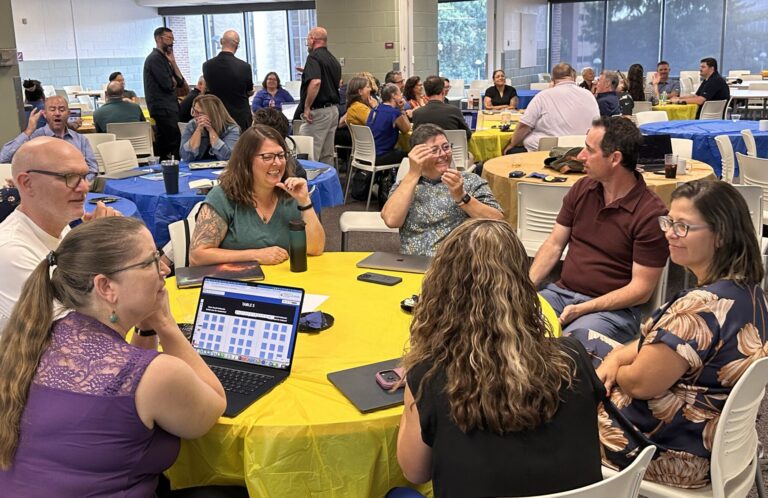


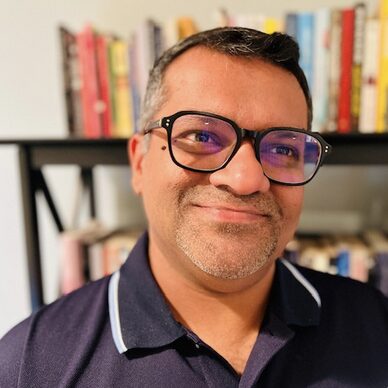
Unfortunately, almost everyone has a personal connection to cancer, says Dr. Gaurav Arora, an Associate Professor of Biology. In Arora’s case, he lost his mother to the disease two years ago. That is why he thinks it is critical to teach young people as much about it as possible and hopefully inspire them to work to eradicate it. “These are the students who can go into the field and make changes,” he says.
This semester, Arora debuted a new course, “The Biology of Cancer,” looking at what scientists know — and what they still need to learn — about one of the world’s leading causes of death. For the eight students enrolled in the class, it has also been a chance to meet Deaf researchers fighting cancer and find out how to follow in their footsteps.
Questions and curiosity
Arora first began to look closely at cancer while doing research for his PhD at Georgia Tech, studying the differences between humans and chimpanzees. A big one was cancer, which chimps don’t typically get. His dissertation showed that the cost of bigger brains is a higher rate of cancer. He has continued to explore cancer-related questions at Gallaudet through his bioinformatics research, including working to identify which viruses are seen in people with cancer and which are not.
The disease is also part of the curriculum in many of Arora’s courses, such as “Human Genetics,” in which he teaches about tumor suppressor gene TP53 and several other genes related to cancer.
But this new class takes a much deeper dive into what is happening in the field of cancer research. “We have better medicine and disease management than ever,” says Arora, who is fascinated by cancer’s lengthy history. “It was once believed to be a modern disease, but it has been mentioned in manuscripts from before Christ.” What has changed over time is where cancer appears and who it targets. Current research has highlighted the disturbing fact that young people are getting diagnosed more than ever before. “That was how I started the course,” Arora says. “I want to make it relevant to what is in the news.”
Learning from role models
To offer first-hand accounts of different ways scientists are studying cancer, Arora invited several guests to present to the class. The list included student Maizy Grace Wilcox, who shared the results of a research project she completed last fall for Arora’s “Machine Learning for Data Scientists” course. She used the technology to predict cancer diagnosis based on lifestyle, environmental, and biological factors. “I learned that machine learning can be an amazing tool for the medical field and has great potential to aid professionals,” says Wilcox, who was honored to be part of a discussion with students that continued even after class.
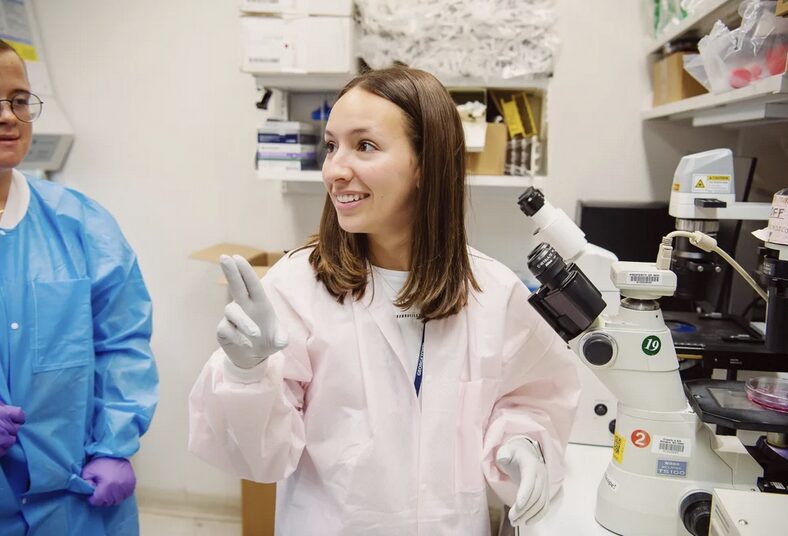
The students also learned from Dr. Megan Majocha, ’18, who not too long ago was an undergraduate at Gallaudet discovering her passion for genetics. After completing a year-long post-baccalaureate research opportunity at the National Cancer Institute (NCI) on breast cancer genetics, Majocha went on to earn her PhD in Tumor Biology from Georgetown University while continuing to do molecular biology and genetics research at NCI.
“My work was mainly on breast cancer metastasis (cancer spreading from the breast to other parts of the body), and understanding why that happens and finding ways to prevent it from happening. This work gave me insight into how complex and interconnected cancer biology really is,” says Majocha, who now serves as a Scientific Communications Manager at Susan G. Komen, where she focuses on empowering patients through education.
Her lecture touched on different types of cancer treatments, including chemotherapy, targeted therapies, immunotherapy, and precision medicine, in addition to explaining why cancer can still grow or come back after treatment.
Majocha also welcomed questions from students about how she has navigated the cancer research field. “There is a real gap in representation of Deaf and HoH individuals in biomedical research and healthcare. The lack of representation affects how science is communicated, who feels included in research spaces, and patient outcomes,” Majocha says. “I have experienced both the barriers and the value of bringing different perspectives into science.”
Explaining in ASL
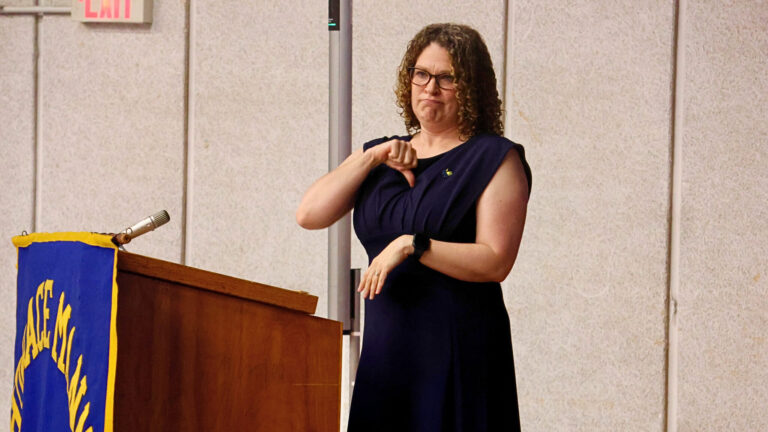
Associate Biology Professor Dr. Alicia Wooten, another guest presenter, recognizes these same challenges from her career in immunology. They are a huge part of why Wooten and Dr. Barbara Spiecker founded Atomic Hands, which develops STEM resources in American Sign Language. She says that making more scientific information available can be a matter of life or death.
“Deaf people are often more at risk for being diagnosed with advanced cancer due to health literacy, so the more individuals who have the ability to clearly explain how cancer works, treatment, and what it all means in an accessible language, the more we can reduce health disparities,” she says.
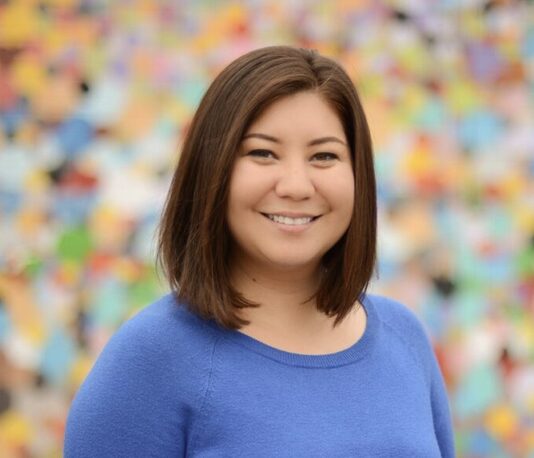
(Another presenter, DEAF, Inc.’s Stephanie Wilcox, a Community Advocate and Certified Patient Navigator, devoted her class time to exploring unique barriers that Deaf, Hard of Hearing, and Deaf Blind patients face in cancer care.)
Wooten’s presentation to the class was on how the immune system detects cancer and how tumor cells can adapt and evade the immune system. “I gave insight on why we can’t just cure all cancer with one drug. Every tumor behaves differently with different markers and evasion strategies,” she explains.
Wooten hopes that arming students with this information will nudge them toward wanting to learn more about the many emerging technologies being used in cancer research, including CRISPR gene editing and personalized medicine. “Cancer research — and really any biomedical research — lets students be the ones solving the problem so that developments can be made to treat the problem,” Wooten says.
Looking into the future
By offering “The Biology of Cancer,” Gallaudet is providing foundational knowledge that will make it easier to follow in their footsteps, Majocha notes. “This allows students to see themselves in these roles and decide if this is something they’d like to pursue after graduation,” she says. “Gallaudet is positioned to support students through accessible STEM education, mentorship and research opportunities designed for Deaf learners.”
In her case, Majocha knows how useful it was to have mentors that built up her confidence and pushed her to explore possible career paths. “Gallaudet helped me get to where I am today by allowing me to connect with other Deaf scientists and professors who were able to guide me to opportunities,” says Majocha, who credits her advisor Dr. Derek Braun, ’95, with steering her to NCI. “It was also where I had a fully accessible learning environment where I could focus completely on learning, asking questions and building confidence in my abilities. That made a huge difference in how I engaged with science.”
Evaluating options
Student Maria Serra Pereda found herself being able to connect the dots between this material and other topics she has studied at Gallaudet. She appreciates how the course has given her a new perspective that she plans to carry forward. “I learned that cancer is often seen as a very scary word in society, and many people don’t fully understand what it really means or how it can sometimes be prevented,” Serra Pereda says. “There are resources available, but not everyone is properly educated about them.”
Gaining a deeper understanding of how complex cancer is at the molecular and cellular level intrigued student Nikki Palleja, an aspiring neurologist. “This course has made me consider pursuing a subspecialty in neuro-oncology. The connection between cancer biology and the nervous system, particularly in brain tumors, is something I now find especially compelling,” she says. “Learning about mechanisms like mutations, tumor suppressor genes, and targeted therapies has made cancer feel less abstract and more like something that can be studied, understood, and treated in precise ways.”
Arora — who also learned an incredible amount teaching the course — wants to keep offering it, although it will need to evolve to keep up with the latest developments and discoveries. “This field has so much going on,” he adds.
Learn more about studying Biology at Gallaudet, which offers two undergraduate degrees and a minor in the subject.