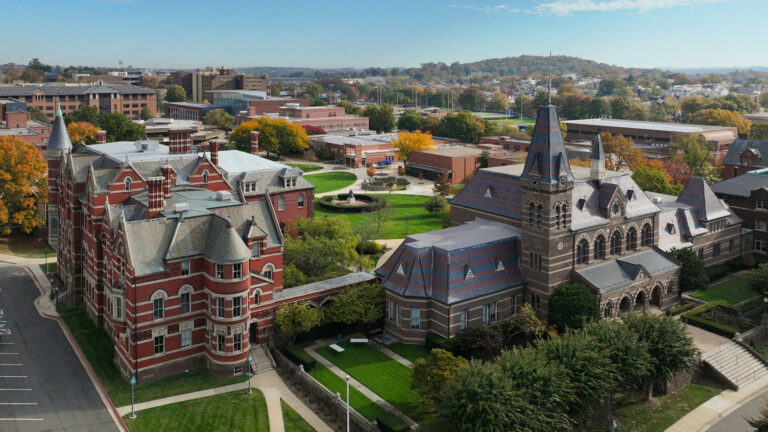

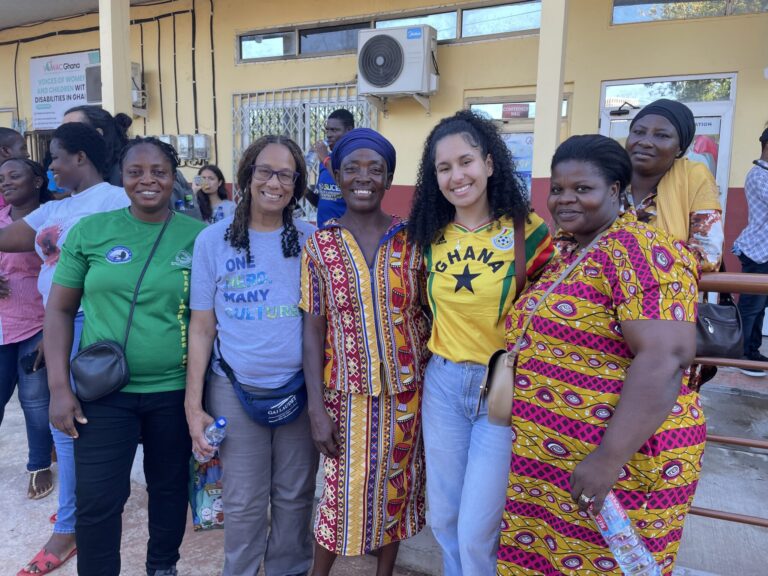
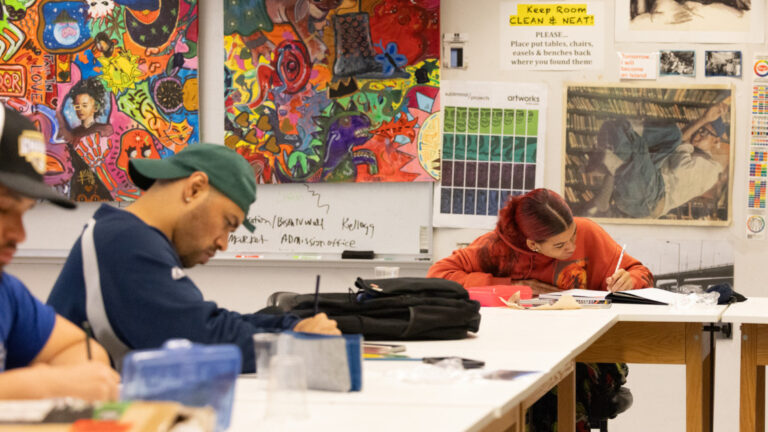
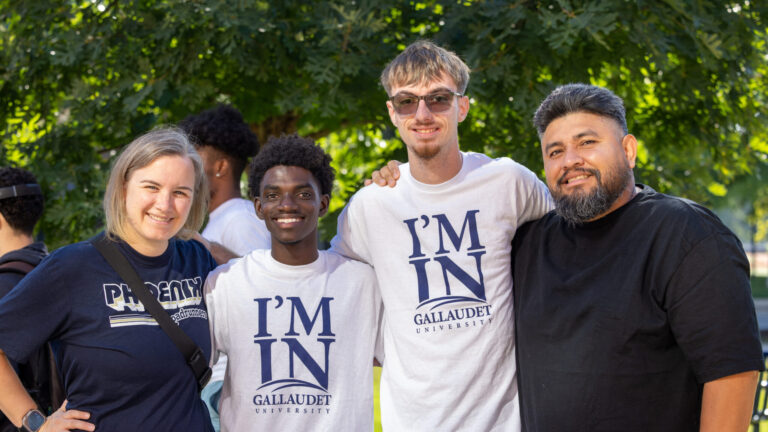


On a bright and crisp fall day during Gallaudet’s 2025 Homecoming, a long-awaited moment finally arrived. More than 70 years after a determined mother fought for her son’s access to an education, the Gallaudet community gathered to honor a history once overlooked – and now on its way to being permanently memorialized.
With the October 23 site dedication of the Louise B. Miller Pathways and Gardens: A Legacy to Black Deaf Children, the University took a step toward acknowledging the struggle, courage, and resilience of the Black Deaf families who demanded educational justice in segregated Washington, D.C.
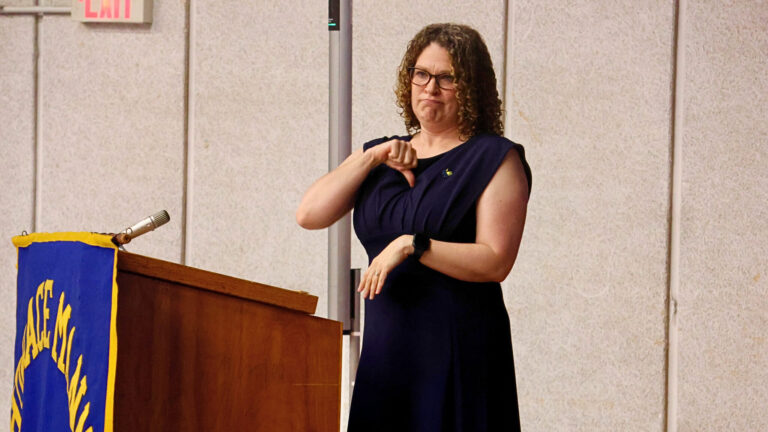
“This is a moment where we stand with perseverance and unity,” said Evon Black, ’87, G-’96, & EdS, ’25, co-chair of the Louise B. Miller Pathways and Gardens Steering Committee. “It is a commitment to remember the struggle, to celebrate the triumph, and continue the legacy.”
A mother’s fight for justice
The struggle, triumph, and legacy belong to those who fought for the right for Black Deaf children in Washington, D.C. to have access to education during segregation. At the center of the movement for justice was Mrs. Louise B. Miller, a local mother of three Black Deaf sons and a hearing daughter.
When her eldest son, Kenneth, was denied entry into Kendall School for the Deaf located on Gallaudet’s campus because he was Black, Mrs. Miller refused to stand by. She mobilized a group of parents of Black Deaf children in D.C. to file a lawsuit against the D.C. Board of Education. The first lawsuit failed, but the parents persevered and eventually prevailed on their second attempt.
Soon after, Kendall School Division II (KSDII) was built on Gallaudet’s campus in 1952 and it operated for two years with 24 students and four teachers until Brown v. Board of Education ruled school segregation illegal.
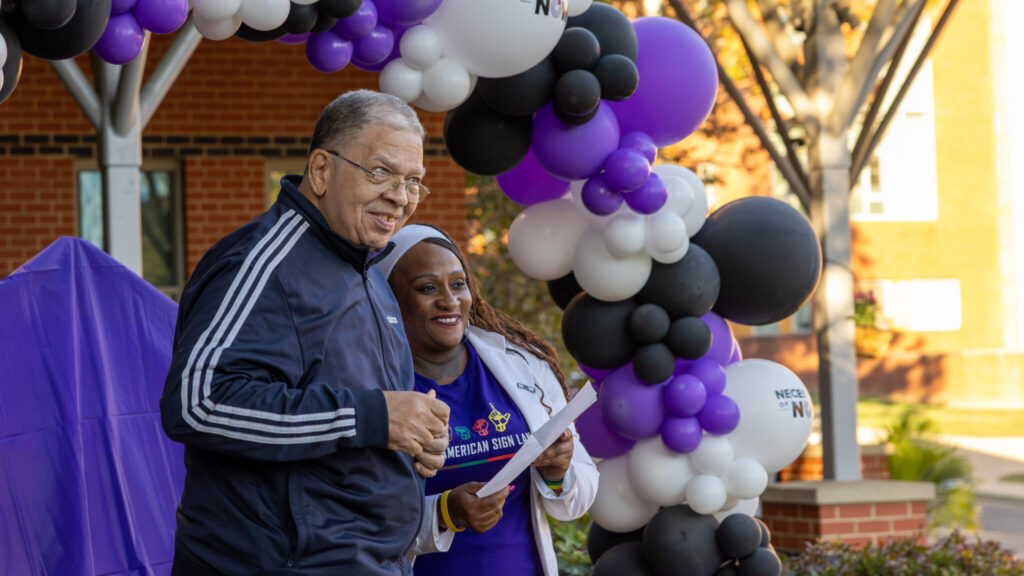
“This profound moment in history that we recognize today is a memorial that stands as an act of justice, honoring my mother and the 24 Black Deaf children who stood on her shoulders – and shoulders of others who made this possible,” said Mrs. Miller’s son Gerald during the site dedication.

Honoring the past, looking to the future
The Louise B. Miller Pathways and Gardens: A Legacy to Black Deaf Children will be a serene, reflective, and sensory-rich environment to honor the enduring impact of Mrs. Miller, KSDII, and the resilience of the Black Deaf community. The space will include three reflective rooms, a small gathering area, and a large outdoor classroom.
More than 1,000 individuals, couples, families, and organizations contributed to the Necessity of Now (NOW) fundraising campaign, which supports the design and construction of the Pathways and Gardens. NOW also funds student scholarships, and research and programming at the University’s Center for Black Deaf Studies (CBDS), an outreach center for teaching and learning about the Black Deaf experience. To date, more than $22 million of the $23 million goal has been raised.
“Thank you all so much who have donated,” said Gerald during the ceremony. “My mother is watching and she would love to share that she loves you all.”
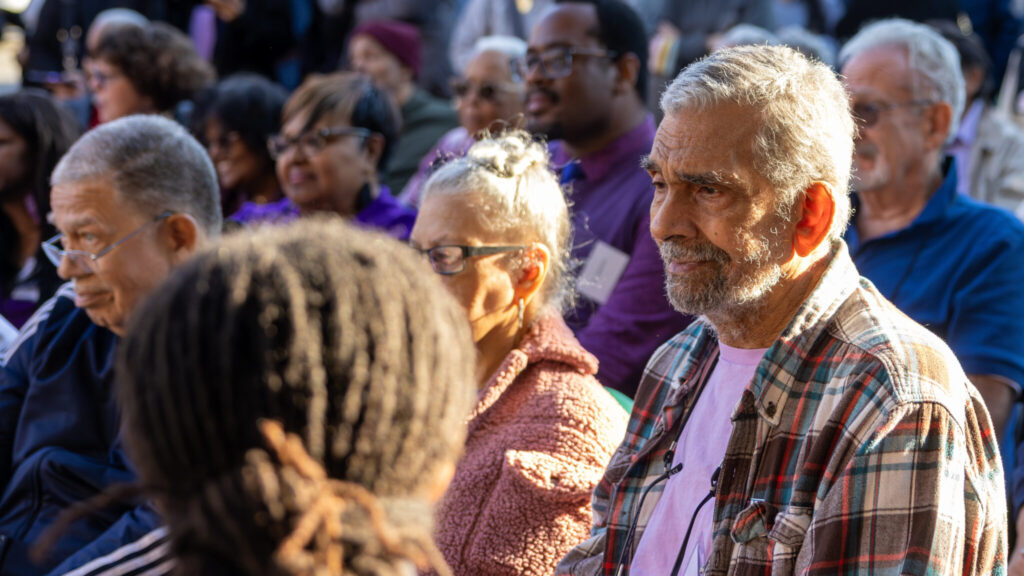
Gerald’s wife, Lavonda, said she believes Mrs. Miller would be touched and honored that her hard work on behalf of her sons, especially Kenneth, is being recognized. At the dedication, Kenneth received special recognition as attendees gave him a resounding ovation.
“I want Black Deaf students to see the space and understand more about the challenges our community has faced, and how we persevered and succeeded,” said Lavonda. “And for them to know that in the future we will continue to persevere and succeed. The future will be even better for Black Deaf students.”
Recognition long awaited
For Melissa Irby, Mrs. Miller’s granddaughter, the campaign and dedication are especially poignant given the long-standing lack of recognition for her grandmother’s courage and activism.
“We are glad that my grandmother is being honored as she should be. She was an icon in the Civil Rights Movement who was not written about or spoken about,” Irby said. “It is vital and important that we share these stories of these events, and that we come together and that we memorialize this history.”
Decades after KSDII shut down, the building was torn down in favor of newer campus buildings. Black recalled for the audience how she vehemently protested losing this important piece of Black Deaf history.
“In the early 1990s, I was standing here where you are today,” she said. “I stood in front of the bulldozer to stop them from demolishing the former school for the deaf for Black students. Now we are here for this site dedication. It is a full circle moment and I am full of emotions.”
For years, the only public acknowledgement of KSDII was a plaque on the back of a wall near the hotel. Interest resurfaced in 2016 when a class discussion prompted calls to recognize the stories and experiences of Mrs. Miller and the students and teachers of KSDII.
The moment coincided with a broader institutional reckoning, as Gallaudet began examining its relationship with the Black Deaf community, including its history of segregation and exclusion.
Reckoning, healing, and renewal
“This story being told here has endured for over 70 years for the Miller family,” said President Roberta J. Cordano during the ceremony. “To the Black Deaf community, this has been a story long in waiting, a story waiting to be told as the years have passed. As the story began to be told and shared, it had a remarkable impact. Our community’s commitment to equity and justice and opportunities for everyone in our deaf community has been elevated to a much higher degree with much more visibility.”
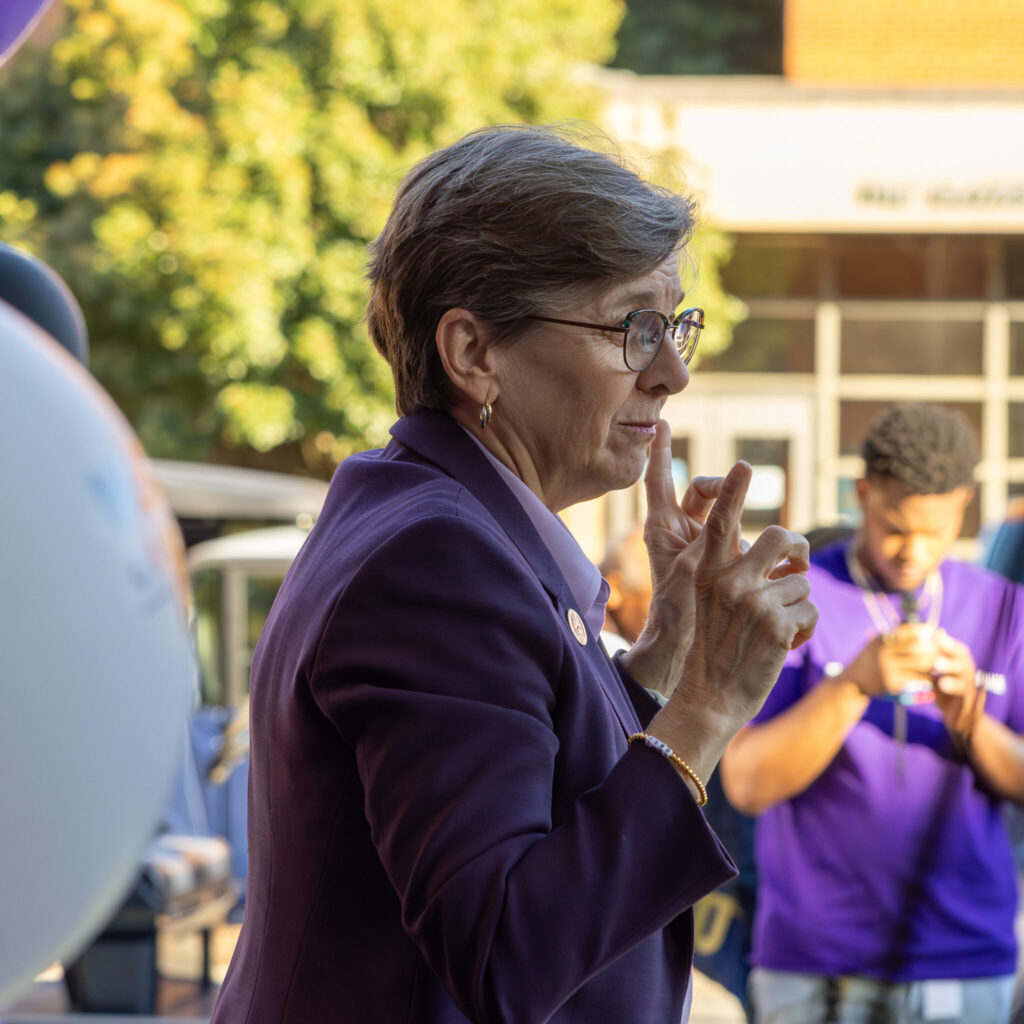
In the intervening years after the 2016 class discussion, Gallaudet has taken steps to elevate the Black Deaf community. Along with the NOW campaign, the University established CBDS, created a Black Deaf Studies minor program, and hosted an inaugural Black Deaf Studies Symposium.
Through CBDS’ research and outreach conducted, Gallaudet located several surviving KSDII students and their family members and hosted a graduation ceremony in July 2023 to honor them. Because of segregation-era discrimination, they had never received their high school diplomas. At the ceremony, some of the surviving class members and their family members had the opportunity to walk across the stage to receive the long-overdue diplomas. The University proclaimed the day as “Kendall 24 Day” and the Board of Trustees issued a proclamation acknowledging and apologizing for its role in the injustice that was committed against the 24 students.
For Gallaudet, learning about and spotlighting Mrs. Miller and the KSDII community has been transformative. Combined with the generosity of NOW donors, these efforts continue to advance justice, remembrance, healing, and opportunity for Black Deaf people on and beyond campus.
“We’ve seen time and time again when deaf people share their stories, they can make a difference and the world can change,” said President Cordano. “Our University is committed to continuing to recognize the experiences of our Black Deaf community members.”
Awareness, freedom, remembrance, and healing
As she concluded her remarks, Black reflected on the four guiding themes of the Pathways and Gardens — Awareness, Freedom, Remembrance, and Healing — and how they will soon live on in the very same place where she once protested the threatened erasure of Black Deaf history.
“Let us carry with us the four themes,” she said. “Awareness to understand the purpose of Mrs. Miller’s fight for justice, freedom to honor the struggle for equal access to education, remembrance to reflect on the strength and stories of the 24 children, and finally, most importantly, healing to mend the wounds of the past and move forward together.”
You can contribute to the Louis B. Miller Pathways and Gardens! Visit the Necessity of Now page to learn more and donate.
Gallaudet offers a Black Deaf Studies minor. Visit the Center for Black Deaf Studies page or follow the center on Instagram to stay informed.