

In today’s world, visual communication is more important than ever. Gallaudet’s art program is adapting to the needs of today’s students, giving them the skills they need to build a career in the creative arts field.
The new Art and Visual Communication Design (AVCD) program has a new name, but it will continue the university’s proud tradition of creating vibrant deaf and hard of hearing visual artists and creators.
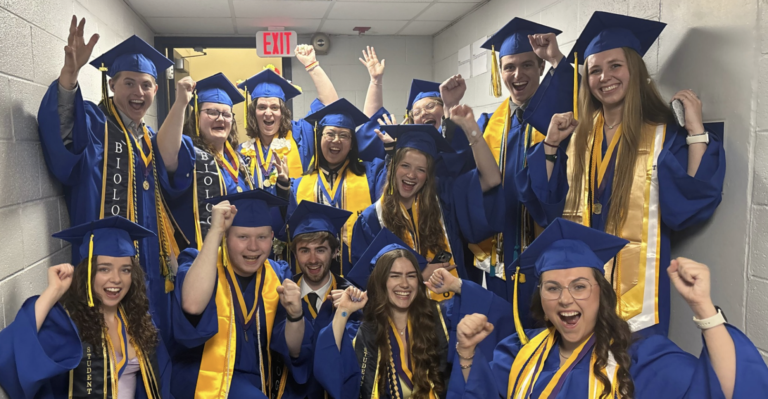
Zoe Abrams-Gay, ’26, is one of the many former graduates who gave feedback that informed the new AVCD experience. She is excited about the new changes. “The updated curriculum can give future students even more opportunities to explore where art, design, and technology are heading. The creative industry is constantly changing, so it is important for students to have a curriculum that grows with it,” she says.
A shift in focus
AVCD is designed to center interdisciplinary learning, face-to-face creative collaboration, and intensive 8-week courses taught by experts. It now offers three specializations:
- Animation students focus on visual storytelling through motion, character development, and digital production in both 2D and 3D. They learn animation techniques, motion graphics, storyboarding, and visual effects while learning industry-standard processes.
- Film + Video students focus on visual storytelling through moving images, sound, and editing. Students gain experience from pre-production to post-production, including cinematography, directing, editing, production design, and conducting archival research. Visual narrative, pacing, composition, and accessible media practices will be learned and applied in student projects.
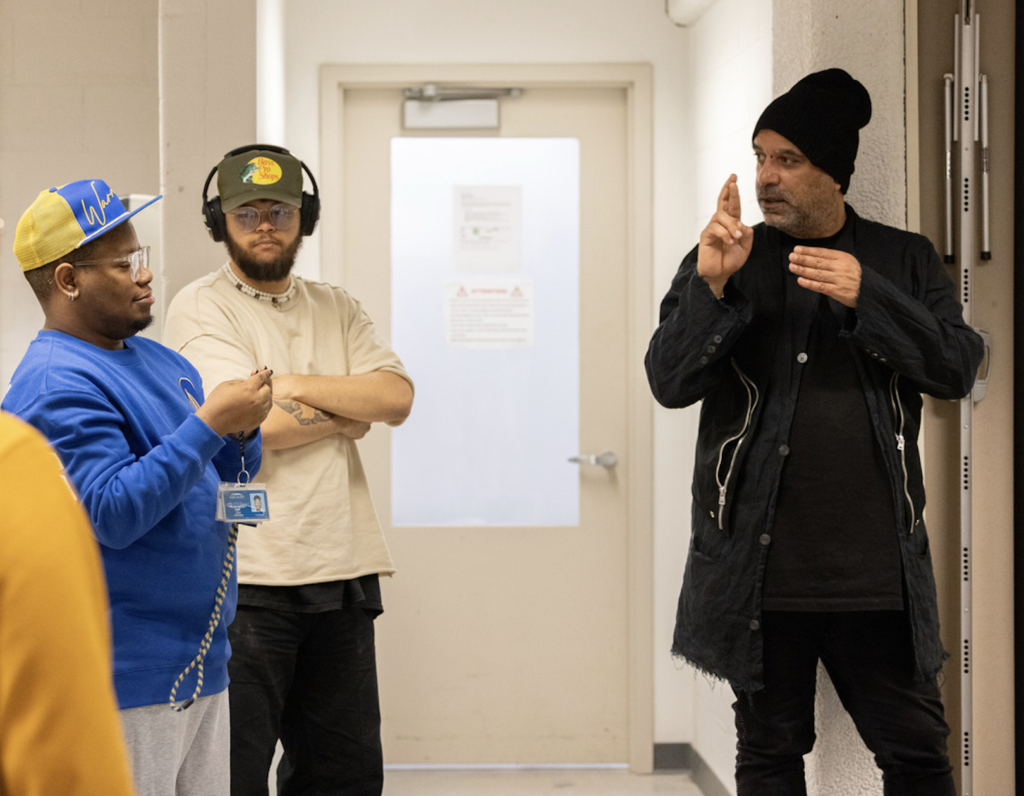
- Fine Arts students focus on drawing, painting, sculpture, photography, mixed media, and experimental practices in a studio-based practice. Bringing together technical skill, critical thinking, and historical context, this track allows students to engage with a variety of materials, ideas, and processes through studio practice, discussion, and critique.
In addition to specialized skills, AVCD majors receive foundational learning in areas such as art history, graphic design, photography, drawing, and film. These foundational courses will be supplemented with new offerings that connect arts to today’s technology, such as Introduction to AI Tools, Digital Design Foundations, and Digital Media in Motion.
AVCD will grow with its inaugural cohort of 19 students, offering six courses this year. More art classes will be added each year, ultimately reaching 25 in year 4 (Academic Year 2029-2030). In addition to traditional classroom learning, the program will offer new online certifications in drawing and software programs relevant to the arts field.
Professor Manuel Vazquez, ’06, known as Mava, has been central to the redesign process, saying, “I’m proud to see the program moving forward and becoming something students can grow with.” Informed by faculty, staff, advisory board members, and external professionals, the program centers on students’ needs, “including new technology, studio skills, digital media, accessibility, and preparation for their future careers,” he says.
Agile and intensive courses
AVCD will include immersive and innovative 8-week specialization courses. Each course is taught by experts in their field, and the short-form experience fosters greater engagement and intensity. Gallaudet successfully piloted three specialization courses last fall, when students took on deep dives in deaf arts, filmmaking, and performance art.
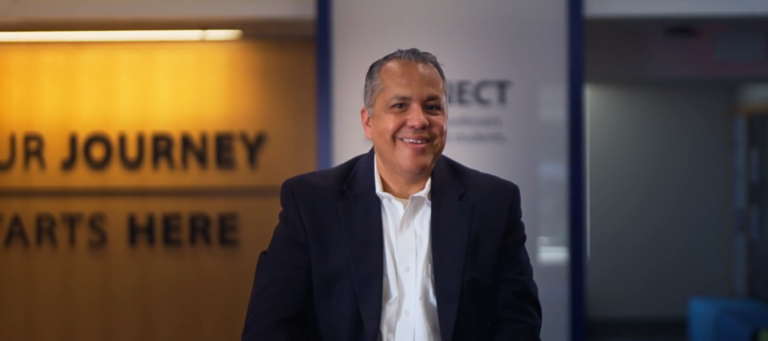
“Students in the pilot courses demonstrated heightened creativity and engagement, resulting in stronger, more focused project work,” says AVCD Director Scott Carollo, ’95. “They also performed better academically compared to those enrolled in traditional 15-week courses.”
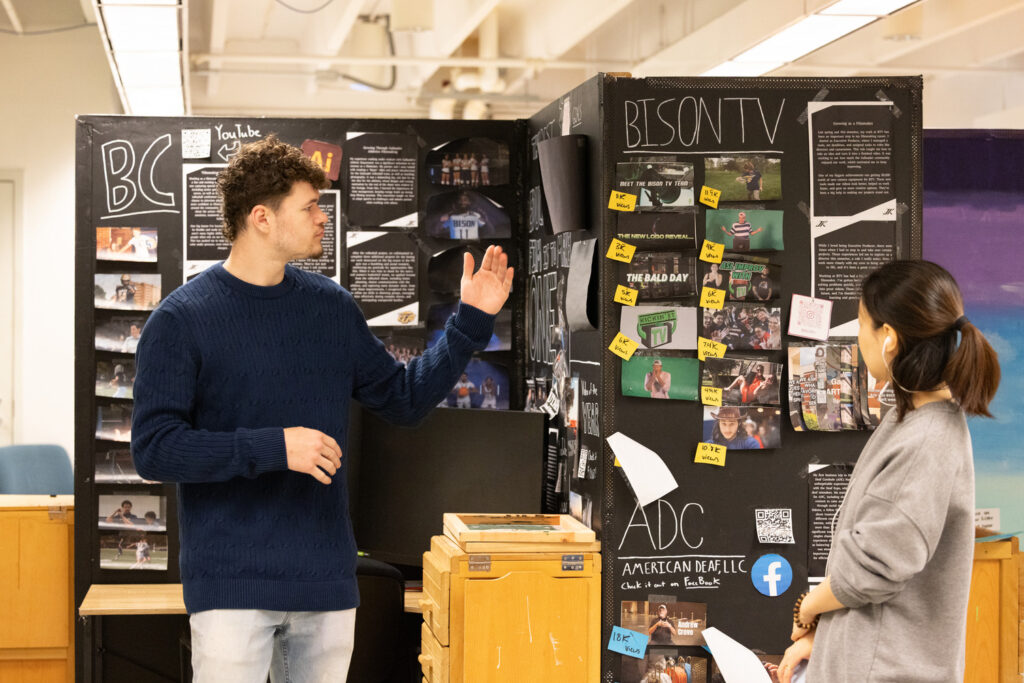
The 8-week schedule also allows Gallaudet to work with a wider variety of guest instructors for the AVCD program. Carollo sees the 8-week course model as beneficial for both students and faculty recruitment, saying, “It’s a strong option for future curriculum planning.”
Cultivating a creative culture
AVCD is based in Washburn Arts Center (WAC), which will serve as a hub of experiential learning. Sharing space means students, faculty, and staff can easily connect with one another for impromptu brainstorming and creative exchanges. Students will have access to a range of technical equipment and professional opportunities. Motion Light Lab (ML2) — Gallaudet’s research and design lab — is moving into the building, and the Schuchman Deaf Documentary Center staff will teach film-related courses.
In total, nine academic programs across Gallaudet will collaborate with AVCD, in an interdisciplinary bonanza. From Deaf Studies and English to accounting and business courses, the goal is to prepare students in a range of skills to help them build sustainable careers. They can learn how to start and run their own creative business through marketing classes, while courses on writing for digital and social media will help them market their brand. Or they can choose to learn programming and web technology skills through the Information Technology program.
“This allows students to see and use specialized equipment used in art, technology, and research, while being exposed to the interdisciplinary nature of it all,” says Carollo.
Theatre students will also inhabit the halls of WAC, taking courses such as scriptwriting. Other co-curricular collaborations include student-run outlets Bison TV, Buff and Blue News, Tower Clock yearbook, and the Tinker Lab maker space, which will be renamed the GU Production Lab.
Building on a powerful legacy
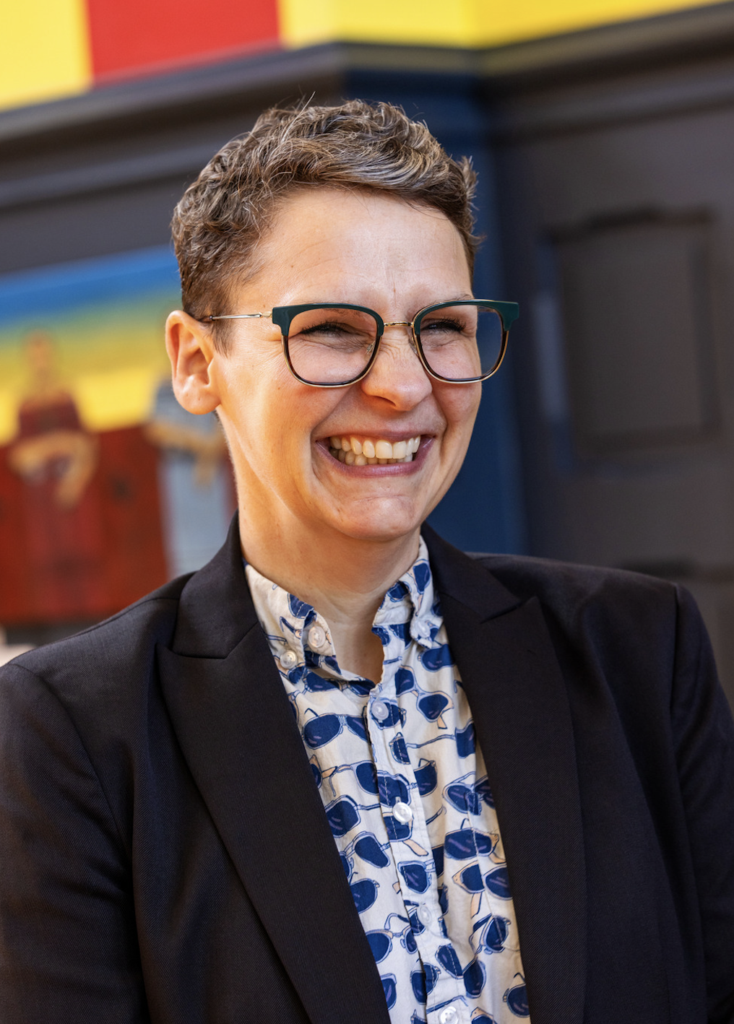
Throughout campus, students become familiar with the sculptures, murals, and paintings by deaf artists, as well as the award-winning National Deaf Life Museum. Everything is carefully curated by Tabitha Jacques, ’06, the university’s Director of Arts, Culture, and Experience (ACE). And she’s no stranger to the art program.
Says Jacques, “As an art history major at Gallaudet University, I was fortunate to take interdisciplinary classes, study art history during a three-week trip to Italy, and visit museums throughout the Washington, D.C., area.” Before returning to Gallaudet to lead ACE, Jacques led the groundbreaking Dyer Arts Center at the National Technical Institute of the Deaf. “I never imagined how my degree would shape the trajectory of my career and lead me to where I am today,” she says.
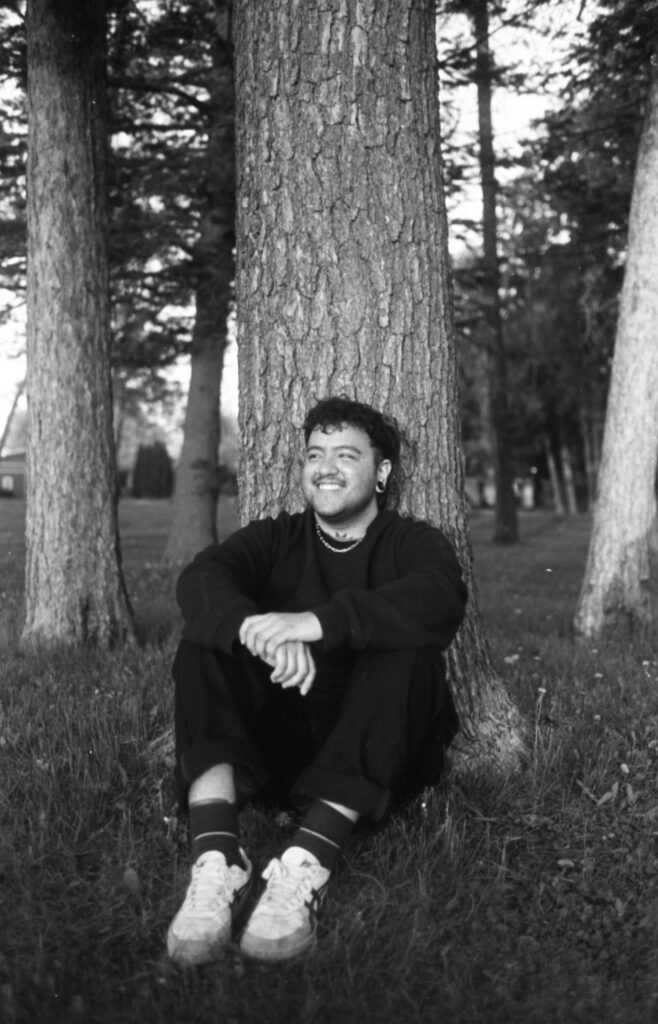
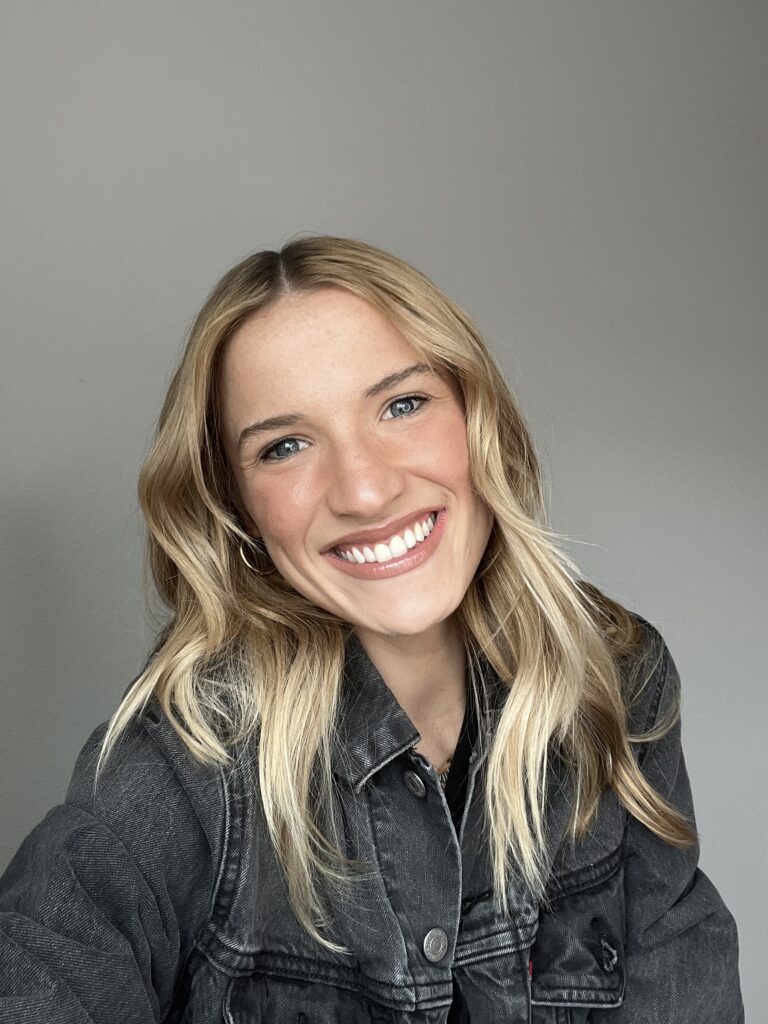
Kah Mendoza Weethee, ’19, similarly says his career as a filmmaker and artist is still shaped by the connections and foundation he gained through Gallaudet’s art program. “I’m deeply grateful for the opportunities and community I find myself part of today, and I hope to see the program continue to grow and receive the recognition and investment it deserves, so future generations of deaf artists can strengthen their craft and build sustainable careers,” he says.
JamiLee Hoglind ’19, develops creative strategy and produces accessible, culturally meaningful campaigns and stories for Apple TV+, the NFL, and Outside, among others. She says a benefit of the program was never having to choose between access and artistic growth.
“I developed my craft alongside Deaf peers and had direct access to professors in my language, while Washington, D.C., became an extension of the classroom from working at Motion Light Lab, a research lab advancing sign language literacy through technology, to completing my first professional internship at The Phillips Collection, America’s first museum of modern art,” says Hoglind.
Feedback from other alumni has also been positive about AVCD’s new curriculum, interdisciplinary approach, and skill development. Carollo notes that the alumni emphasized the importance of gaining skills across multiple creative disciplines. “They see that this approach will strengthen student portfolios, increase their career flexibility, and make them more competitive in today’s job market,” he says.
“Art is not just about making something look good — it is about problem-solving, communication, accessibility, and creating work that connects with different audiences,” says Abrams-Gay. “I hope students take advantage of the new curriculum to experiment, find their own creative style, build strong portfolios, and discover how their art and design skills can connect with other fields.”
See how Gallaudet’s Art + Visual Communication Design program can take you into the future.