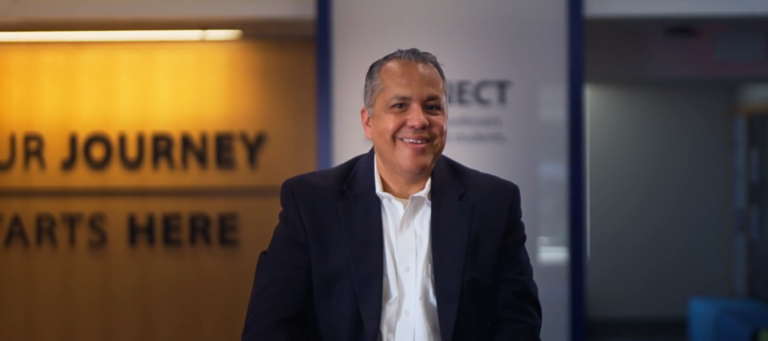
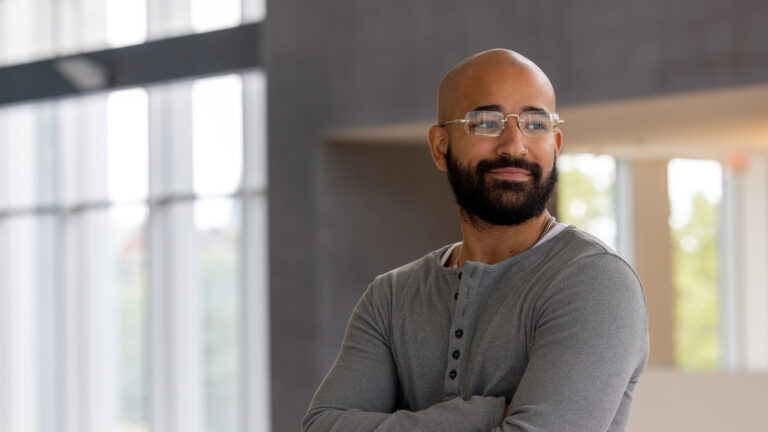


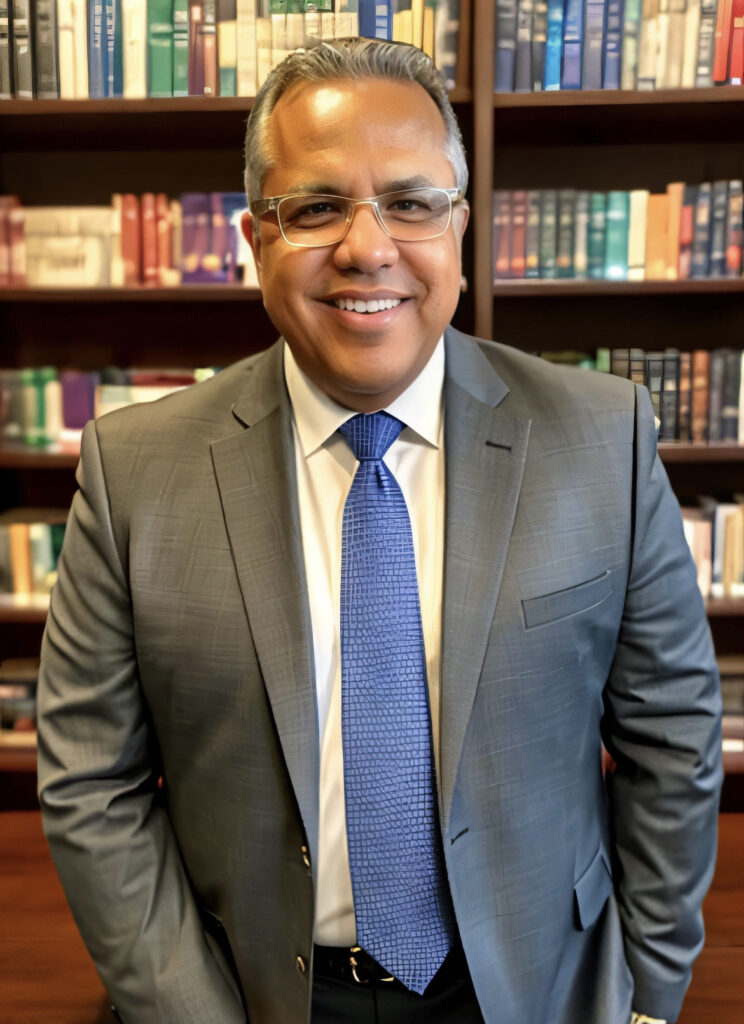
Professor Dr. Gabriel Lomas, G-’01, is Director of Gallaudet’s Counseling programs. He holds expertise on assessment, forensics, and crisis preparation. He has provided expert testimony in hundreds of court cases, most of which involve deaf people and the justice system, and presented on the school-to-prison pipeline. Lomas is one of the editors of “Deaf People and the Justice System: Selected Topics on Advocacy, Incarceration, and Social Justice,” co-editor of an upcoming book series on mental health in deaf communities, and serves as an advisor on the documentary film, “Being Michelle.”
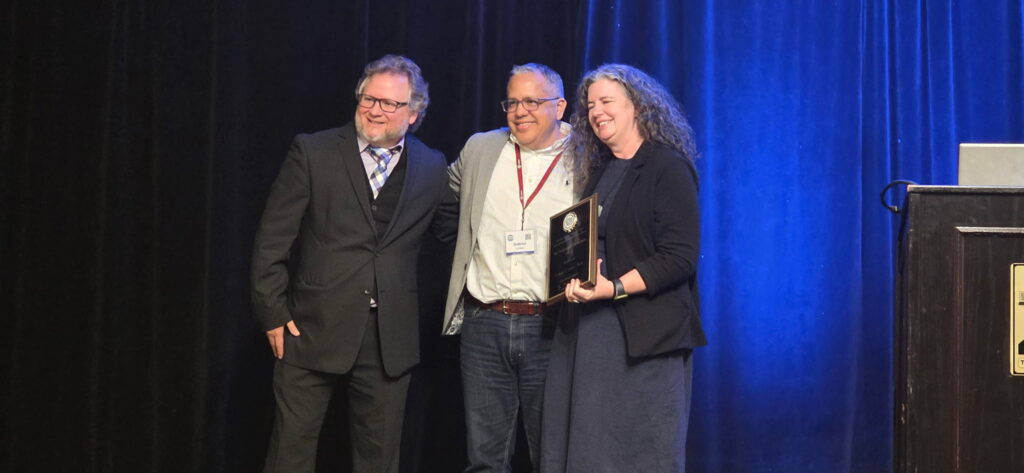
This summer, Lomas won the Frederick C. Schreiber Award, given to an individual for outstanding contributions to the American Deafness and Rehabilitation Association (ADARA), which provides a perfect opportunity to learn more about his path and current work.
After college, you were on a path to becoming a teacher. What changed for you, and what brought you to Gallaudet as a student?
I had earned my teaching certificate and was working on my MA in Deaf Education when I developed a new interest in mental health after taking a statistics course as a requirement through the Psychology department at Lamar University.
Around the same time, I went to a conference in Boston and met Dr. Frank Zieziula from Gallaudet’s Counseling Department. Eventually, he convinced me to finish my master’s degree in counseling at Gallaudet. So I did just that — I continued working in deaf education until I earned my degree. I also met my wife there.
Your trajectory and expertise have been shaped by almost a decade of private practice in Texas in the early 2000s. Can you tell us about that?
After graduating from Gallaudet, my wife and I moved to Texas, and I started working as a counselor in the Brazoria-Fort Bend Regional Day School, a deaf and hard of hearing program in southwest Houston. I became licensed and founded a private practice, the Houston Center for Mental Health and Deafness, because I recognized a need for clinical services. I called on friends who were deaf or knew ASL and began coordinating services through the center. I was also teaching at the University of Houston at Clear Lake, but we maximized our potential to provide therapy, testing, and training because there was a full-time secretary at the center, and other professionals could use the space.
I secured contracts to become a provider for Child Protective Services and the Vocational Rehabilitation system (then called DARS). Through these agencies, we conducted a large volume of assessments and therapy sessions. I also continued my academic work, getting a Ph.D. in Counseling with a specialization in School Psychology.
How did that experience impact your next steps?
When I was young, I was just going for experience and to earn an income, but I quickly noticed disparities. Hearing and deaf clients have such different experiences and access. People in poverty and people of color are overrepresented in the legal systems in our country, as are those with language delays. It took years for me to come to new realizations about disparity and people’s experiences, but that prompted my shift toward advocacy.
Do you still practice?
My focus now is on Gallaudet’s Counseling program, as well as writing and mentoring. I have also been doing a lot of competency work — evaluating deaf people who are currently being held in ICE (Immigration and Customs Enforcement) custody. It’s important to advocate for a fair application of justice for people with language and/or cognitive delays, because it can severely impact their ability to stand trial.
What are some of the biggest challenges you see out there?
The hardest cases I see tend to involve people from lower socioeconomic groups who become more disempowered by the system. The state mandates certain things, but these expectations are geared toward upper-middle-class populations. Some people are in a position where they can’t put food on the table for their kids, much less go to class or a therapy session. They are so marginalized, and yet the resources are not there for them.
Training programs that are not diverse will struggle to match clients who need services the most. I hope we can get more clinicians out in the field to do culturally competent work in ASL. We also need to do the work to recruit and retain clinicians out in the field with lived experience and who speak/sign/look like their clients as much as possible.
You’ve been a part of ADARA for many years — what is the main draw for you?
The ADARA community feels like family. It just took one conference for me to know I had to become more involved. While serving on the board, I met many influential leaders and saw how they addressed challenges to keep ADARA strong. When I was younger, I recall attending state and national conferences for professional organizations related to behavioral health. While they were helpful and inspiring, I always walked away feeling like I had to adapt what I learned to fit my work with deaf clients. I came away with new ideas, but I never felt the deep connection that I experienced with colleagues from ADARA.
You were editor of the ADARDA journal, JADARA, and responsible for moving it to a digital platform. What was that experience like?
Being an editor today is a lot of work, but 20 years ago, it was mostly done on paper. We had to stay organized and give feedback to authors without a platform that provides oversight and tracking. Budgets were shrinking, and I knew we could save money by shifting to a digital journal. Doing that helped to reduce costs, improve our ability to track publications, streamline our work, and expand our reach to new databases. It was a challenge, but also a pleasure to make that shift for ADARA.
You also edited a book about incarceration. Is there something we should understand about deaf and hard of hearing people in the criminal justice system?
There is so much I can say here. I would like to share two thoughts. First, everyone can make a difference with advocacy. State representatives are usually accessible, and they often meet with stakeholders. For people who want to make a change, your representative is a great place to start. Working together, we can make changes to the legal system so Deaf people experience true justice, rather than the marginalization that seems to dominate the field today.
Second, I would like people to think of justice as concentric circles, with jails, prisons, and courts at the center. The outer bands have other related areas such as interpreters, foster care, addiction services, parent training, and so on. Advocating for training in those outer bands can keep people from moving to the center. I would like to see every state pass legislation requiring all justice-involved people to receive a culturally and linguistically affirming evaluation that provides a blueprint of their language and cognitive functioning. This will help all providers who work with them meet their needs better. There’s lots that can be done, and every contribution makes a difference.
Based on your experience, what do you want for your students and the field?
At Gallaudet, our Counseling program is unique. It is low-residency, meaning that we can graduate people from all over the country, who are serving deaf and hard of hearing people across the nation. They can continue working during the day while taking courses at night.
A master’s in counseling seems like an amazing accomplishment, and it is, but it’s an entry point, or foundation. I want students to get their M.A. degrees and then pursue whatever lights their fire. The world of behavioral health is much larger than people think, and we need many providers across many areas: from parent training and addiction counseling to clinical work in schools, agencies, and hospitals. There are many ways people can contribute to the important work that needs to be done in the field. I want students to get out into the world and do something they really love.
Gallaudet’s Counseling Program offers hybrid graduate programs that fit your life and professional path, and equip you with tools to make a difference.