

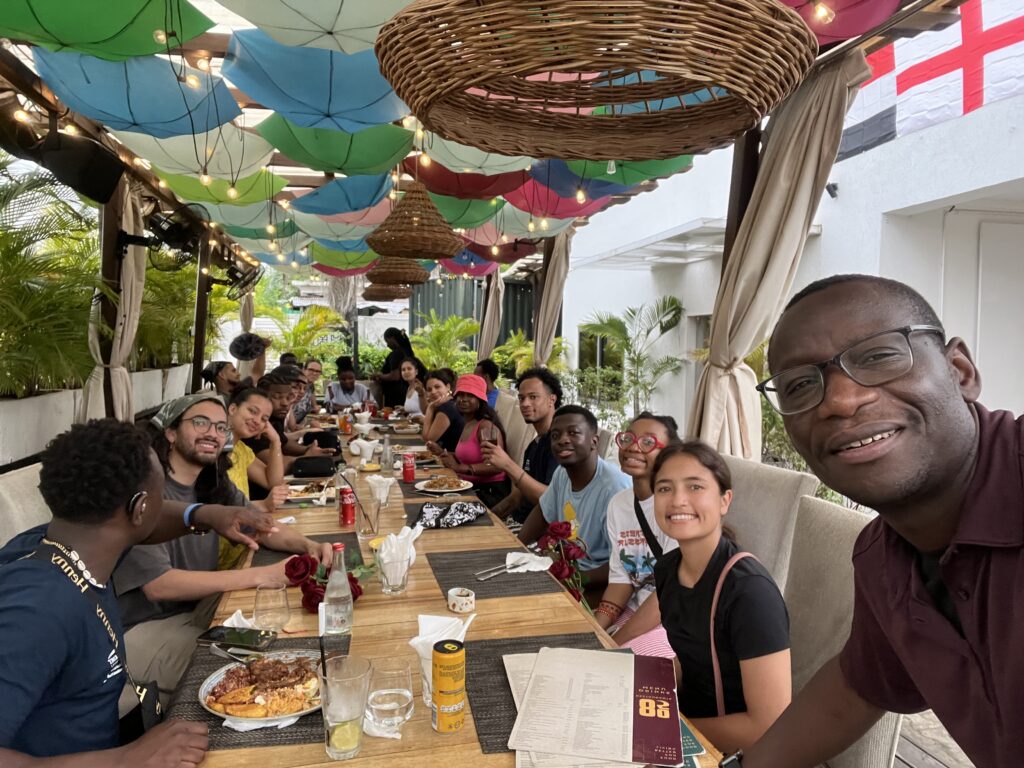
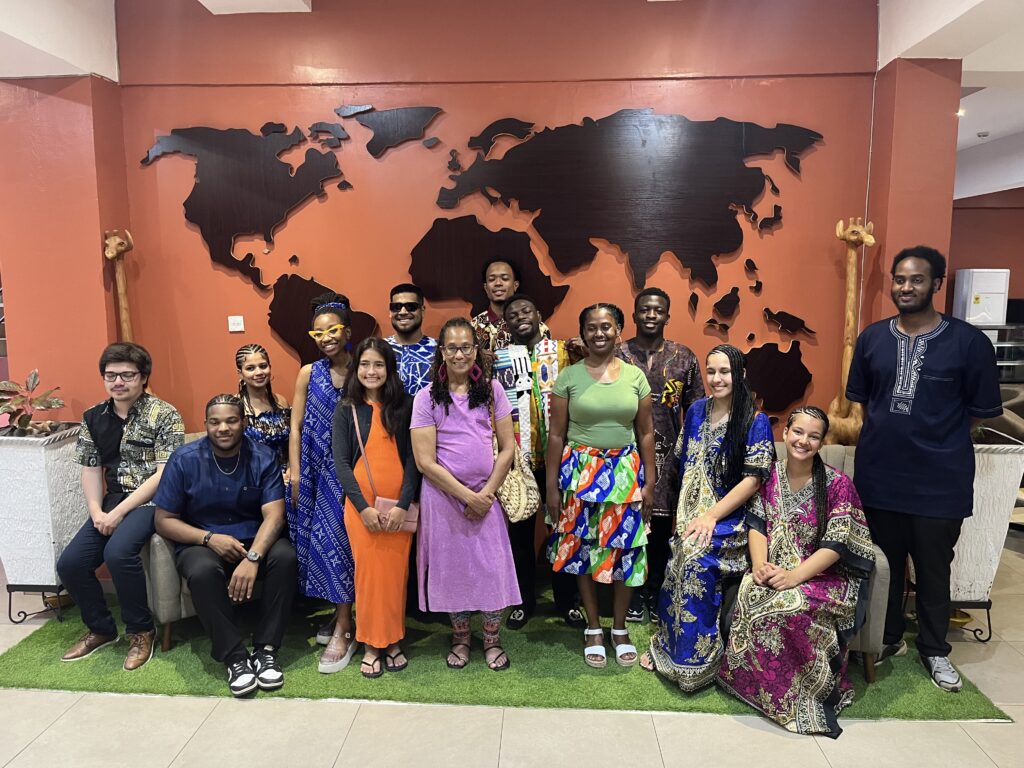
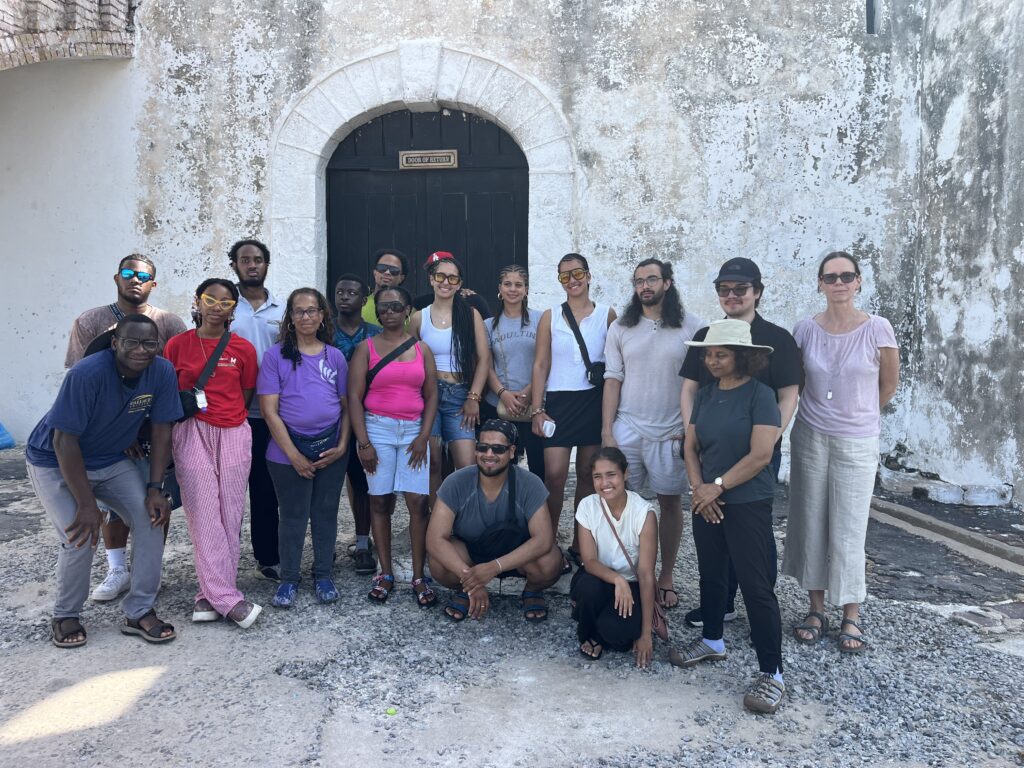
For three weeks this summer, 15 students immersed themselves in Ghanaian history and culture while engaging with locals in Gallaudet’s first Education Abroad program on the African continent.
Building on Gallaudet–Ghanaian connections
Nearly two years in the making, the program began with a collaboration between Fiona Grugan, Manager of Education Abroad and International Fellowships, and Kevin Kovacs, ’95 & G-’97, then Gallaudet’s Head Men’s Basketball Coach. Kovacs began exploring how an Education Abroad program could reconnect Gallaudet students to the university’s strong ties to Ghana, most significantly through the legacy of Andrew Foster ’54, H-’70.
Not only was Foster the first African American to receive a degree from Gallaudet, but he also became known as the father of deaf education in Africa, establishing 32 schools for the deaf in 13 African nations. He also built a pipeline of Ghanaian intellectuals, including Seth Tetteh-Ocloo, ’64 & G-’65, who was a founder of Ghana’s first state school for deaf students in 1966, as well as the Ghana National Association of the Deaf.
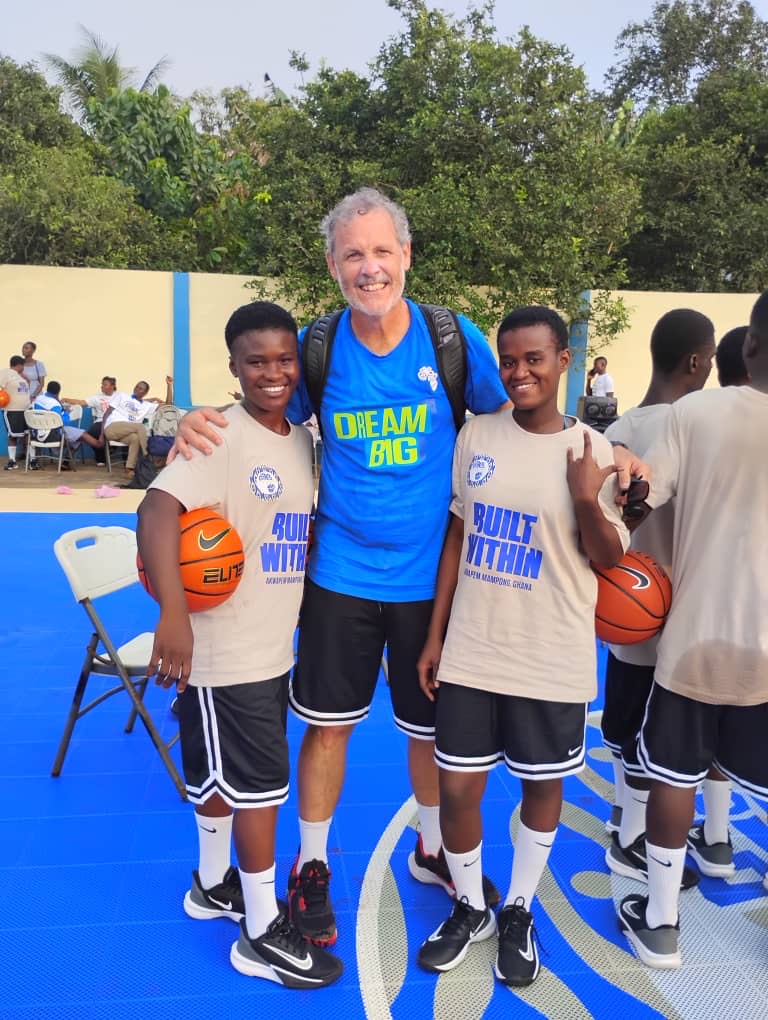
Kovacs approached Giants of Africa, an organization that aims to empower African children through basketball. They agreed to build the first-ever basketball court at Mampong School, the first deaf school established by Andrew Foster. The court was unveiled this past January at the historical site. Grugan and Kovacs built on that momentum to develop the summer’s program design and itinerary, while laying the groundwork for new relationships with Ghanaian deaf communities.
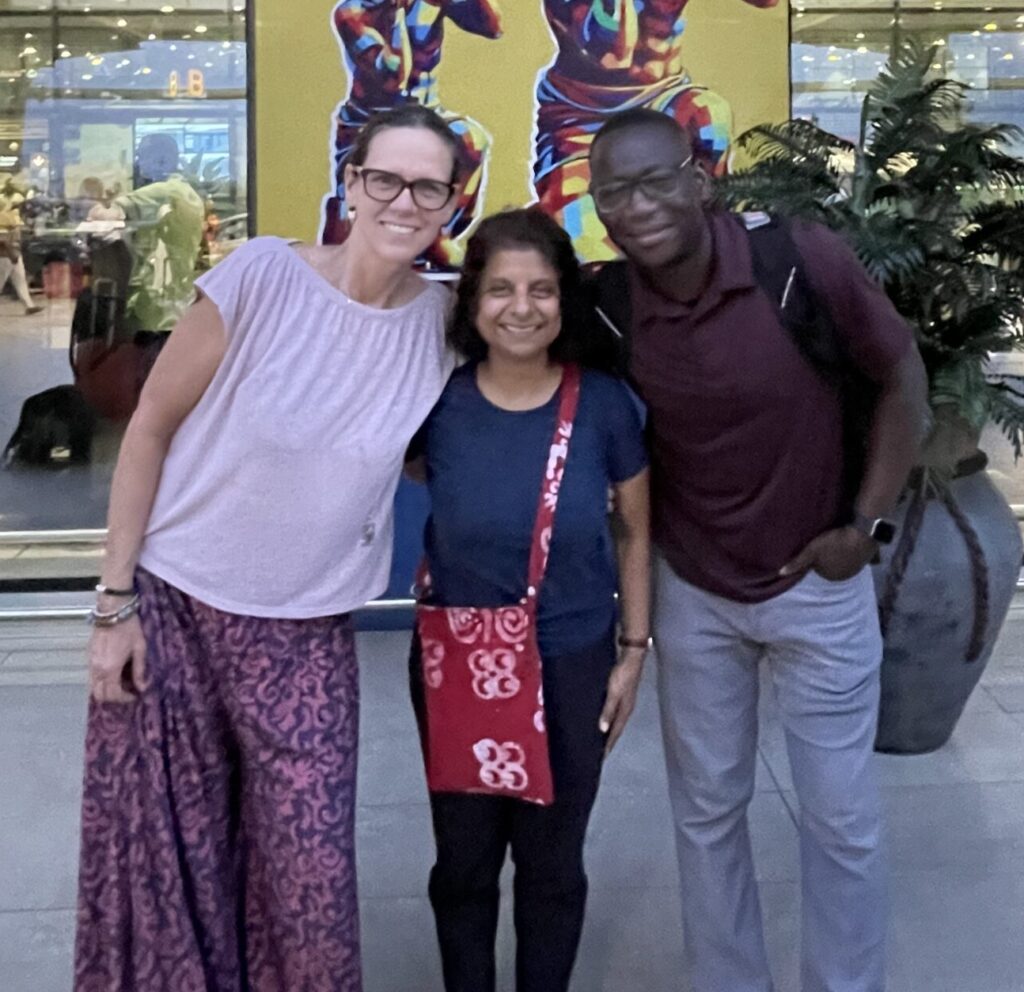
Dr. Gregoire Youbara, Assistant Professor in World Languages and Cultures, led the summer program on the ground. Anjali Desai-Margolin, ’87 & G-’92, Senior Employer Relations Manager with the Office of Career Success, and Amanda Mueller, Co-Director of Global Gallaudet, accompanied the group as staff support, bringing cross-institutional expertise to the program.
Mueller said, “This cohort planted seeds of hope through their leadership, stories, and example, while Ghana planted seeds within all of us through its history, culture, resilience, and people. That spirit of mutual growth made this experience transformative.”
Learning comes to life
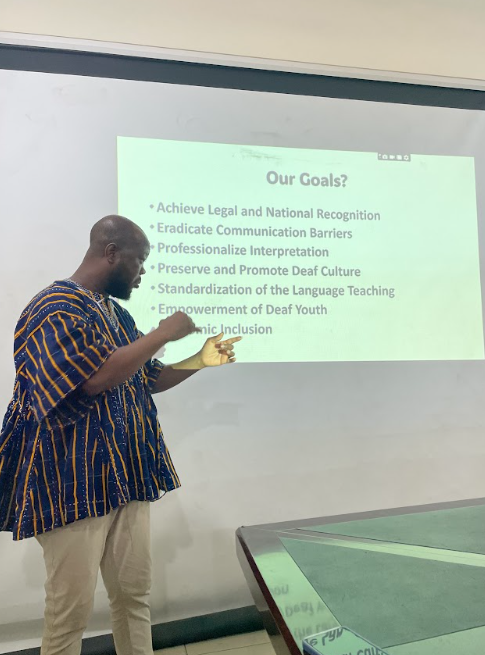
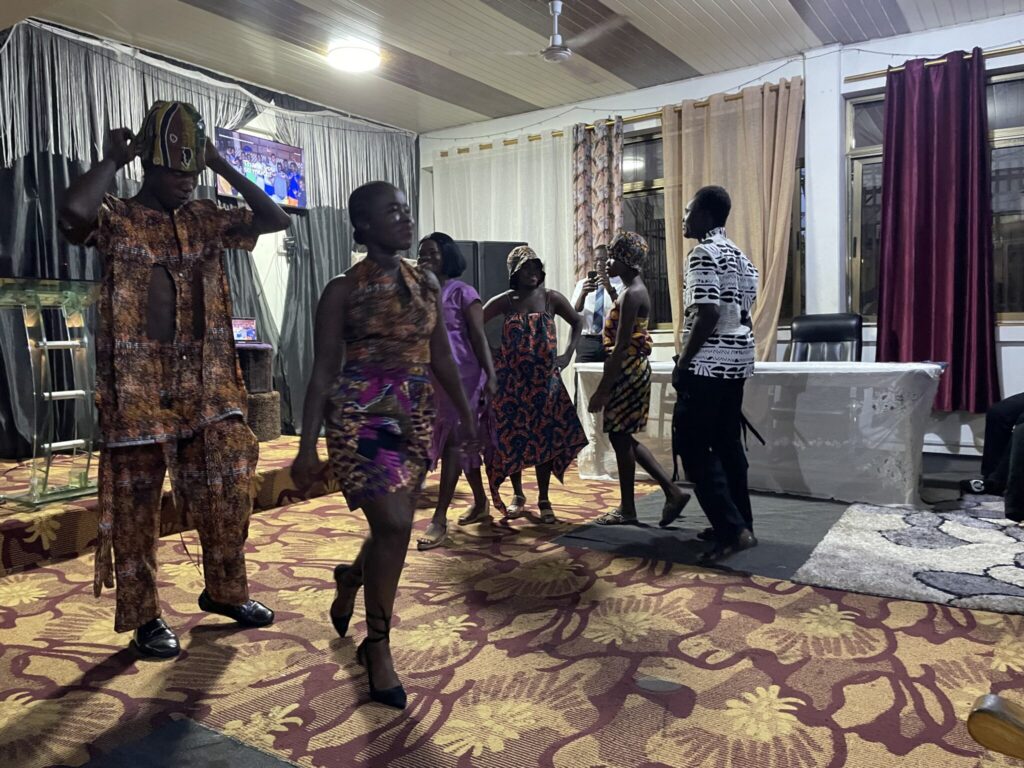
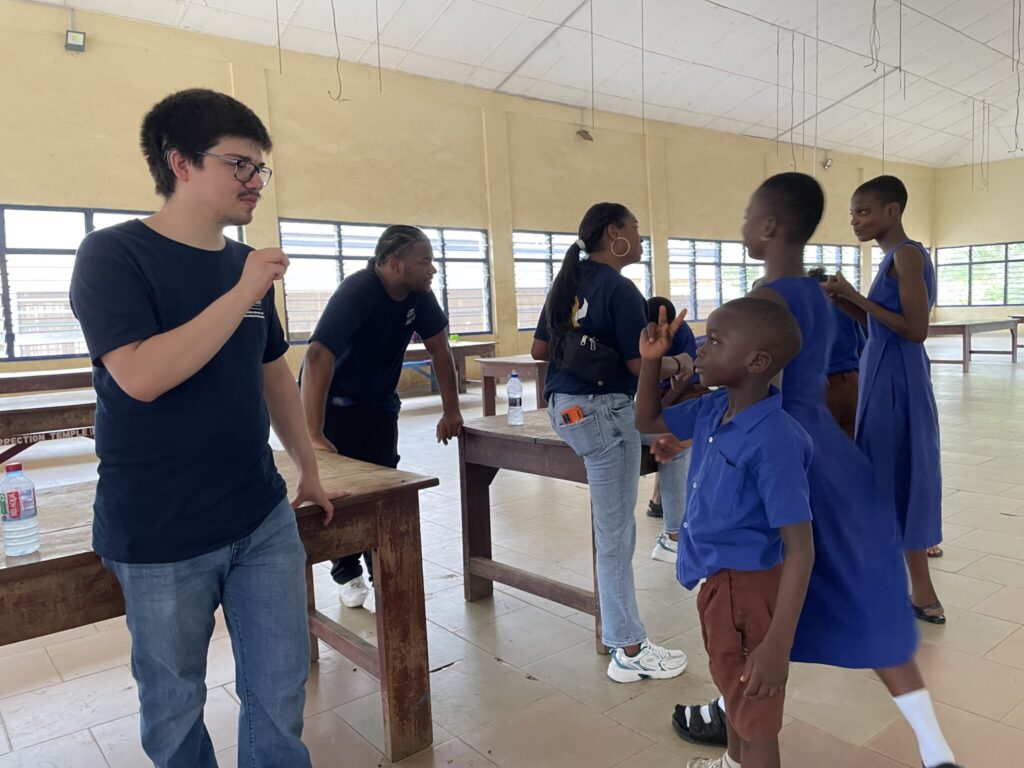
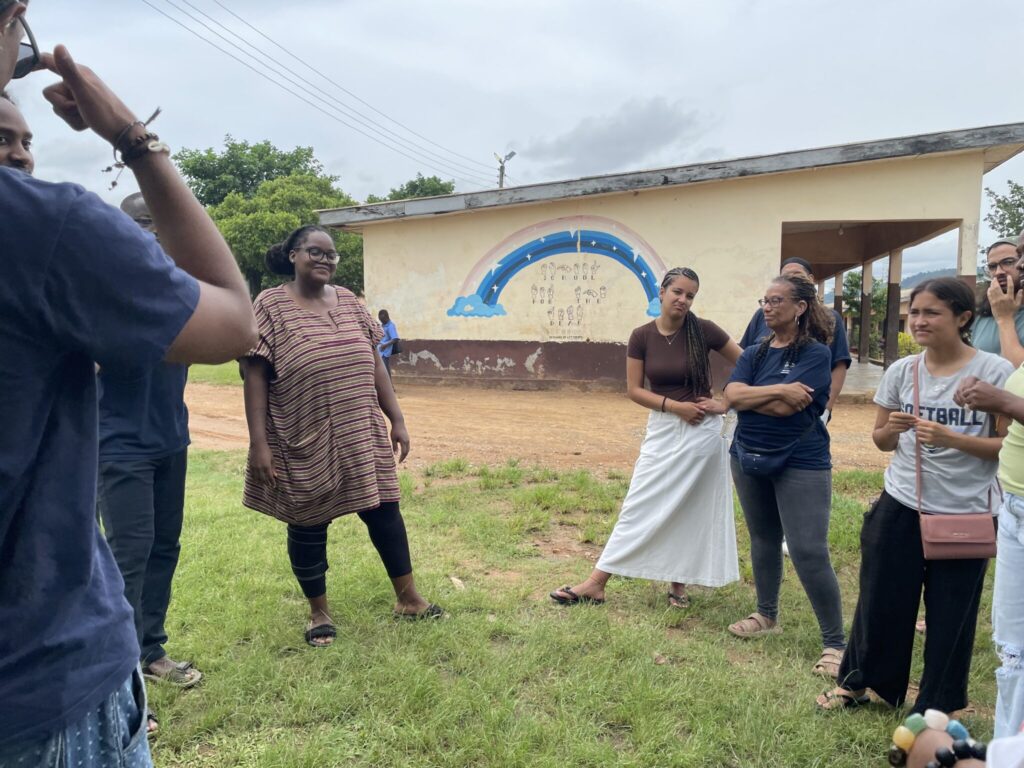
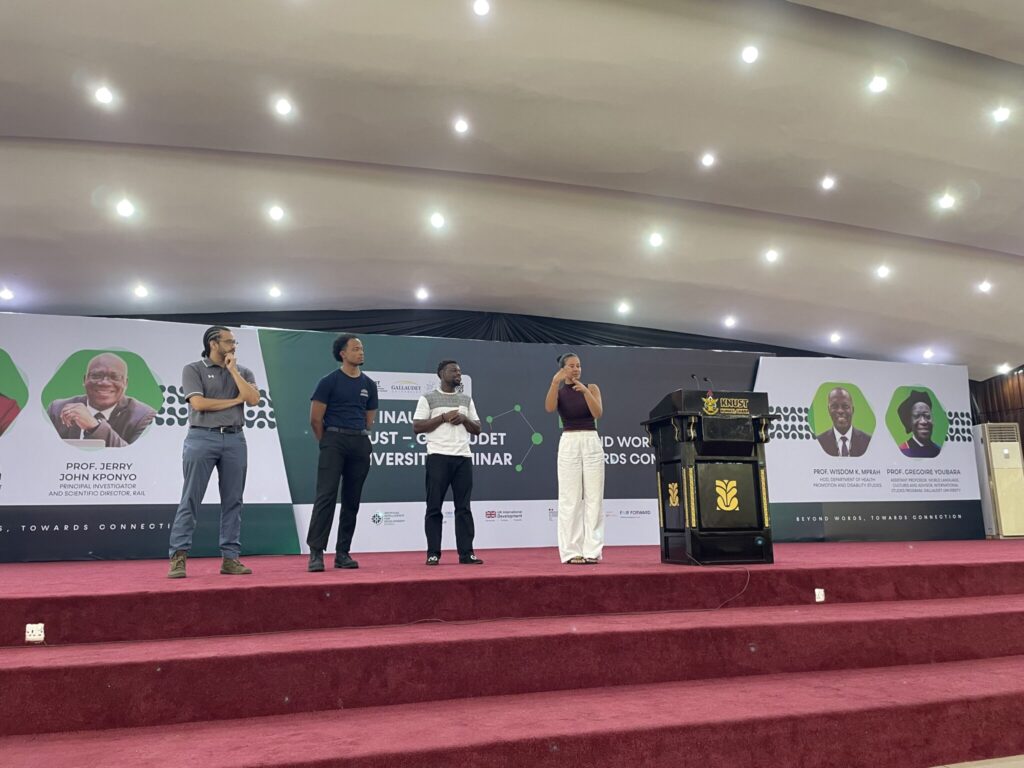
In true experiential education fashion, learning through travel earned students academic credit for two courses. For Ghana Deaf Community in Context (WLC 295), Gallaudet students engaged with and learned from local Deaf communities and leaders, communicating across languages and cultures with the support of a local Ghanaian Sign Language (GSL) interpreter. They also learned some GSL themselves.
Senior Gideon Nyame enjoyed comparing American Sign Language (ASL) and GSL, saying, “It reminded me that Deaf communities around the world have their own languages, cultures, and experiences. As a Gallaudet student, it made me think more deeply about what we can learn from Deaf communities outside the United States.”
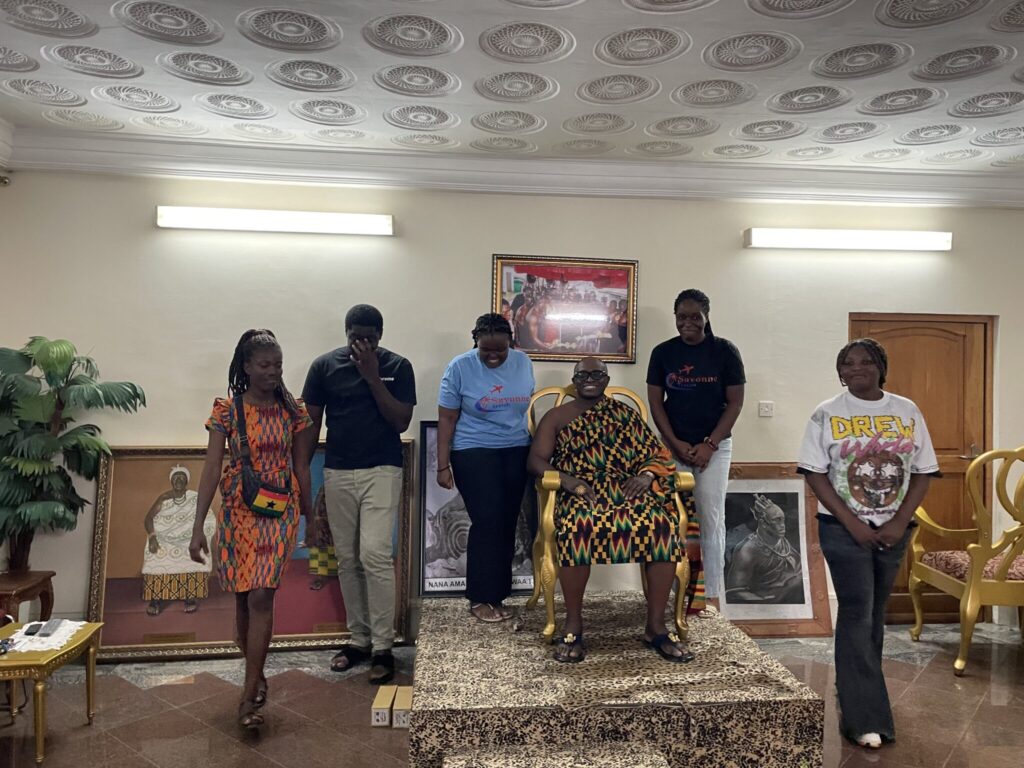
Several students say a highlight of their trip was a private audience with the Chief of Koforidua, Daasebre Kwaku Boateng III. Senior Darico Castillo says, despite the translation chain consisting of 3 languages, the Chief warmly welcomed them.
“What stood out to me was how invested he was in the exchange — this was not a quick or ceremonial greeting, but a real back-and-forth where we talked with each other about the issues the community faces. Connecting to what we had been learning in the classroom, I could see the importance of chieftaincy and local leadership in Ghanaian society firsthand, and how respect, protocol, and dialogue all shape those interactions,” reflected Castillo.
When the Chief explained his efforts to ensure women have access to high school education, Gallaudet students asked if he would consider doing the same for deaf students, since there is only one secondary school for deaf children in all of Ghana, Mampong Deaf School.
Nyame noted, “Our presence gave us an opportunity to show that deaf people should have access, opportunities, and a voice in conversations that affect their communities. It showed me that advocacy can happen not only through protests or formal organizations, but also through conversations, relationships, education, and meeting directly with leaders.”
Connecting with deaf students, from K-12 and beyond
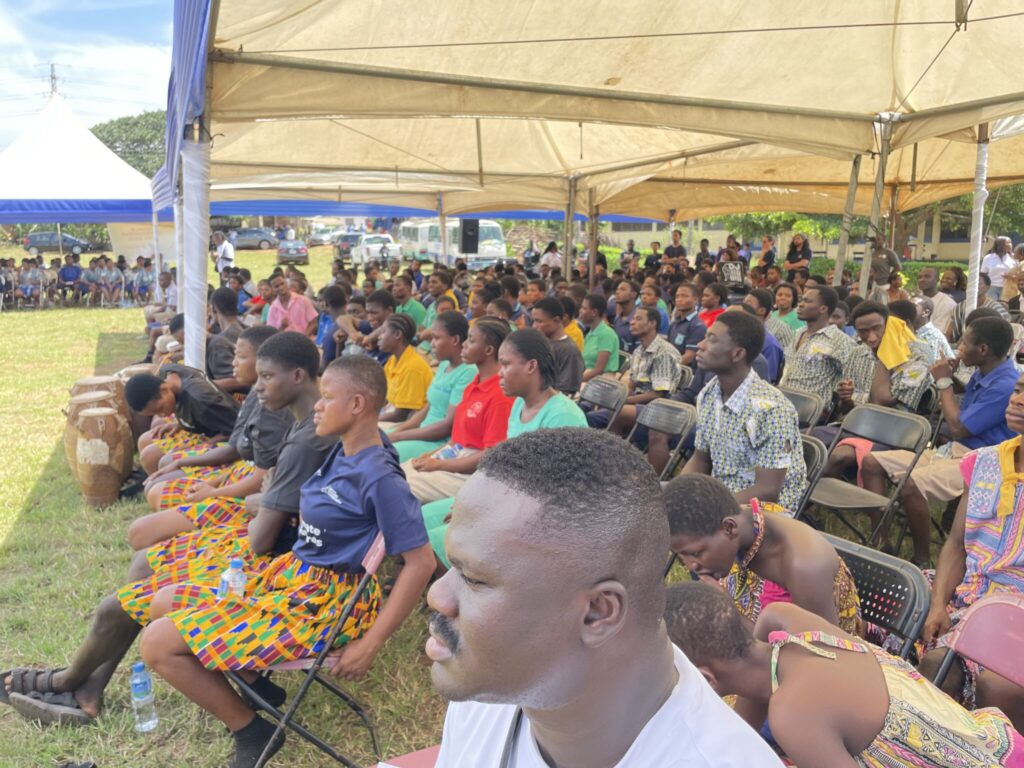
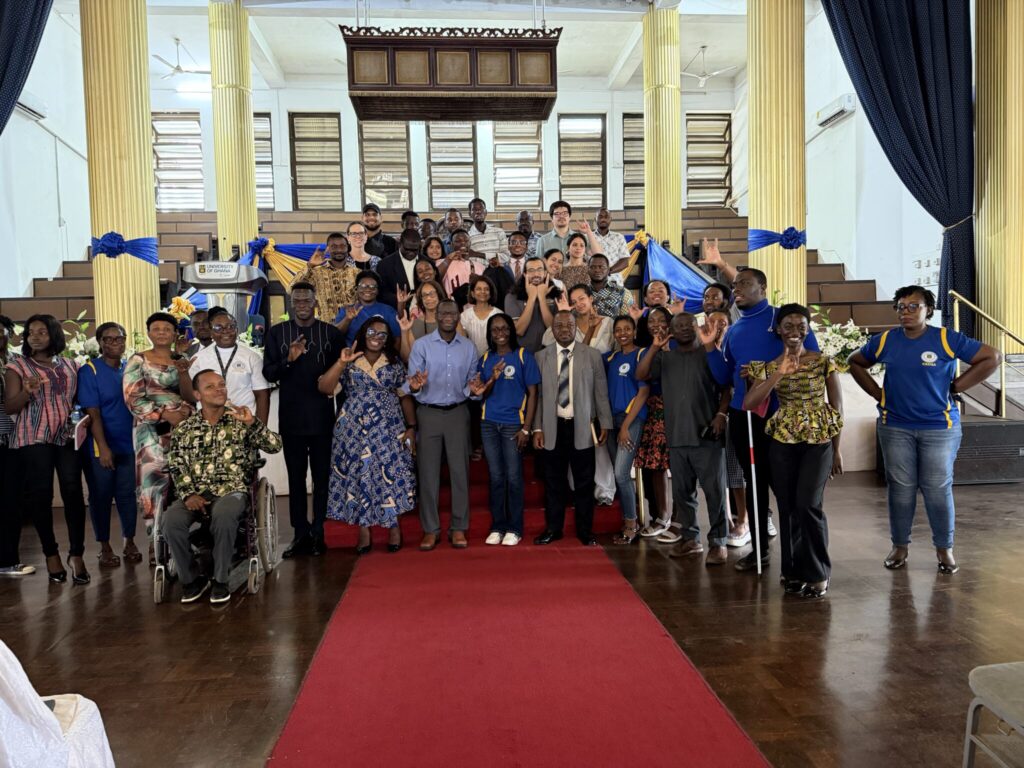
Gallaudet students visited several schools where they were warmly welcomed by educators, administrators, and children. Their interactions were memorable in several ways. “Visiting deaf schools and interacting with Deaf Ghanaians helped me realize that community is not only about having technology or resources. It is also about people supporting each other, sharing language and culture, and making sure deaf people feel connected,” says Nyame.
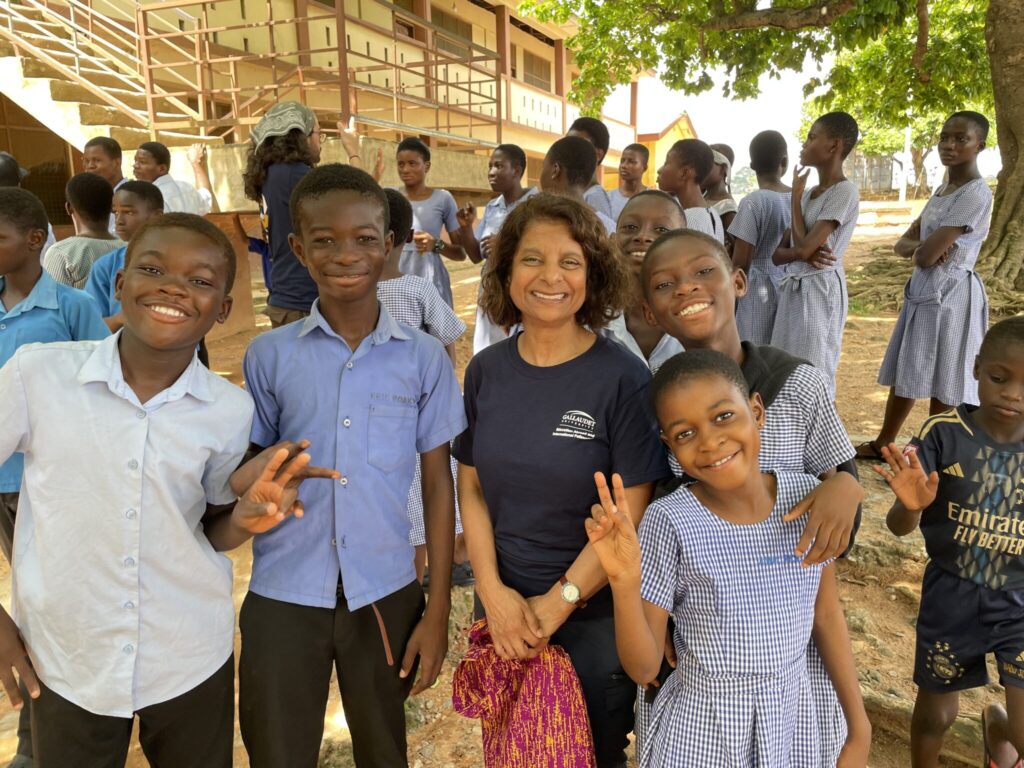
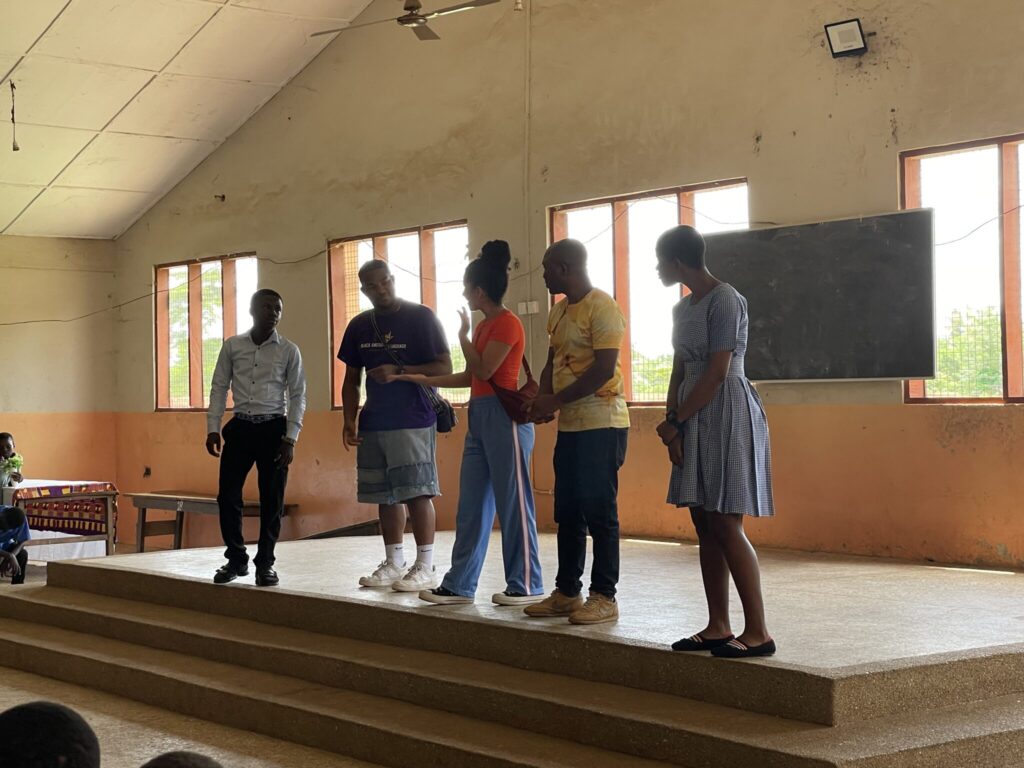
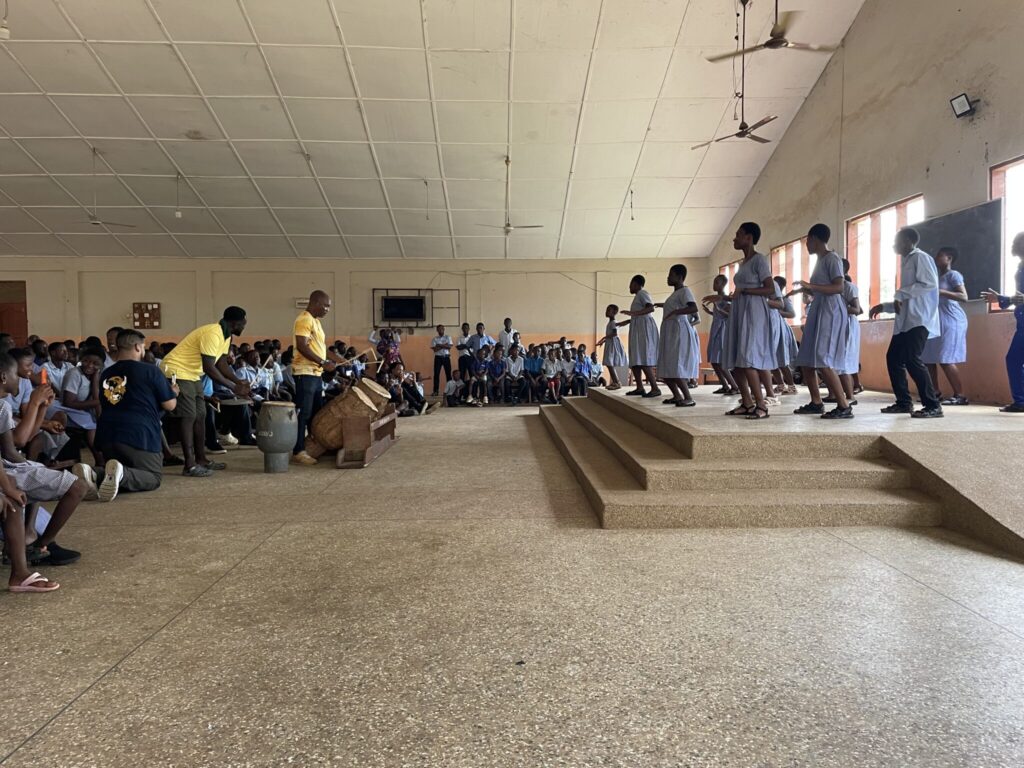
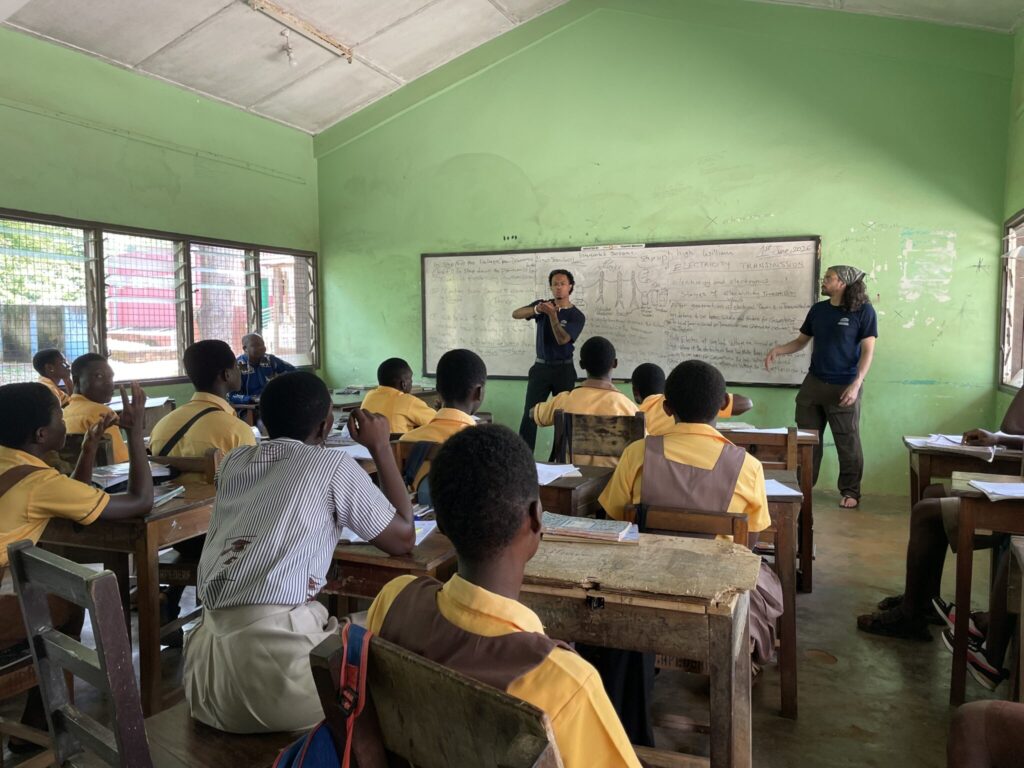
“Before this trip, access was something I mostly took for granted, and I had not really stopped to think about how much of it depends on awareness, resources, and early support,” says Castillo. “It made me realize that access is not a given, that it is unevenly distributed, and that even communities that face real barriers can be full of talent, resilience, and hope. That shift in perspective is something I will carry with me long after the trip.”
On hallowed ground
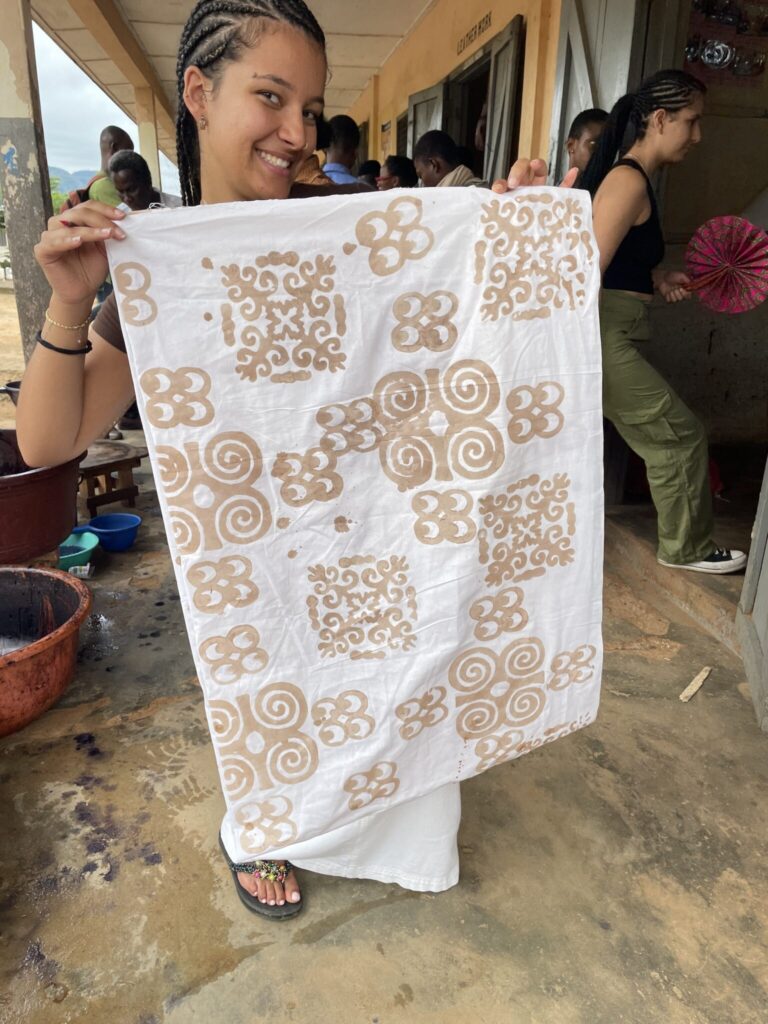
Through their travels, the Gallaudet group gained an understanding of Ghana’s culture, history, customs, and contemporary issues by touring key sites and engaging in discussions. These explorations were the backbone of their second course, Africa Through Experience: Ghana (WLC 395). One tour included the Assin Manso River and Elmina and Cape Coast Castles, historical sites where enslaved peoples were forcibly transported across the Atlantic.
“The dungeons and the ‘door of no return’ hit me the hardest,” says Castillo. “Standing in that space and understanding what it represented—the last point enslaved people passed through before being forced onto ships, never to return—was overwhelming because of the sheer weight of the history held there.”
The trip felt personal to Stephanie Jean Herring, ‘26, who says, “The experience made me think deeply about my identity as a Black person and about the strength and resilience of my ancestors. At the same time, it can reveal how much pain they suffered. It also reminds me that the effects of slavery are connected to today’s racism, systemic inequality, and painful trauma.”
Desai-Margolin observed, “It was incredible to watch the students engage with such curiosity and ask insightful questions. Seeing their understanding of Ghana’s history and culture deepen throughout the trip was both inspiring and rewarding.”
Next steps for Gallaudet in Ghana
Grugan says Education Abroad hopes to offer the Ghana program again in 2028, and that planning is already underway, saying, “We want to build on the community-based global learning model, with students learning alongside Deaf Ghanaian organizations, schools, and community members.”
“I am ecstatic that future Education Abroad trips will bring more light and attention to Africa and to witness the outstanding and unbelievable work Andrew Foster has done that still exists and thrives today,” says Kovacs.
If this past summer is anything to go by, the effort is well worth it. Students like Castillo say it was the most meaningful trip they’ve been on and that it will stay with them for a long time. “I came on this trip expecting to learn, but I did not expect how much the experience would shift my own perspective, both on the Deaf community and on history itself. I am grateful for every person who welcomed us, taught us, and shared their lives with us,” says Castillo.
See more of the action in Ghana on Education Abroad’s Instagram page. Discover how Gallaudet’s Education Abroad can transform your life through travel.