

Featured image credit: Terence Crayton
The museum world just got more accessible. This past June, the highly anticipated Obama Presidential Center Museum opened to the public in Chicago, Illinois. Eight days later, the National Geographic Museum of Exploration (MOE) premiered in Washington, D.C.
The two institutions have more than the month of June in common. Their comprehensive use of American Sign Language (ASL) is breaking ground in making museums accessible to deaf visitors.
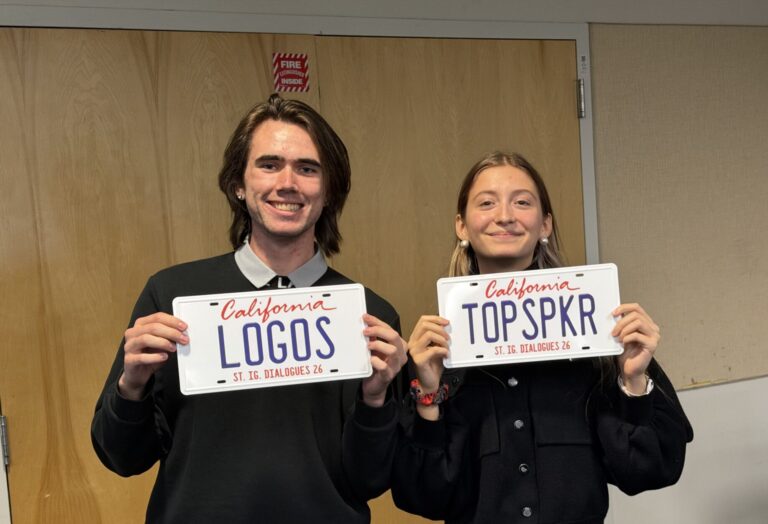
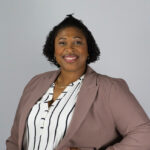
Gallaudet alumni Storm Smith, ’10, worked with both museums as a Creative Accessibility Consultant. Among the many deaf people she recruited for the projects were nine other Gallaudet alums. Their diversity of backgrounds, experience, and education shows why successful Gallaudet graduates are found in every industry around the globe.
Building connections
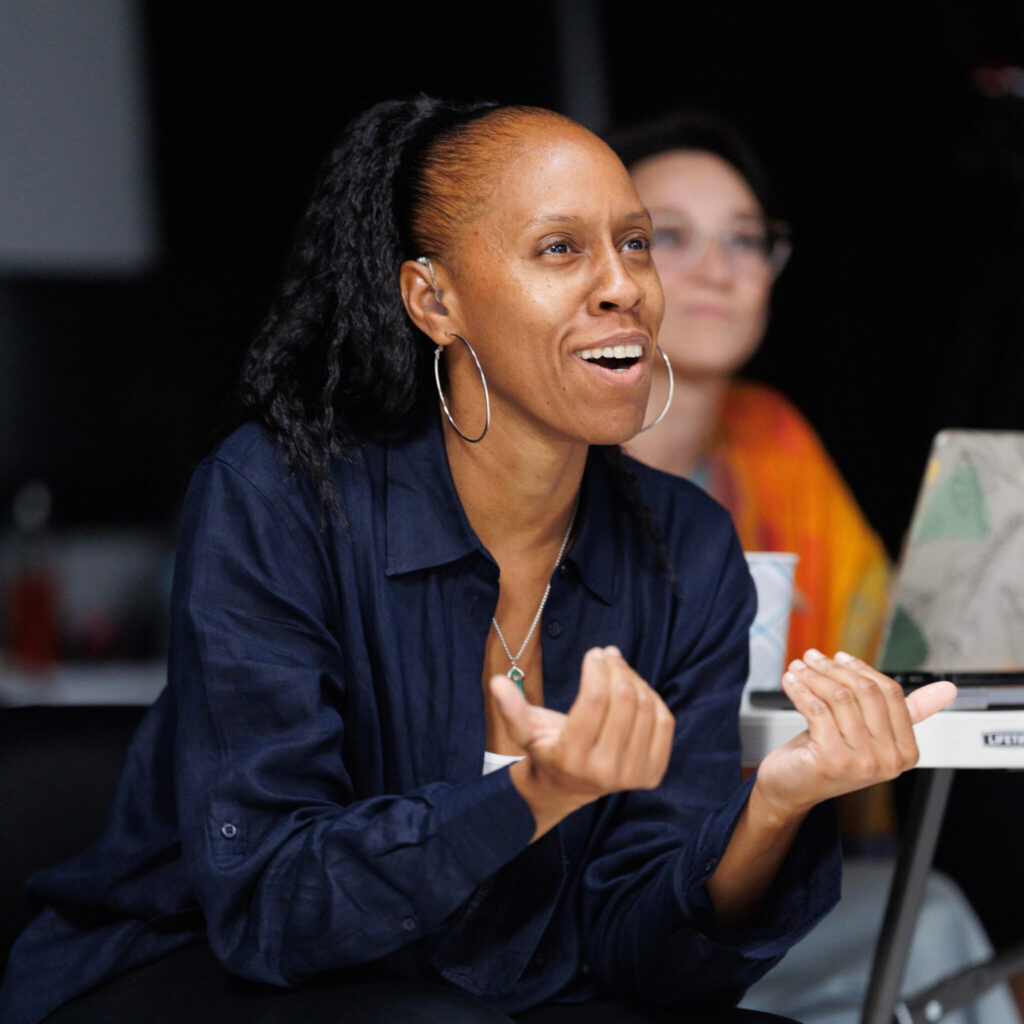
Smith has been building her skills in the creative and accessibility spaces since she graduated from Gallaudet with a B.A. in Psychology. While her degree didn’t teach her how to storyboard a video project, it gave her a foundation that prepared her to work with others.
“What has always guided me is a desire to create work that is both creatively strong and deeply human. Work that reaches people, includes people, and moves culture forward,” says Smith.
After graduation, she worked for Gallaudet in various creative roles. At the same time, she earned an M.A. in Media Entrepreneurship from American University. She went on to work with acclaimed advertising agency BBDO as an Art Director and Producer. During a second stint at Gallaudet, Smith shepherded a unique collaboration with The Coca-Cola Company. Today, she works as a consultant under her brand Sunnie&Co.
Through it all, Smith has stayed grounded in community. In 2020, Barack Obama recognized her in an Instagram post about disability rights activists.
Making museums accessible
The Obama Foundation was formed during President Barack Obama’s second term. Soon after, they started planning and developing the Obama Presidential Center. The completed campus in Jackson Park spans 19.3 acres, including a public library branch, NBA-regulation basketball court, fruit and vegetable garden, 1.25-acre playground, and more.
Standing tall on the grounds is a 225-foot tower that includes the four floors of the Obama Presidential Center Museum. From the beginning, the Foundation team had a goal of making the campus and museum exhibits accessible and welcoming for all visitors.
“We are proud to offer one of the most inclusive experiences at a cultural institution in the country here at the Obama Presidential Center,” says Valerie Jarrett, CEO of The Obama Foundation. “It was important to us from day one of planning the Center’s campus to prioritize accessibility and show other institutions how we can continue to move the bar forward with new and improved best practices to create spaces for people of all abilities to gather.”
The Obama Presidential Center Museum includes accessibility features like on-screen captions, braille and tactile signs, wellness rooms, and mobility aids. Custom keypads allow access to features like audio and visual descriptions, and volume controls. As the films for the Museum were being created, the staff knew they wanted to add on-screen ASL translations.
The City of Chicago Mayor’s Office for People with Disabilities partnered with the Obama Presidential Center to consult on their accessibility features. Commissioner Rachel Arfa remembers, “When the ask came for a deaf creative consultant, I immediately thought of Storm Smith and given her visionary lens, I knew she would do this justice.”
After a thorough interview process, Smith joined the project in February 2025. “Being invited into this work felt like a full-circle moment I could not have imagined,” she says. “I carried a deep sense of gratitude, not only for the opportunity, but for the responsibility to help shape something that will live beyond all of us.”
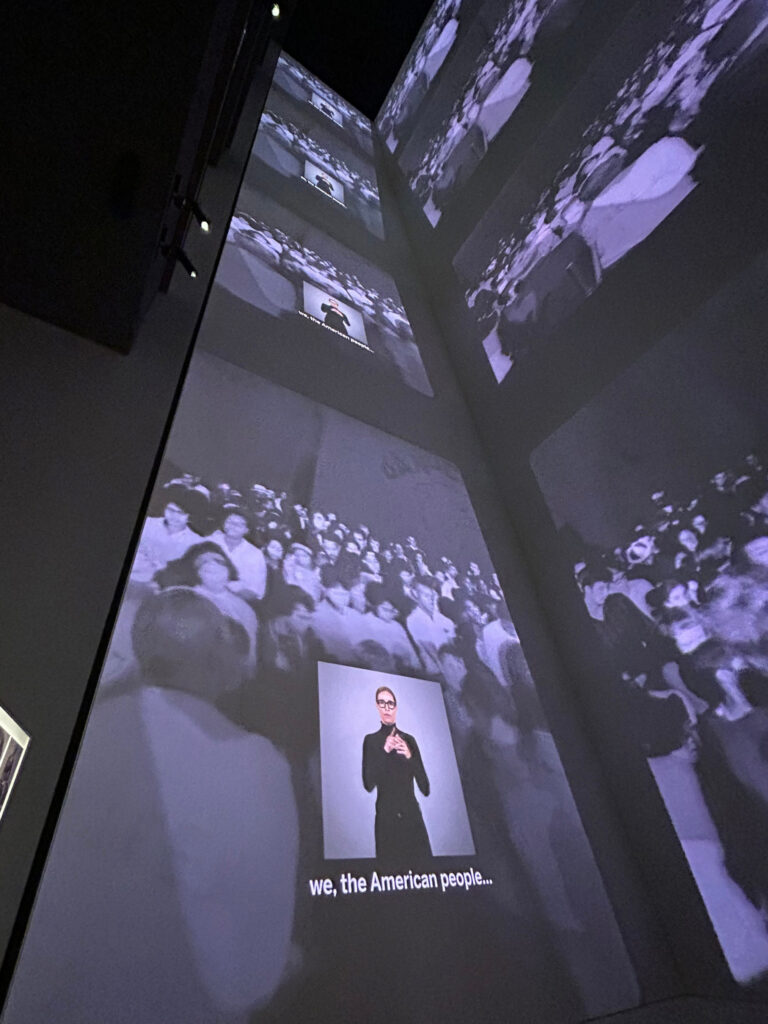
Inside the Center, physical displays and film explore the story of Barack and Michelle Obama, the Obama presidency, and American democracy. Every piece of video footage is accompanied by a deaf signer using ASL. An 88-foot projected film that spans all four stories of the Museum space ties the visitor experience together. Each floor’s landing has its own corresponding ASL video, ensuring that deaf visitors have access no matter where they are in the museum.
In addition to ASL translations, Smith consulted on the Center’s use of captioning for Museum exhibits. The final captions include not only speech, but background audio such as music and environmental noises.
The National Geographic Museum of Exploration is also the result of a comprehensive development process. The MOE is a collection of interactive and educational experiences. The grounds contain 100,000 square feet for visitors, greatly expanding the museum and gallery space on the National Geographic campus in D.C.
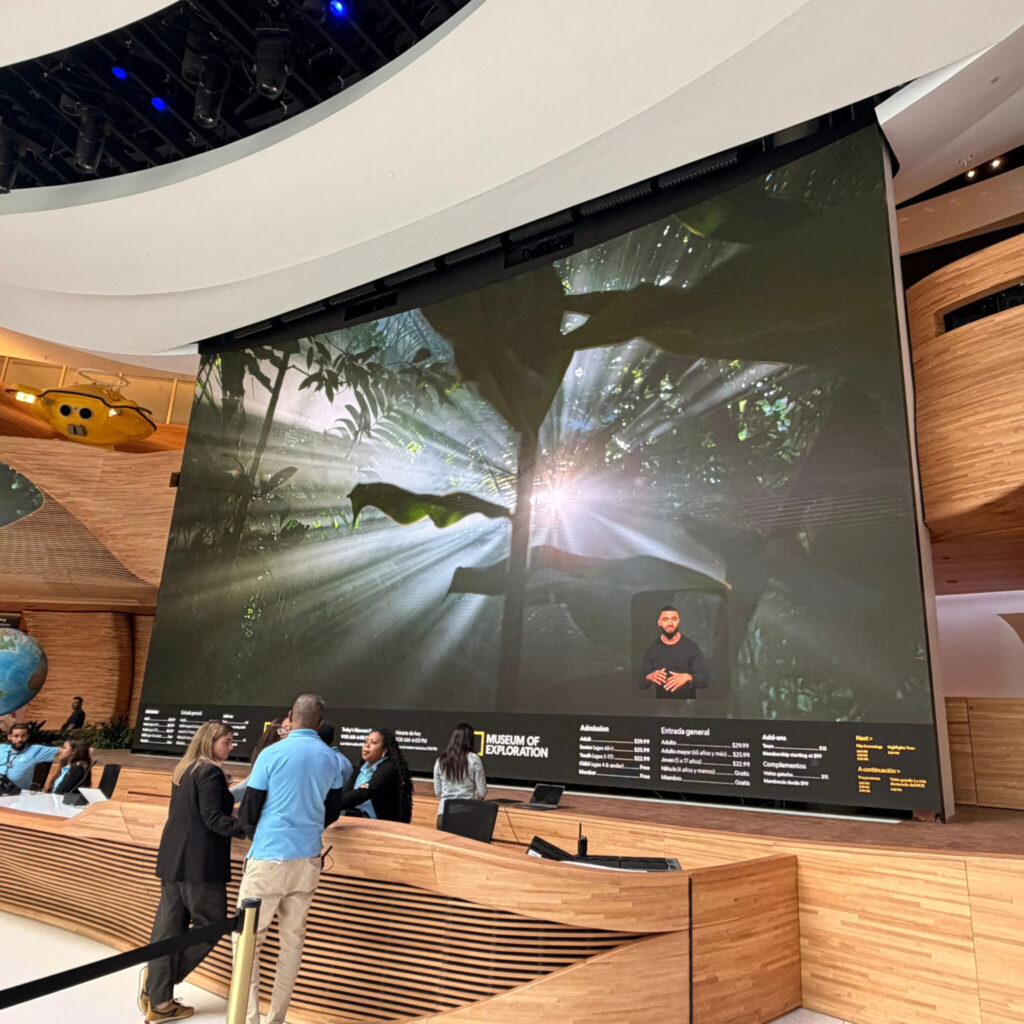
The museum makes extensive use of video displays to tell stories of history, culture, wildlife, and geography. Almost all of the videos in the museum’s permanent exhibitions have ASL translations available, and many others have audio descriptions. Every video at the MOE has captions.
Says Colleen Prior, Content Research and Accessibility Manager at the National Geographic Society, “Here at the MOE, we believe that exploration is for everyone. That ethos meant that our exhibits had to be accessible to as many people as possible so that every visitor could embrace their inner Explorer. We were so fortunate to have Storm and her team come aboard; they were critical partners in making the MOE an experience that is truly welcoming for deaf audiences.”
Building the teams
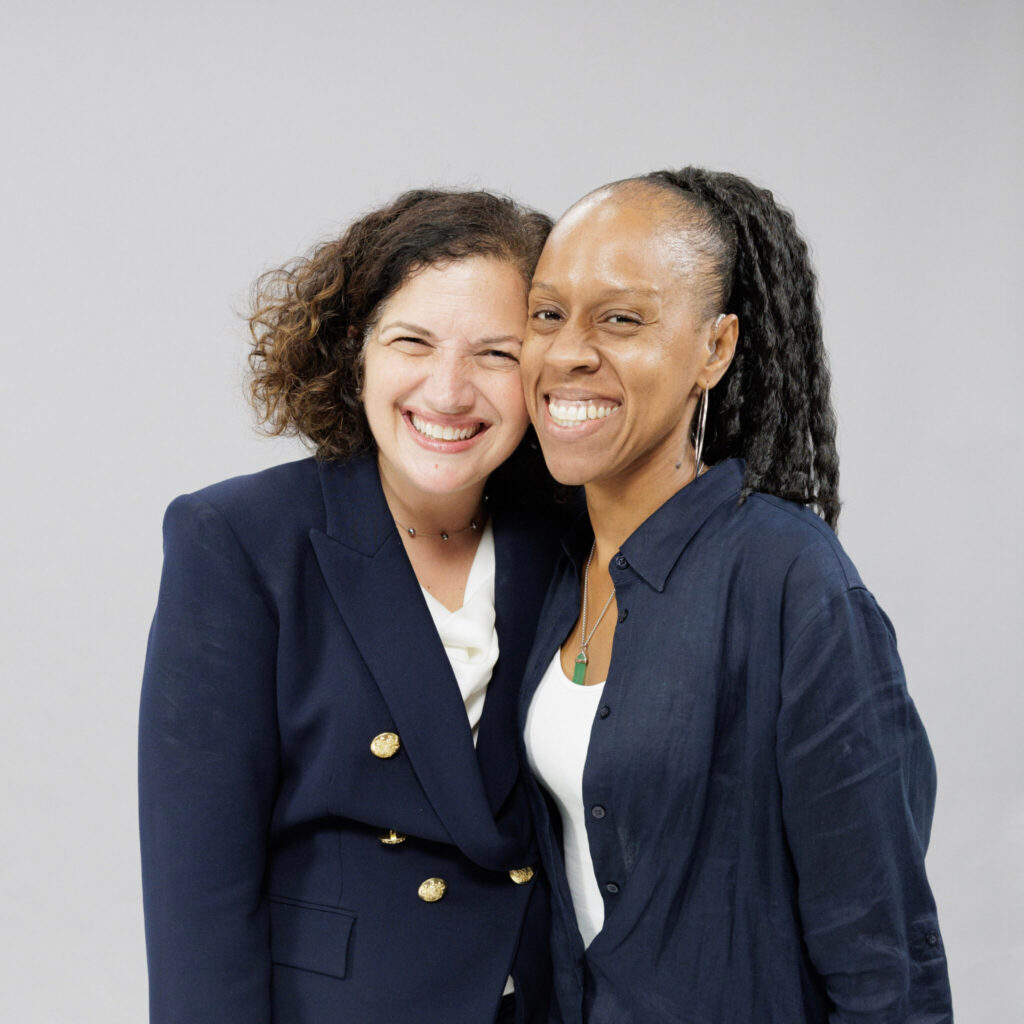
When Smith was hired by the Obama Center, she knew she needed an incredible team. She asked Tyrone Giordano, ’99, to be the Director of Artistic Sign Language (DASL). Giordano graduated from Gallaudet with a degree in English, which translated to a career in the arts. Afterwards, he became an accomplished actor, translator, producer, and DASL.
“I immediately jumped at the chance to work with Storm, knowing her values and similar desire to shake things up and create a positive impact in the world,” says Giordano.
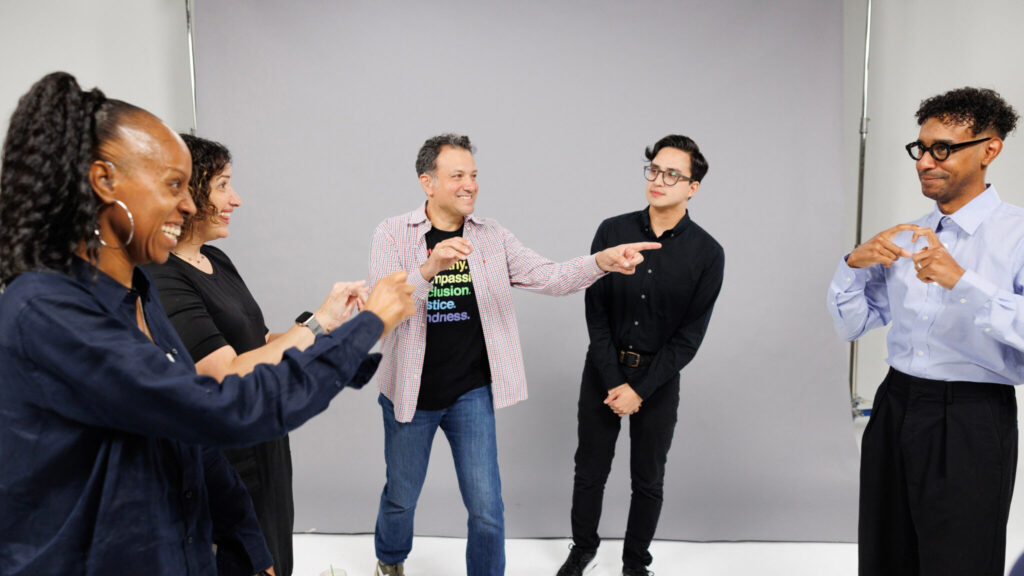
Giordano and Smith were joined behind the scenes by Co-DASL Crom Saunders. The three production leads worked with the Obama Presidential Center team to audition and select onscreen talent. Smith knew she had to find performers who could convey a wide range of information while matching their signing to the tone of the videos.
In addition to a cast of general signers, the Obama Center tasked Smith with finding deaf performers who could represent President Obama and Mrs. Obama themselves. They selected acclaimed artist Jeremy Lee Stone to sign for Barack. Michelle is represented by well-known Deaf Interpreter April Jackson-Woodard, ’12, who graduated from Gallaudet with a B.A. in Business Administration.
“Being chosen as the signer for Michelle Obama was an incredibly meaningful experience for me,” says Jackson-Woodard. “As a Black Deaf woman and a Deaf interpreter, it was especially powerful to see ASL and Deaf representation included in a project of this magnitude. I understood that I wasn’t simply signing words… I was helping create an experience that would be accessible, authentic, and meaningful for Deaf visitors and audiences.”
Jackson-Woodard and Stone were joined by several other signers, including Gallaudet alums Andrea Sonnier Babin, G-’19; Amelia Hensley, ’13; and Dr. Christina Hopewell-Albert, G-’14. As visitors explore the museum, they are surrounded by American Sign Language delivered by deaf performers.
“I love watching as patrons arrive and see the first video in ASL,” says Arfa. “Their first reaction is delight, and then turns to awe and disbelief as they look at the rest of the exhibits on the floor and realize that every digital exhibit is accessible in ASL.”
In addition to the sign language translations in the video exhibits, the Obama Presidential Center’s Campus Guide app has an ASL accessibility option that includes Giordano; Hensley; Jackson-Woodard; Stone; and Alexandria Wailes, MSSD ’94.
The Obama Presidential Center’s crew worked so well together that Smith reunited many of them for the MOE project. Giordano returned as DASL and Daniel Katz-Hernandez, ’14, joined the team as a Production Assistant.
Onscreen signers Babin, Hensley, Hopewell-Albert, and Jackson-Woodard were joined by more deaf performers, including fellow Gallaudet alums Darrius Doe, ’18; Arlene Ngalle, ’17; and Guthrie Nutter, G-’15. The variety of signers ensured that the ASL translations would be able to match the diverse cast of narrators and experts in the MOE videos.
“What made it really special was that everyone brought something different to the table, but we were all there for the same reason,” says Smith. “There was a lot of trust, respect, and care. And we had fun, too. We really felt like we were building something bigger than ourselves, creating space for people to feel seen, have access, and experience the museum together. To me, that was the real honor.”
Tight-knit teams
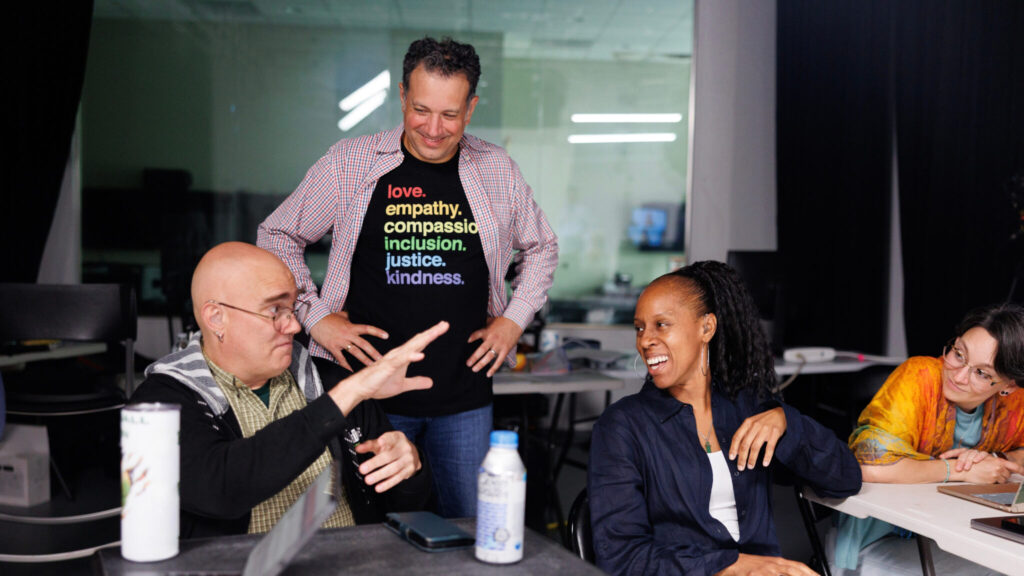
Producing the videos for both the Obama Presidential Center and the MOE required a village’s worth of collaboration. The Deaf professionals involved in the projects knew the significance of the work they were doing and put everything they had into the process.
“There was no ego in the room,” Smith says.
In addition to their diverse backgrounds, the ten Gallaudet alums involved each had different degrees. The varied identities and knowledge allowed the group to tackle every challenge that came their way.




Filming in Chicago
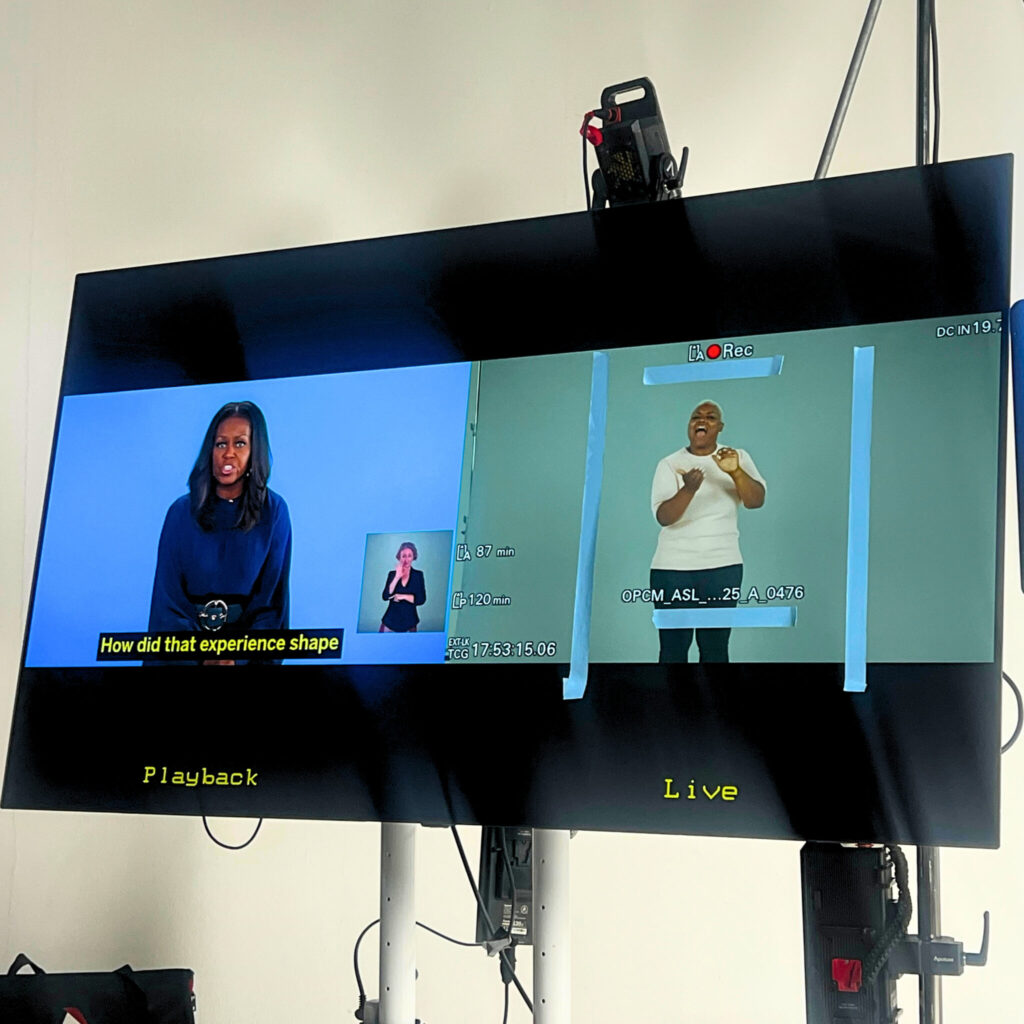
Production for the Obama Presidential Center Museum’s films took place in downtown Chicago. The bulk of filming took place over five months and the crew was on set 10-12 hours a day, four days a week. The Deaf production team worked with filming consultants from batwin + robin productions, who were eager to follow the lead of the deaf experts in the room. During all phases of the process, three ASL interpreters were on site to facilitate communication between the deaf and hearing crew members.
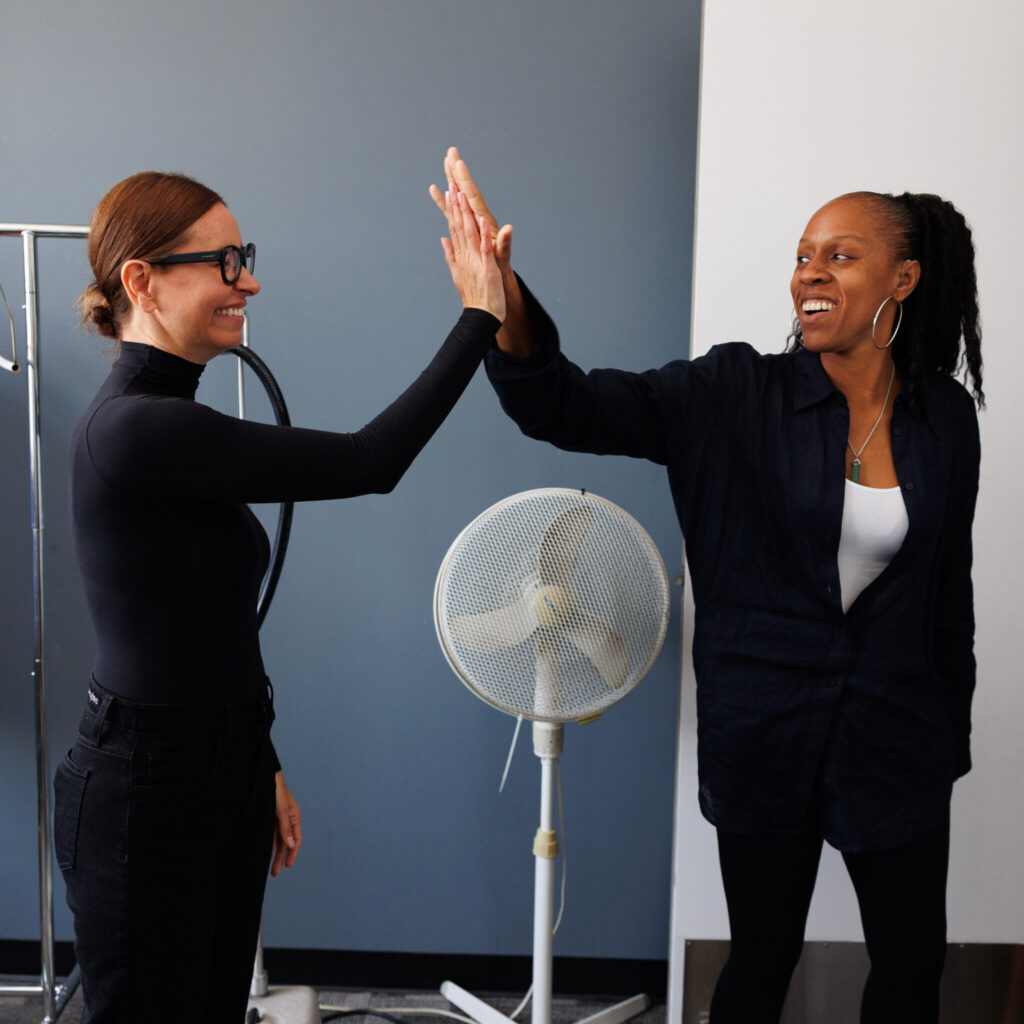
Giordano’s background in the arts and education has provided him numerous opportunities to navigate both ASL and English over the years. This experience served him well as he reviewed all of the video scripts, analyzed footage, and conducted research while developing baseline sign language translations.
“Museums are already translation-rich environments that look for ways to present their content to their intended audiences,” says Giordano. “It was important to me that the talent arrived at their own understanding of the content so we could then shape how it landed with museumgoers.”
The team took painstaking care to ensure each ASL video matched the context and emotion of its accompanying clip. Smith, Giordano, and the signers would often pause to discuss the source texts and intricacies of the ASL translations, working to perfect the final video. The performers did multiple takes until their signing embodied the script, visuals, and audio commentary.
After filming finished, the production crew began working through each of the ASL performances, overlaying them over the original video. Giordano and Smith gave feedback to the editors to ensure that each video had the best possible versions of ASL translation and were timed accurately.
As the Obama Presidential Center Museum was still being built, it was important to visit the site during construction to give feedback on the exhibit layout and user experience as they were installed. Based on the information collected during the visit, it was discovered that a number of videos required reshoots. The Obama Presidential Center brought the signers and crew back as needed, believing in the integrity of the project.
By the time they were done, Smith and the production team had filmed ASL translations for over one hundred unique videos. The massive undertaking took over a year of recruitment, translation, rehearsal, filming, and review.
Filming in D.C.
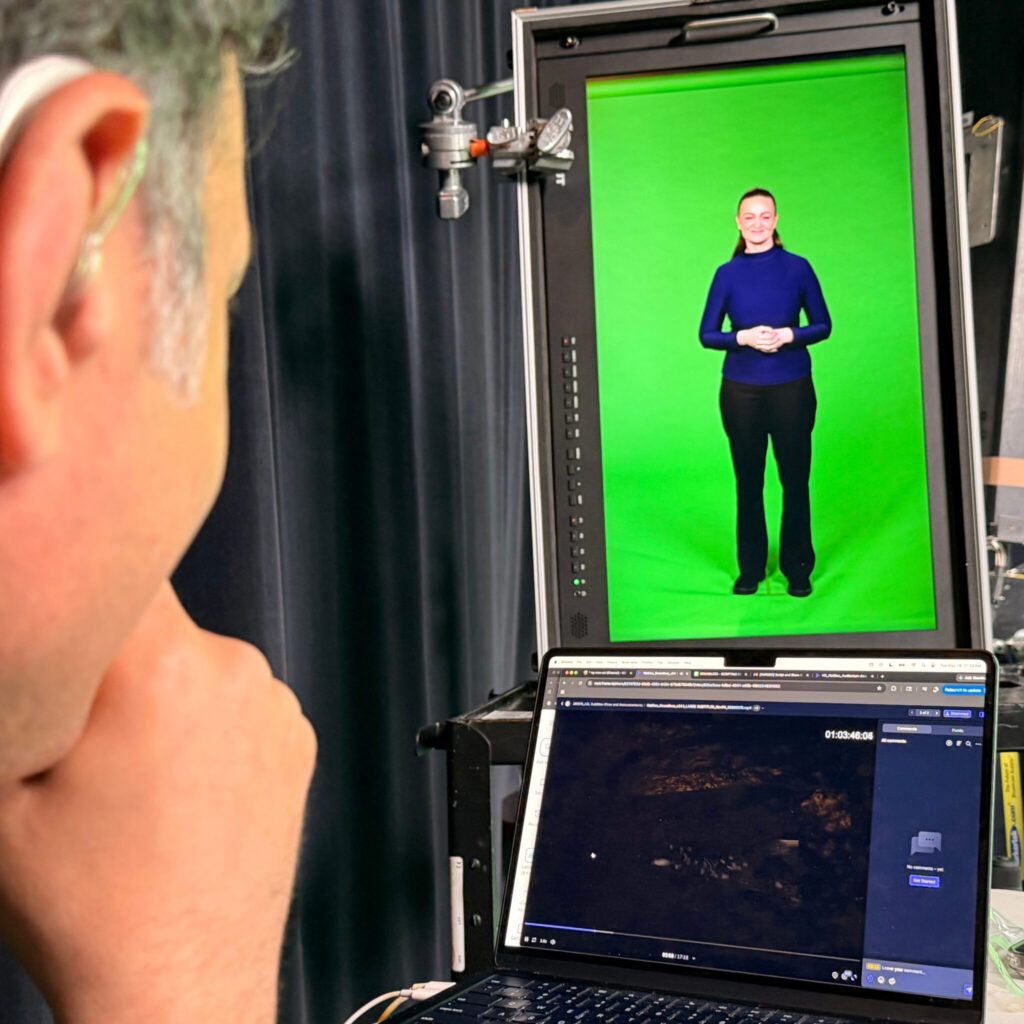
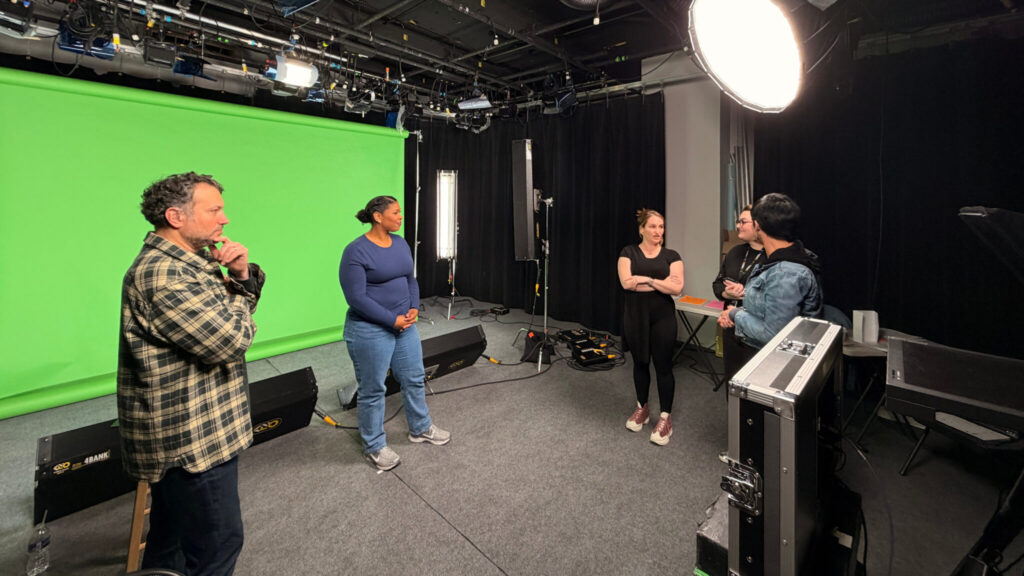
The production process for the Museum of Exploration was similarly comprehensive. This time, the team was challenged to convey National Geographic’s blend of cinematic storytelling with scientific rigor. Many of the MOE’s videos are self-contained stories with narrative arcs and animated visuals, all with the goal of inspiring future scientists and motivating people to go beyond awareness to action.
Giordano once again took the lead in working with talent on translating the scripts. He worked diligently with Smith and the signers to balance brevity with accessibility. Not all scientific terms have a corresponding ASL sign, and simply listing terms for audiences wouldn’t be accessible.
During the production process, Giordano and the signers took great care to ensure that the ASL translation took inspiration from both the spoken audio and the visuals of the video. They partnered with production consultants from Interface Media Group, who thoroughly recorded dozens of videos.
The wide range of experts in the MOE’s videos required the signers to inhabit many different characters. An adventurous filmmaker with an English accent, for example, had to be expressed in ASL differently than a quiet American scientist. The variance was a fun challenge for Giordano and the team.
One 20-minute video in the Archives area features a cast of dozens of international speakers, capturing the spirit of National Geographic’s philosophy of blending storytelling with exploration. As the signers appear on screen, they embody the personality and voice of each successive person, giving deaf viewers full access to the emotion of the exhibit.
Access in common
Smith and the team were some of the first people to tour the finished Obama Presidential Center before it opened. They were joined by familiar faces Leah Katz-Hernandez, ’10, and Claudia Gordon, deaf women who worked for President Obama’s administration.
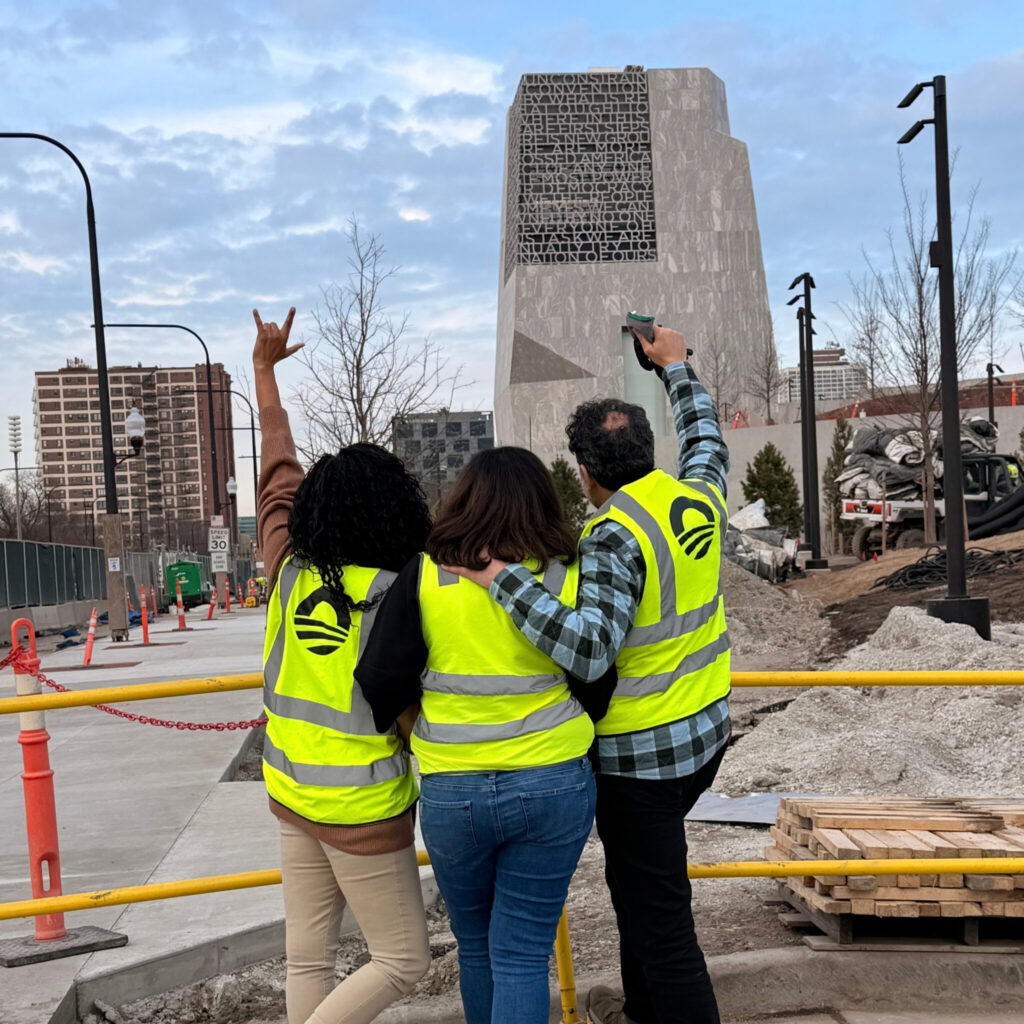
“Walking through the museum as a visitor and finally seeing the work in place was emotional for me,” says Smith. “I kept thinking about the people who would come through those doors and, maybe for the first time, feel like the experience was truly designed with them in mind. Seeing everything come together made the impact feel real.”
“What keeps me humble is looking at the faces of people lighting up, watching what we created, and taking in the experience,” says Giordano. “That’s real, measurable impact.”
By integrating ASL within the exhibits, the Obama Center and the MOE are doing more than practicing access. They’re ingraining it into the fabric of their institutions. Says Arfa, “The Mayor’s Office for People with Disabilities had several meetings with the Obama Foundation about best practices. I hope other cultural institutions see what we have done and incorporate what we have done into their design and accessibility planning.”
Both projects required an incredible amount of collaboration and expertise. The wide-ranging expertise of the involved Gallaudet alums, along with their peers, led to something special. From psychology to art, theater to linguistics, and from accounting to sociology, each member of their crew brought their own unique contributions. Smith hopes the work can be a model for other museums across the nation.
“What gives me hope is seeing what becomes possible when the right people are in the room together. The outcome becomes bigger than any one project. It becomes a pioneering model for what creative accessibility and human-centered storytelling can look like, and a way to keep pushing the standard forward.”
Ready to make your mark? Learn about Gallaudet’s degree programs and take the next step!