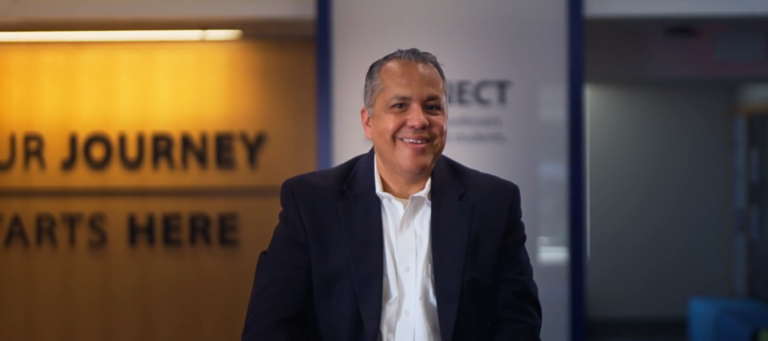


Yauheni Koraneu ‘17, Lecturer II in the Accounting program, does impactful work empowering deaf youth through financial literacy. We caught up with him recently to discuss his advocacy and doctoral research. He also discussed his experience of Deaf Gain during his recent trip to Japan and how it broadened his thinking.
Through a substantial financial literacy grant, you are doing important work to make financial concepts accessible to young deaf and hard of hearing people. Can you tell us more about that?
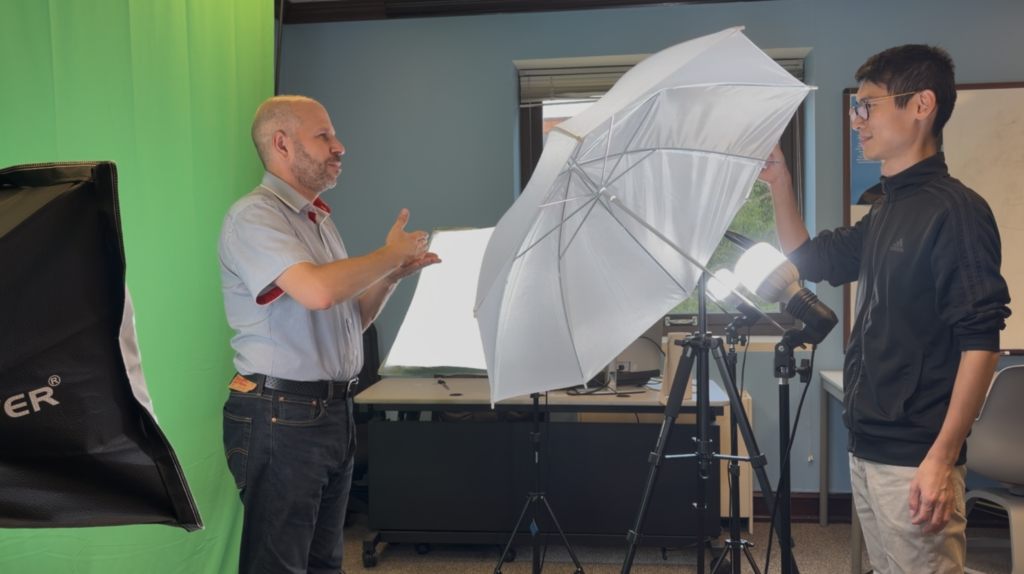
Yes! Our team has developed and recorded more than 800 signs and is building an online American Sign Language (ASL) financial and business glossary, called SignBiz. But this is only one part of the project: we’re also developing ASL definitions and examples of financial concepts, integrating them into personal finance instruction for deaf high school students. We ask students to explain financial topics through short ASL video assignments, and then we will use those videos to understand how students learn and communicate financial concepts. Ultimately, we can improve instructional materials.
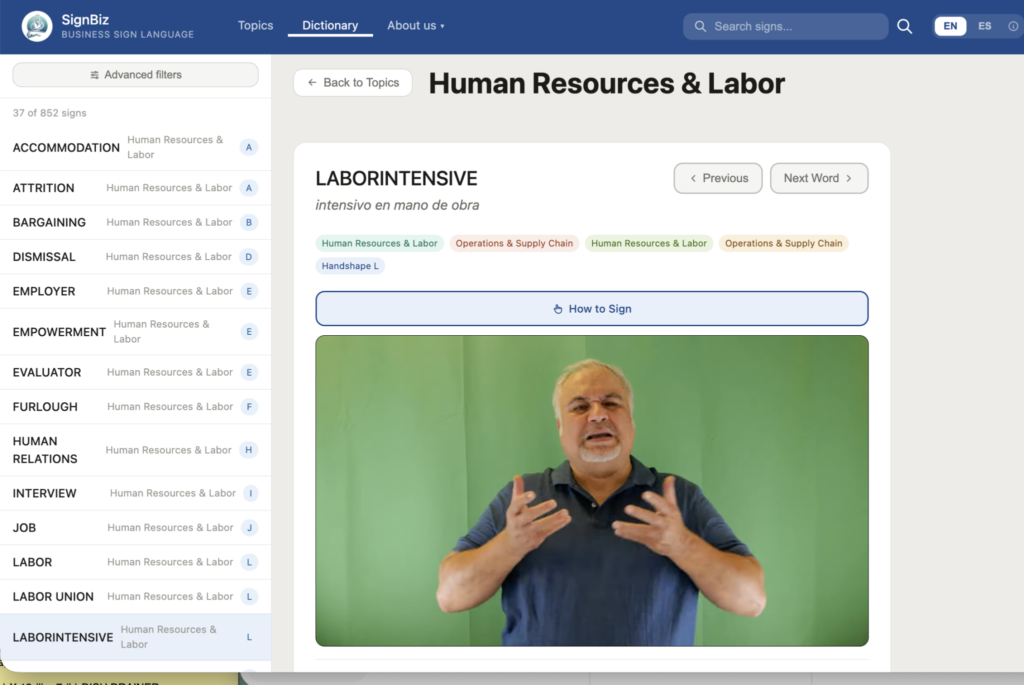
Fiancial and business ASL glossary SignBiz gets built one term at a time
What’s your motivation behind the work, and what do you want to see come of it?
My motivation stems from seeing that deaf students are often expected to understand a financial concept through written English first and then connect it to ASL. I wanted to explore the opposite approach — starting with the concept directly in ASL. I hope to create practical ASL financial resources for teachers and students, while also building evidence on how learning financial concepts directly in ASL may support students’ understanding and confidence in making financial decisions.
I also found an unexpected connection to this work while I was in Japan this past summer. One subsidiary of a large IT company employing deaf professionals has been developing its own sign bank for specialized terms frequently used in daily work. This made me think that the business glossary we are developing could eventually extend beyond education into the workplace, supporting internal communication and interpretation as well.
What took you to Japan last month?
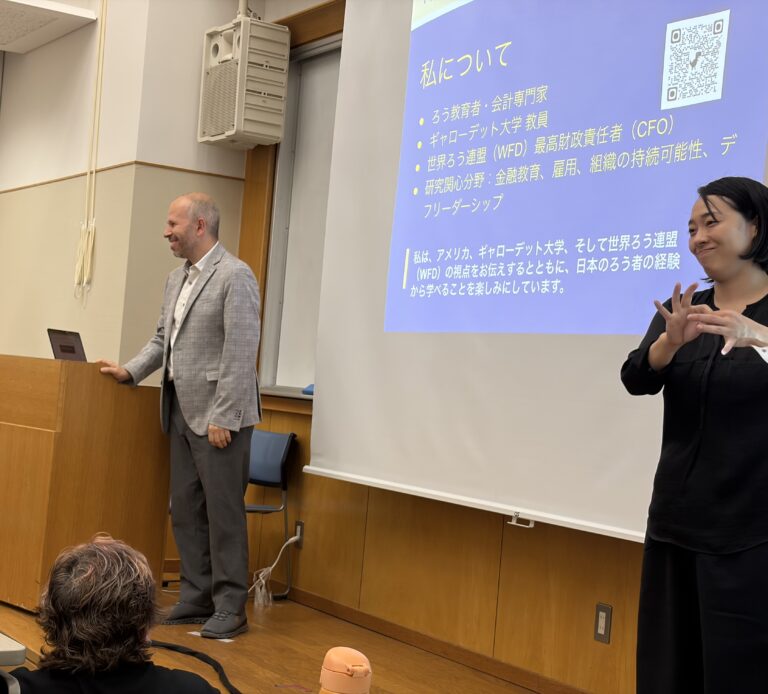
I did not go to Japan only for professional reasons, but I ended up exploring several unexpected and professionally rewarding directions. Over the course of a month, I experienced Japanese culture directly — in everyday environments where deaf people were working, doing business, and shaping the spaces around them. The trip became a combination of professional work, research, and cultural learning, and it made me think more deeply about how culture and environmental design can shape deaf people’s experiences. As I traveled, I became especially interested in how those broader cultural patterns shape the different dimensions of deaf life and Deaf Gain in Japan.
What do you mean by that? Can you share some examples of deaf Japanese businesses and ecosystems that expanded your thinking on this?
Discussions about accessibility often begin with what needs to be added to an existing environment so deaf people can participate. My experiences in Japan suggested another perspective: deaf ways of communicating, working, and seeing can also be resources that shape businesses, workplaces, and communities. Deaf Gain becomes visible not only through access but also through the changes that occur when deaf people and deaf ways of being help shape the environment itself.
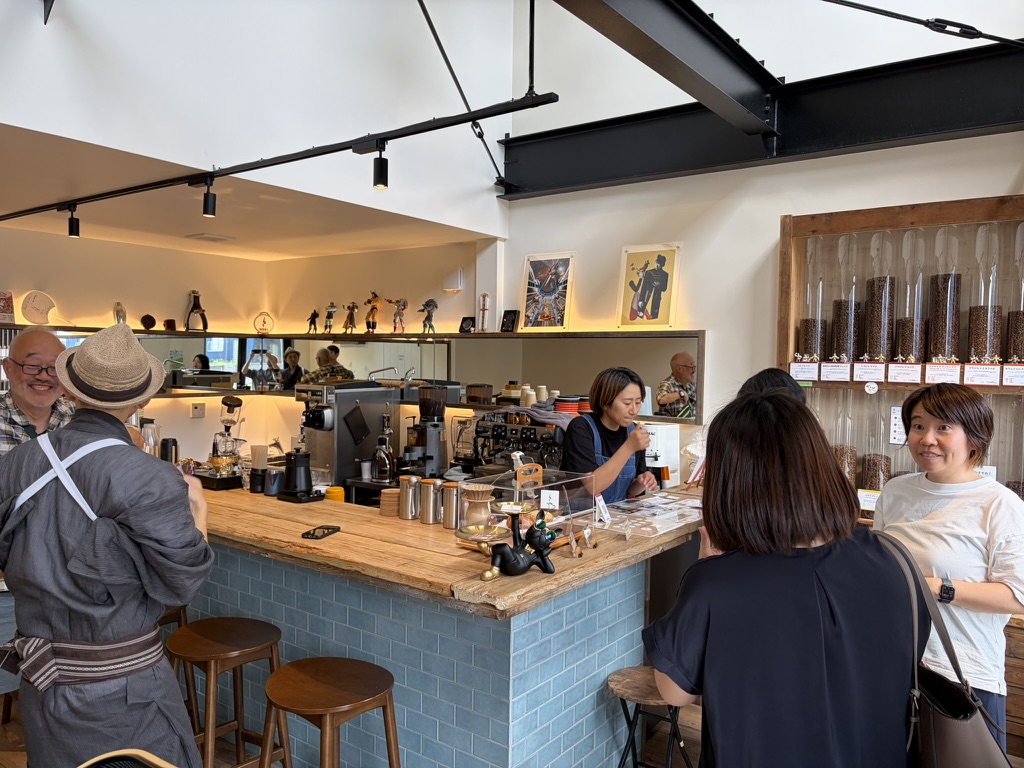
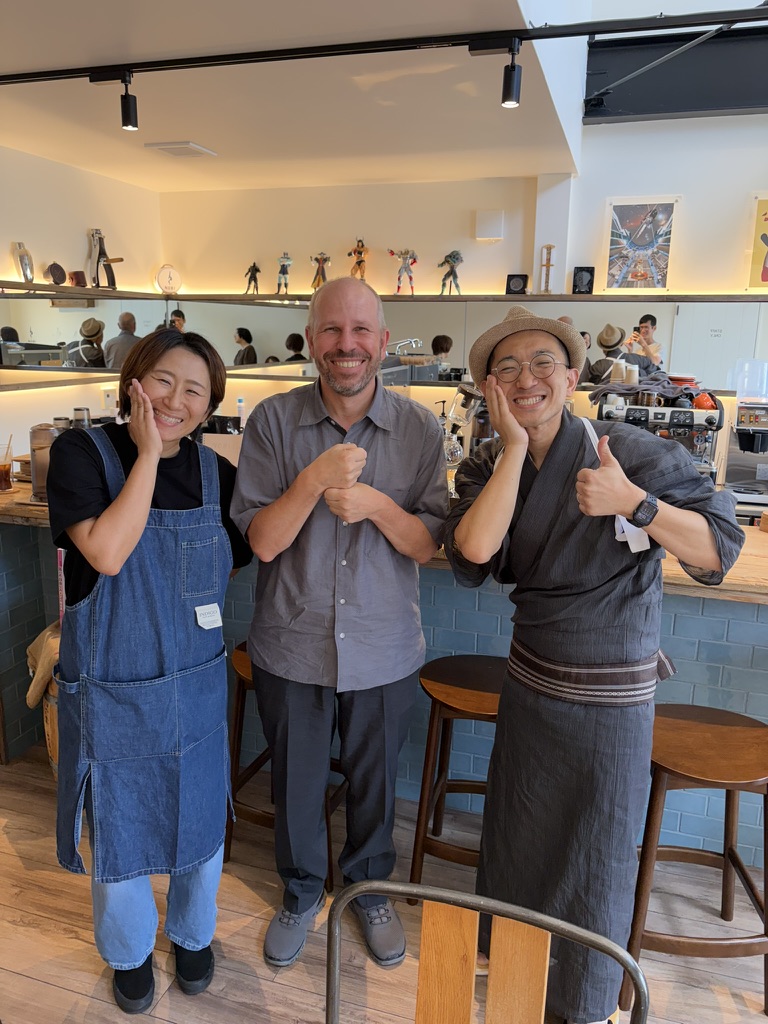
I encountered two very different deaf-run cafés that made me think about how communication can shape a business environment:
In Nagaoka, one cafe employs several deaf staff members, where communication with hearing customers is conducted through writing. The owners describe an unexpected benefit: writing creates a pause, making it more difficult to direct anger or frustration immediately toward staff or other customers. People have to slow down and communicate more deliberately, which they believe contributes to the café’s calm, friendly atmosphere.
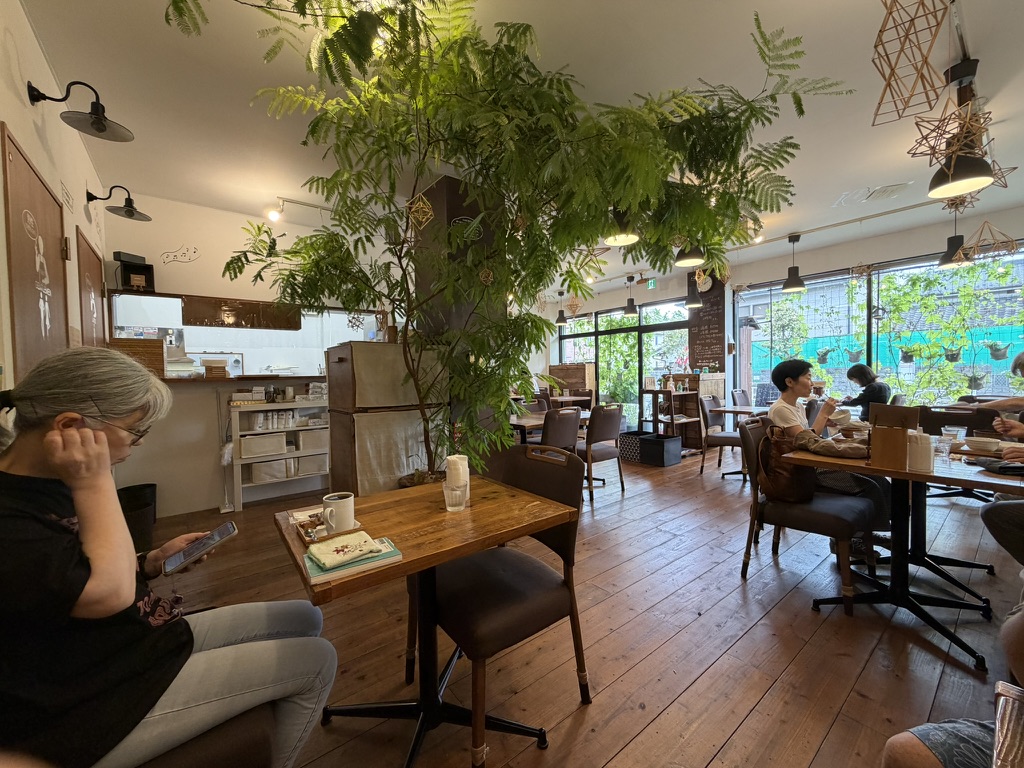
Another deaf-owned café in Kodaira has operated for more than 11 years. There, the deaf owner and hearing customers pay close attention to facial expressions, body movements, and other visual cues. Many hearing customers became regulars because they enjoy the quiet, unrushed, and friendly atmosphere. It showed me that accessibility can also mean designing an environment around deaf communication and allowing others to adapt to it — and that doing so can sometimes create a better experience for everyone.
Similarly, in Tokyo, I went to SELF, a small deaf bar. At SELF, three deaf bartenders were working in a space for only about 15 customers, and all three were busy. Everyone was deaf and signing, with bartenders actively drawing customers into conversations. Many customers came after work to relax and socialize in Japanese Sign Language (JSL) after spending their working day in hearing-dominant environments. The bar was clearly about much more than drinks: JSL and deaf interaction shaped the entire experience. It was also a wonderful place to observe everyday JSL and the differences between signed languages. One amusing example was the familiar ASL sign for “vampire,” which means “garlic” in JSL.
It looks like you gained a lot from your time there! You also shared some of your knowledge through workshops and presentations.
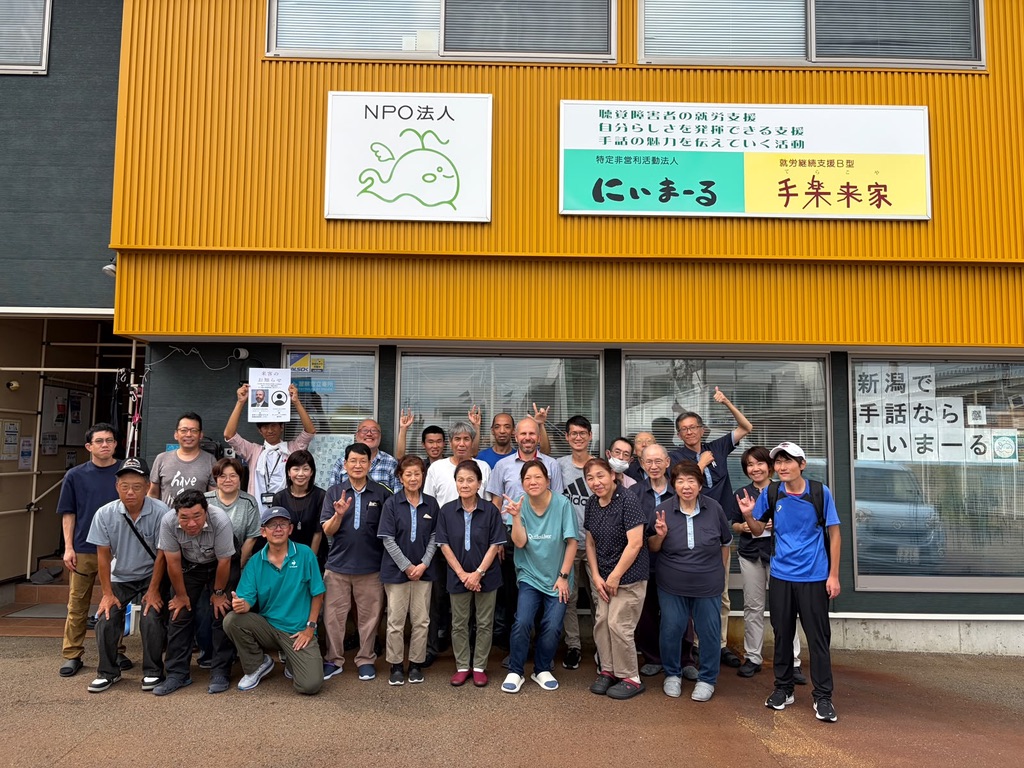
Yes. In Niigata, I gave a presentation based on my experience with Deaf-Reach in Washington, D.C. We discussed deaf nonprofit management, housing and group-home support, financing, and how coordinated deaf-centered services can help prevent isolation and homelessness.
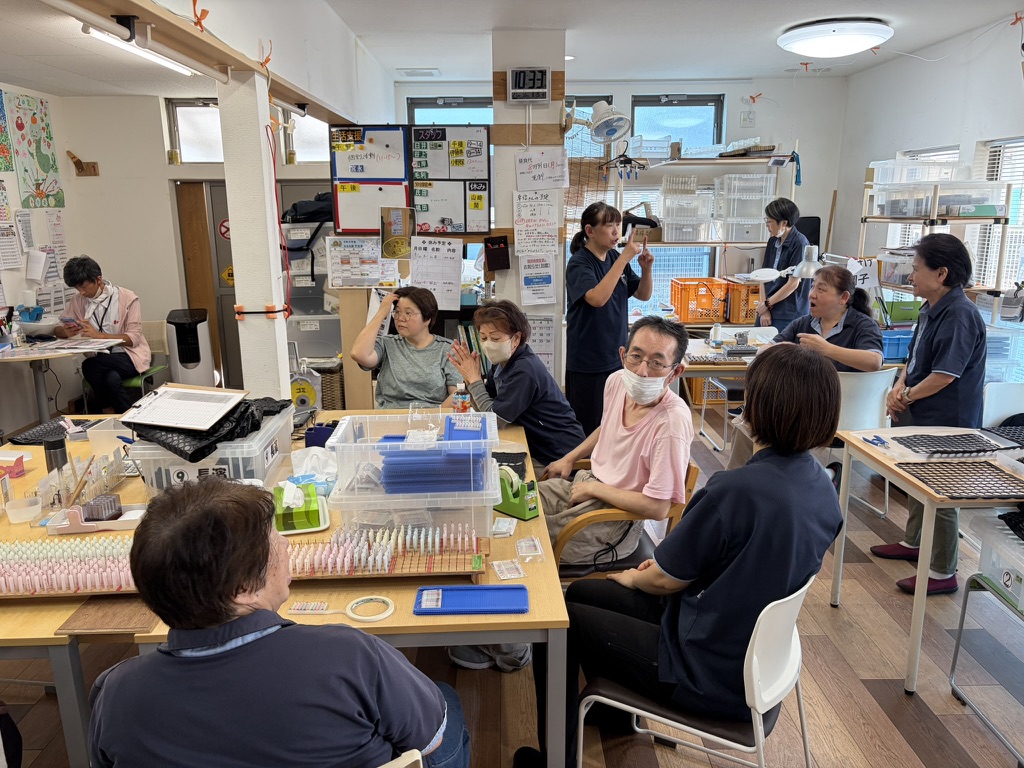
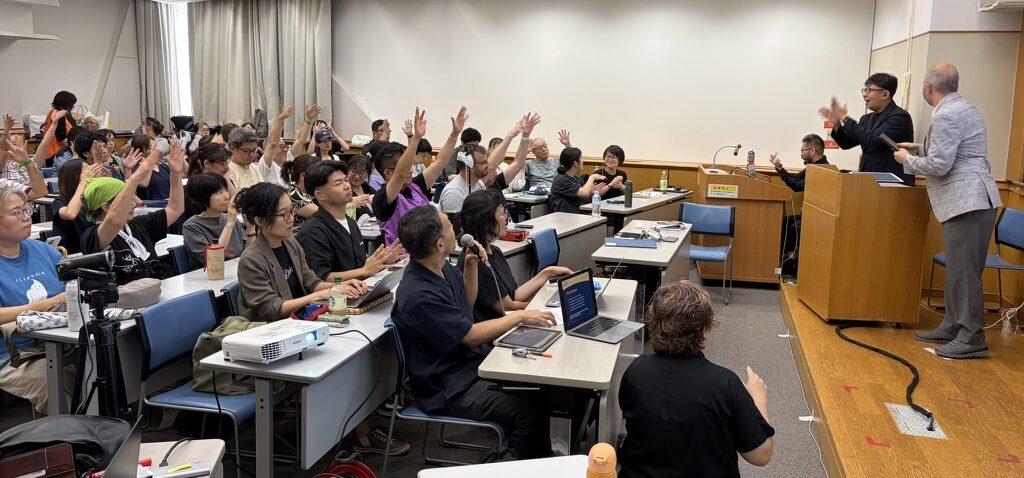
A two-day workshop in Tokyo brought together approximately 80 participants, including many deaf professionals and people working in HR-related roles. A major theme was that getting hired is only the beginning. Participants discussed workplace challenges after hiring, including communication, career advancement, access to training opportunities, and whether deaf employees have opportunities to continue growing.
The discussions also went deeper into unconscious audism and employee well-being. Some participants said that even when they were meeting the company’s goals, their work did not always feel personally rewarding or meaningful. This raised a broader question: inclusion should not be only about providing accommodations and keeping deaf people employed, but also about creating workplaces where they can feel valued, fulfilled, and proud of their work.
How does this connect to your doctoral dissertation?
My research focuses on what happens after Deaf and hard-of-hearing employees are hired. I am examining how managers and organizations can make communication access, accommodations, workplace support, and opportunities for growth part of consistent management practices rather than depending on individual managers or situations. This is part of my doctoral capstone for a Doctor of Business Administration (DBA) in Strategy and Innovation at Capella University.
When it comes to your teaching, is there anything in particular you want your students to keep in mind?
I try to teach students that business is not about memorizing the “right” answer. Knowing the right answer by itself does not always give students confidence. In real organizations, there is often incomplete information, competing priorities, and several possible solutions.
That is why I focus on helping students build confidence in expressing their own opinions, explaining their reasoning, and defending their decisions. I use cases, practical problems, applications, and examples from real organizations so they can practice thinking independently rather than simply repeating what they think the instructor wants to hear.
My goal is for students to leave the classroom not only knowing more but also feeling more confident in dealing with situations they have never encountered before.
Find out how inspiring faculty in the School of Civic Leadership, Business, and Social Change can open new doors to your future.