

This July, research from Gallaudet University’s Accessible Human-Centered Computing and Policy (AHCP) program crossed the Atlantic to Masaryk University in Brno, Czech Republic. Students and faculty from AHCP presented four papers at the 20th International Conference on Computers Helping People with Special Needs (ICCHP 2026).
One of the longest-running international venues for assistive technology and digital inclusion research, ICCHP publishes its proceedings in Springer Nature’s Lecture Notes in Computer Science series and draws researchers, service providers, educators, and policymakers from around the world.
Bringing together many levels of experience
The trip brought a cross-section of the program to Brno: faculty members Abraham Glasser and James Waller, Research Scientist Matthew Seita, graduate students Amy Luna, Joe Merino, and Michaela Okosi, G-’25, and undergraduate students Austin Baker, Nora Dunphy, and Gidey Gezae.
AHCP program directors Dr. Raja Kushalnagar and Dr. Christian Vogler co-authored all four papers and served as co-chairs of the Accessibility for the Deaf and Hard of Hearing session. The papers also reflect the contributions of co-authors Devesh Saini, ‘23 & G-’26, Alison Nana, G-’24, Joshua Prado, Paige DeVries, ‘22 & G-’25, Ming Li, ‘24 & G-’25, and Pranav Pidathala, whose work traveled to Brno even though they did not.
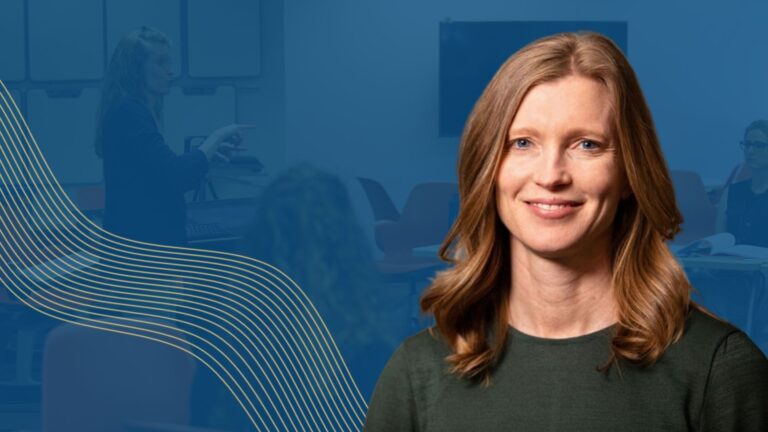
“These four papers ask questions that matter deeply to our community, from protecting the privacy of signers to making everyday technology respond to sign language,” said Kushalnagar. “Our students carried that work to an international stage, undergraduates and graduate students alike, and represented Gallaudet in a global research conversation. That is what the AHCP program was built to do.”
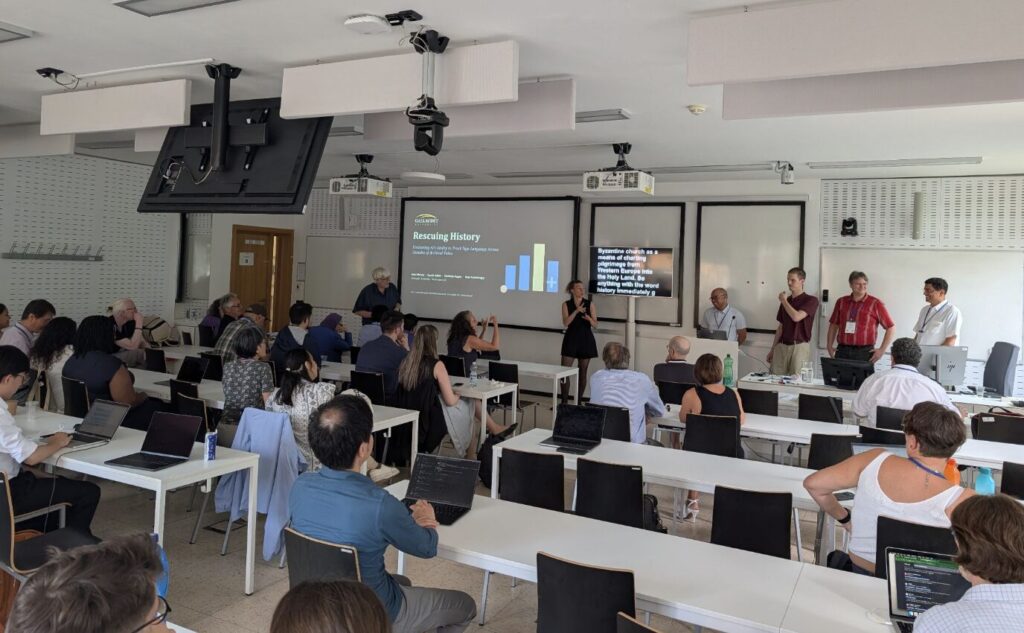
The first of the papers, “Rescuing History: Evaluating AI’s Ability to Track Sign Language Across Decades of Archival Video,” (Merino, Baker, Vogler, and Kushalnagar) was presented in the Innovation, Accessibility, and Artificial Intelligence session. The paper examines whether modern AI tools can reliably track signing in historical film. The work speaks to the preservation of Deaf heritage captured on decades of archival footage, much of it recorded long before today’s computer vision systems existed.
A session of their own
A dedicated session on Accessibility for the Deaf and Hard of Hearing was the centerpiece of the cohort’s participation. Chaired by Kushalnagar and Vogler, together with international colleagues Sarah Ebling and Matjaž Debevc, the AHCP delegation contributed three of the session’s five papers.
In “Can Deaf Signers Understand Anonymized MediaPipe Pose Models?” (Luna, Seita, Saini, Nana, Kushalnagar, and Waller), the team took on a question at the heart of signing privacy: sign language is produced with the face and body, so a signer cannot simply be blurred out of a video without erasing the message. The paper evaluated whether skeleton-based pose representations can anonymize signers while keeping their signing intelligible.
“Accessible Deaf and Hard of Hearing Hybrid Events in the 2020s” (Okosi, Prado, Glasser, Kushalnagar, and Vogler) distilled lessons from a decade in which meetings, classrooms, and conferences moved partly online, examining what it takes for hybrid events to deliver genuine access, from interpreting and captioning logistics to platform design.
In “Beyond the Touchscreen: Hands-Free Sign Language and Head-Pointing Interfaces for Deaf Interaction with Intelligent Assistants,” the authors (Dunphy, Gezae, DeVries, Li, Pidathala, Glasser, Kushalnagar, and Vogler) explore how deaf users can command intelligent personal assistants without touching a screen, investigating sign language and head-pointing input as first-class interaction methods for devices that were designed around voice.
For the graduate and undergraduate students who made the trip, ICCHP offered what no classroom can: the experience of defending their methods before an international audience of accessibility researchers, and the chance to see their work take its place in a research conversation that spans continents, languages, and signing communities.
Join a program that trains researchers to design, evaluate, and implement evidence-based accessible technology and to present that work on the world’s stage.
The AHCP program offers both M.S. and Ph.D. degrees and is designed for deaf, hard of hearing, and hearing scholars alike. It awards six NSF research traineeships annually focused on accessible and universal AI.