
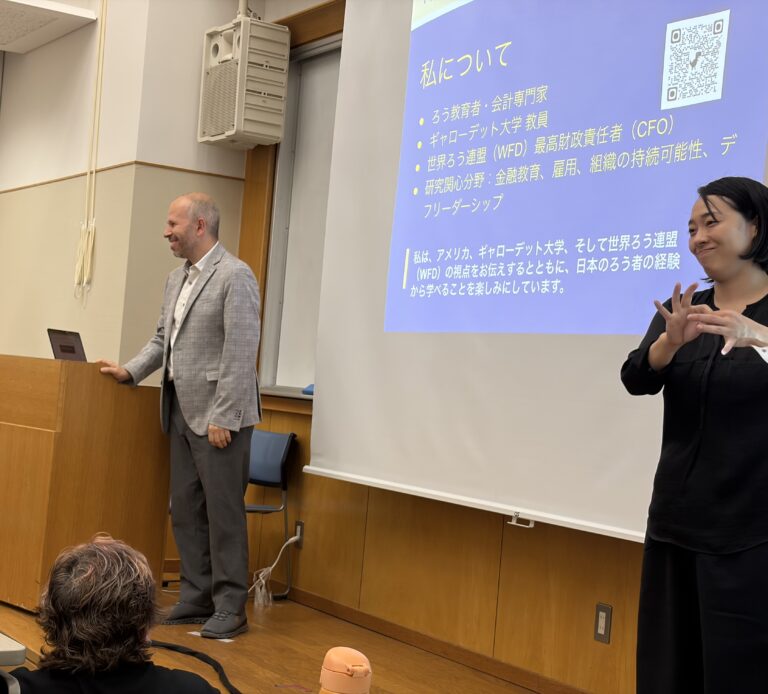





Most workplace accommodations are low-cost, easy to implement, and supported by existing technology. Common accommodations include:
-
ASL interpreters
-
CART services (Communication Access Realtime Translation or real-time captioning)
-
Captioning
-
Video Relay Services (VRS)
-
Visual alert and notification systems
-
Accessible meeting platforms
-
Meeting transcripts and written follow-up materials
-
Flexible communication options
Accommodation needs vary by employee, position, and workplace environment. The employee is often the best source of information regarding which accommodations will be most effective.
Communication Best Practices in the Workplace
-
Speak directly to the Deaf employee, not the interpreter.
-
Maintain eye contact.
-
Ask for clarification when needed.
-
Use visual support and communication tools whenever possible.
-
Avoid assumptions about communication preferences.
-
Set clear communication expectations.
-
Share agendas and materials in advance.
-
Use captioned, accessible virtual meeting platforms.
-
Hold regular check-ins.
-
Provide written follow-up notes.
-
Build an inclusive team culture.
Most communication challenges can be solved through planning and flexibility. These practices frequently benefit all employees, not just Deaf employees.
Working with Interpreters
When interpreters are present:
-
Speak directly to the employee, and maintain natural conversation flow.
-
Allow slight pauses for interpretation.
-
Include interpreters in logistical planning.
-
Provide materials in advance when possible.
-
Ask the employee where the interpreter should sit or stand.
Remember: the conversation is between you and the employee. The interpreter is a communication facilitator.
Free Accommodation Consultation & Resources
Employers do not need to figure accommodations out on their own. The following organizations offer free guidance:
Job Accommodation Network (JAN)
Provides free accommodation guidance, ADA information, workplace accommodation ideas, and employer consultation.
National Deaf Center on Postsecondary Outcomes
Provides employer guidance, workplace accessibility resources, Deaf employment resources, and accommodation information.
https://nationaldeafcenter.org
Equal Employment Opportunity Commission (EEOC)
Information regarding ADA requirements and workplace accommodations.
Registry of Interpreters for the Deaf (RID)
Locate qualified vs. certified interpreting professionals throughout the United States.
Contact
- Office for Career Success
- Fowler Hall | 100
- career.success@gallaudet.edu
- 202.448-7036
- (202) 250-2071
- 202-448-7036